



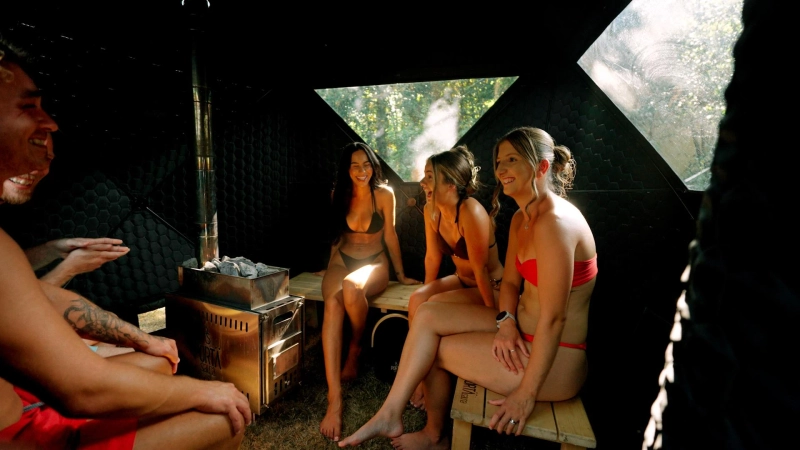
If you’re new to sauna tents, it’s natural to ask about safety. You’re dealing with high temperatures, steam, and a live fire. The reassuring news is that modern portable units are designed with safety in mind, and if you follow a few sensible guidelines, they’re a fantastic, safe way to enjoy real sauna heat in the UK.
Choose the right tent and stove
Look for a tent made with flame-retardant outer fabrics, reinforced seams, and a properly engineered flue exit. The stove should be sturdy steel, with a tight-fitting door, a guarded body, and stable legs. The flue should assemble snugly and vent well above the tent roof so smoke clears efficiently.
Site it safely
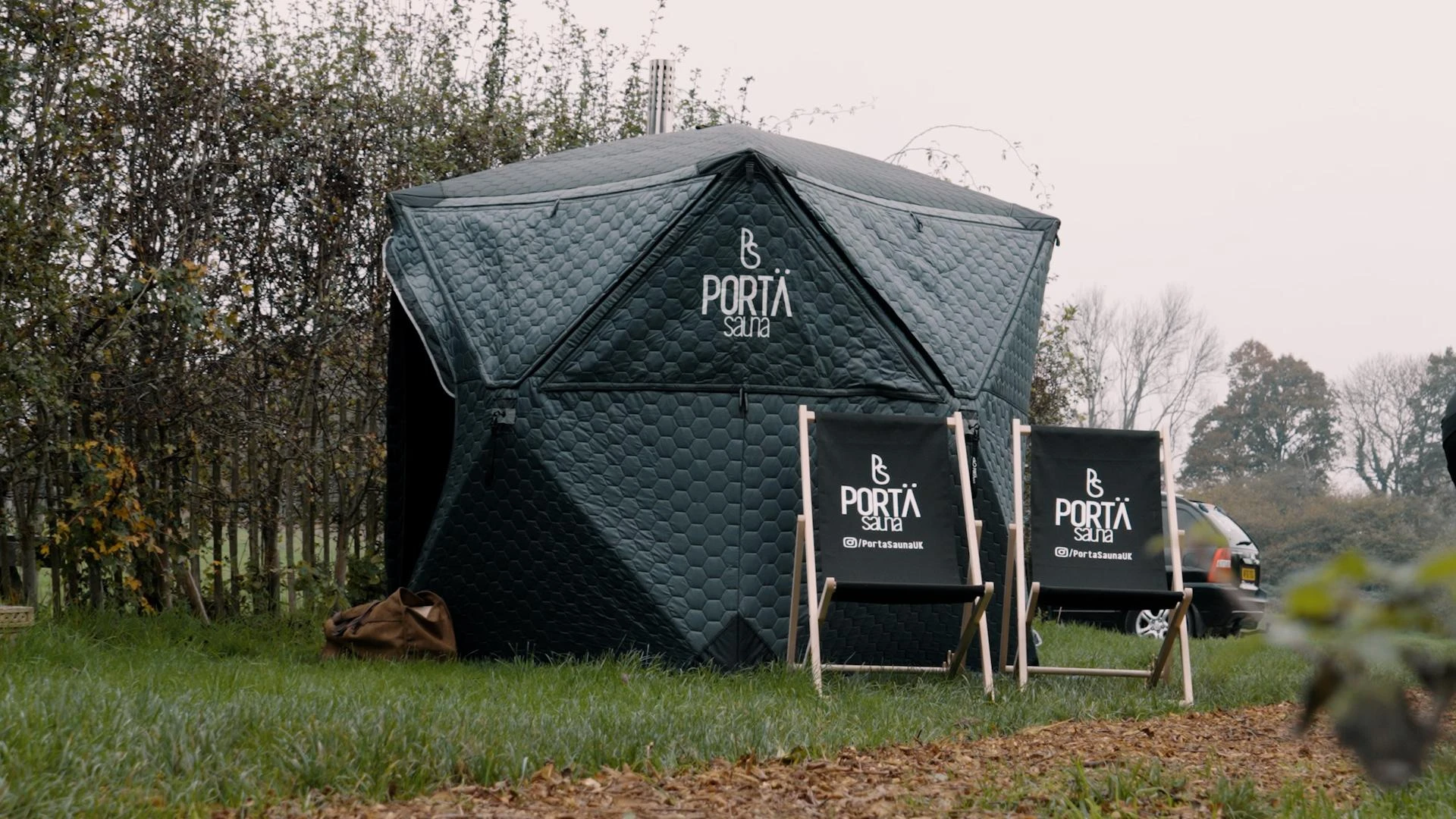
Pitch on flat, stable ground with good airflow. Keep the entrance clear and guy the tent out properly. Position the flue at least several feet away from trees, fences, sheds, or awnings. Portable saunas are built for outdoor use, not indoors or in garages. Think of it like a BBQ—fresh air, sensible spacing, and you’re golden.
Fire management basics
Use only dry, untreated wood. Softwood kindling is fine to start, but kiln-dried hardwood logs give the best heat. Build gradually, not all at once. Never leave a loaded stove unattended. Keep a bucket of water or a hose nearby and use heat-proof gloves when tending the fire or adjusting the flue cap.
Ventilation and heat control
A good tent balances insulation with controlled airflow. Use the adjustable vents and keep the flue drawing. If the heat spikes, open a vent for a minute or crack the door to stabilise things. If you feel light-headed or uncomfortable, step out, cool down, and hydrate.
Personal safety and session length
For your first sessions, keep it short—8 to 12 minutes—then cool off. Alternate two or three rounds rather than aiming for a marathon. Drink water before and after, avoid alcohol, and don’t sauna if you’re unwell or under medical advice that cautions against heat exposure. If you’re pregnant or have heart or blood pressure concerns, seek medical guidance first.
Family use and guests
If you’re inviting friends, brief them on how the stove works and basic etiquette. Keep little ones away from the hot stove body and ensure everyone knows not to lean on the flue. Towels prevent accidental skin contact with hot surfaces and keep benches hygienic.
Weather awareness
Portable saunas thrive in British winters, but common sense applies. Don’t run in severe winds or during heavy snowfall that could weigh down the roof. In wet conditions, use the rain cover and keep the stove wood dry in a lidded box or bag.
Aftercare and storage
Let the stove burn down before you dismantle. Ashes should be fully cold before disposal. Dry the tent if it gets damp, and store it loosely rather than cramming it into a bag wet. A dry tent is a safe tent.
Safe, simple, and satisfying
Do the basics right, and a portable sauna is as safe as it is enjoyable. For many households, it’s the easiest path to a genuine Portable Sauna habit—one you can set up in an afternoon and enjoy for years. If you’ve got a suitable space, a well-pitched garden sauna will quickly become everyone’s favourite part of the week.