



Traveling to Morocco is a dream for many — from exploring the vibrant souks of Marrakech to wandering the blue alleys of Chefchaouen, and even venturing into the Sahara desert. But before you can soak in the magic Morocco eVisa For Saint Kitts and Nevis citizens, the Morocco eVisa system simplifies much of the traditional visa process by allowing you to apply online. This blog will walk you through everything you need to know: from which eVisa to choose, required documents, processing times, to common mistakes — all tailored for Kittitian/Nevisian travelers.
What Is the Purpose of a Morocco eVisa?
The Morocco eVisa is an electronic visa system designed to make entering Morocco more convenient. Instead of visiting a Moroccan embassy or consulate, eligible travelers can apply, submit documents, pay fees, and receive visa approval online.
m 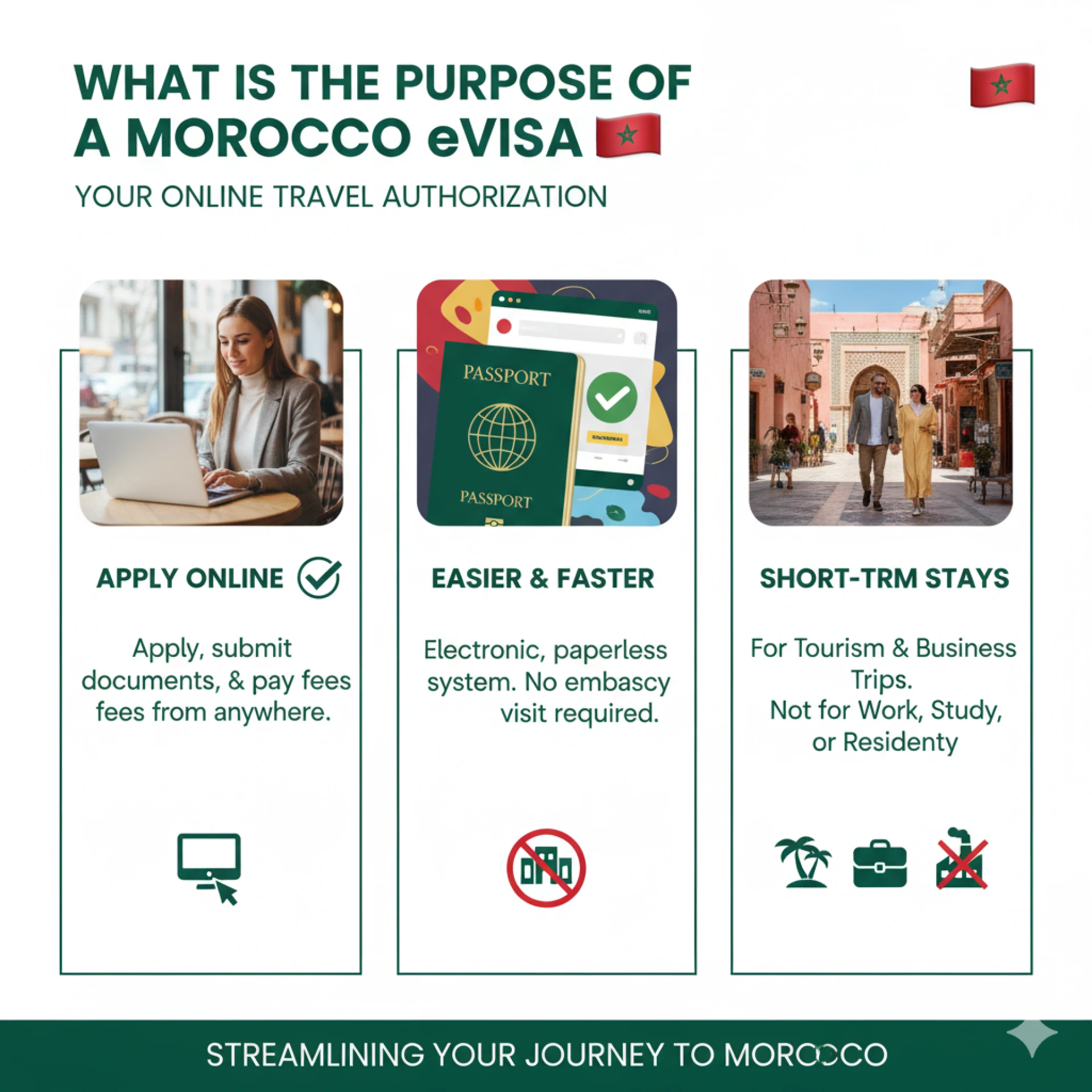
- The eVisa is linked to your passport electronically, so you don’t have to get a physical sticker (in many cases), which speeds up the process and reduces paperwork.
- The eVisa is primarily intended for short-term stays, such as tourism or business trips. It is not designed for long-term residence, work, or study in Morocco.
Why Apply for a Morocco eVisa Especially as a Saint Kitts and Nevis Citizen?
There are several advantages to using the Morocco eVisa:
- Convenience: No need to visit a Moroccan embassy or consulate — everything is done online.
- Speed: With express options available, you can get your visa within days.
- Flexibility in entry: Valid at major international entry points, which means you can fly into any airport.
- Cost-effective: While not the cheapest visa in the world, it’s relatively reasonable for short tourist or business trips.
- Legitimacy: It’s a fully recognized visa by Moroccan immigration, so once approved, you’re good to go without needing additional permits (for short stays).
- Transparent process: Online portals usually give clear instructions, and you can track your application.
- Safety and security: Digital processing reduces risk of document loss, and portals follow modern data-protection standards.
Which eVisa Should I Choose for My Trip to Morocco?
Depending on your travel purpose, you’ll typically choose between:
1.Tourist eVisa
If you're visiting Morocco to sightsee, relax, explore cultural sites, or visit friends/family, the tourist eVisa is the right choice. This is the most common visa for leisure travelers.
2.Business eVisa
If you're traveling for professional reasons attending meetings, business conferences, trade fairs, or any work-related engagement then you should apply for the business eVisa. While you're not allowed to work long-term, this visa supports short-term, legitimate business activities.
How do I upload my documents for the Morocco eVisa online?
When applying for the Morocco eVisa, you must upload certain documents. Here’s a typical list (requirements may vary slightly, so always check current guidelines):
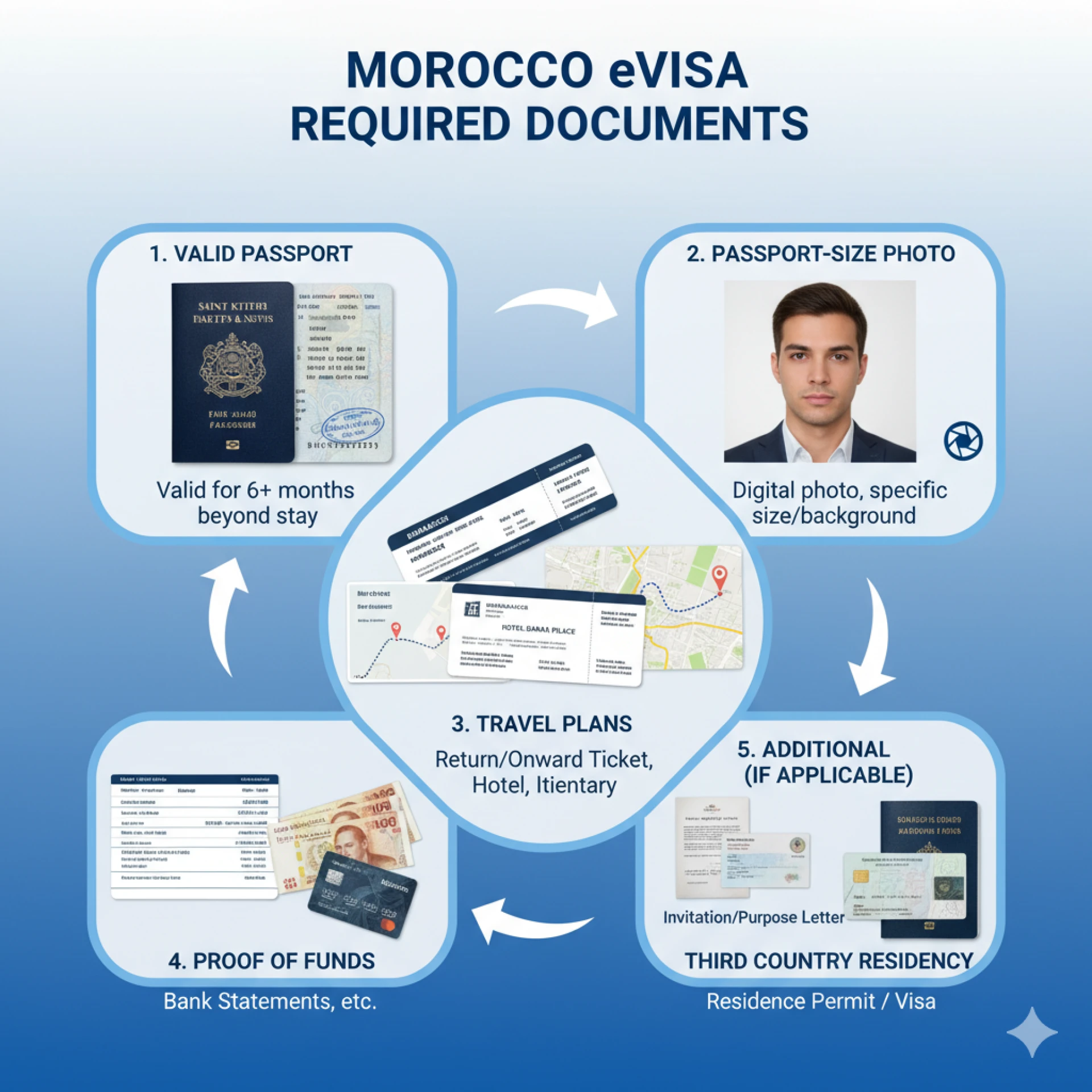
- A valid passport: For Saint Kitts and Nevis citizens, your ordinary passport must be valid, usually for at least 6 months beyond your planned stay.
- Passport-size photo: Digital photo with specific size and background (more on this below).
- Proof of travel plans: Return or onward ticket, hotel reservations or accommodation details. Some portals also ask for a travel itinerary.
- Proof of sufficient funds: Evidence that you can support yourself during your stay in Morocco (bank statements, etc.).
- Business documents (if applying for business eVisa): Invitation letter, a letter of purpose, or proof of business trip from a Moroccan entity.
- If applicable, a residence permit or visa from a third country: For some nationalities, having a valid residency permit in certain countries or a multiple-entry visa in some cases is required.
How much does the Morocco eVisa cost?
The cost of a Morocco eVisa varies slightly depending on the processing speed and the service provider. While I won’t quote an exact fixed number (as it changes and you did not want a mention of fixed amount), here’s a breakdown in relative terms:
- There’s a standard eVisa fee, applicable when you choose regular processing.
- If you opt for express or super rush, the fee increases to reflect the faster processing.
For instance, according to some sources, the express version costs significantly more than the standard one.
How can Saint Kitts and Nevis citizens apply for a Morocco eVisa?
Here’s a simple roadmap to Apply for Morocco eVisa as a Saint Kitts and Nevis citizen:
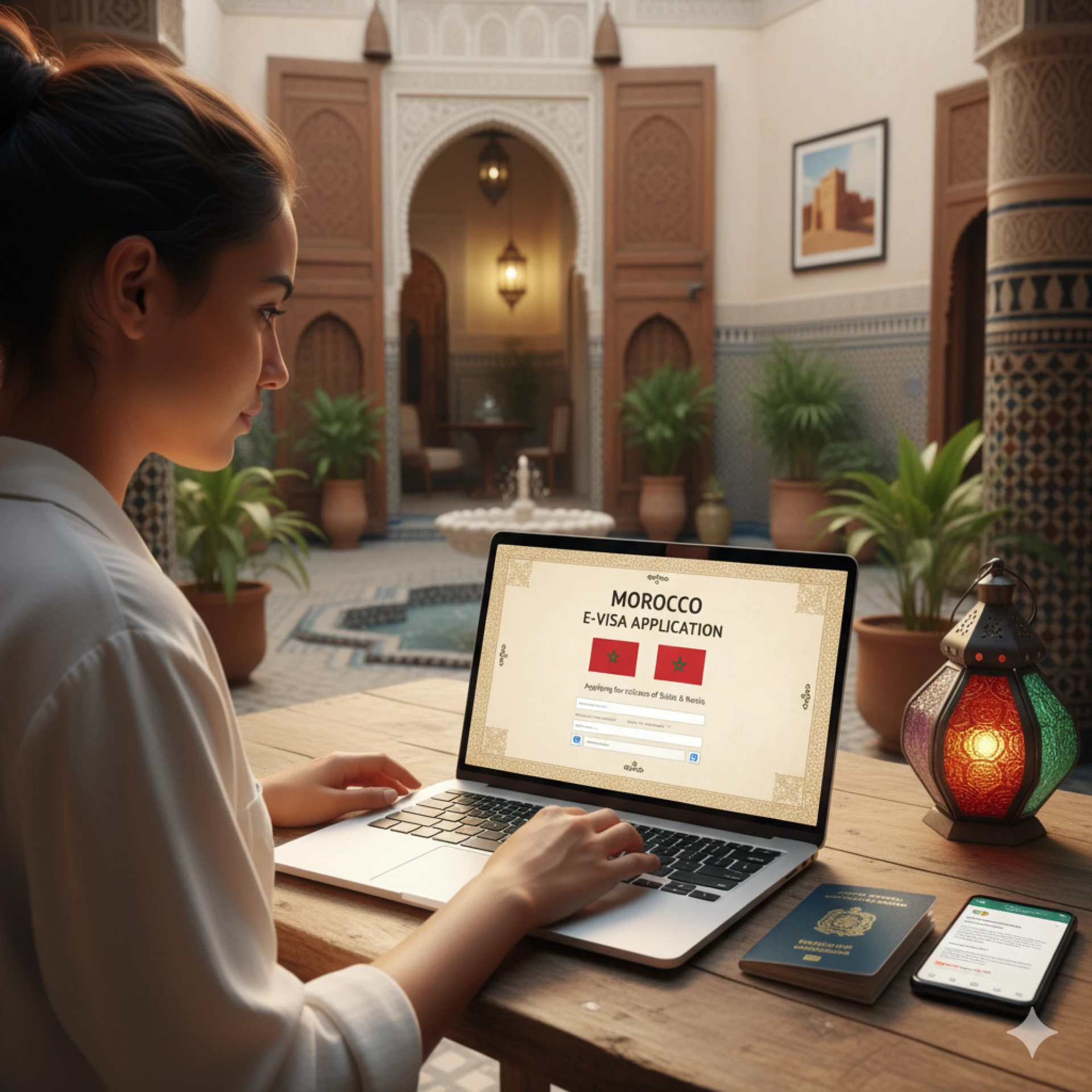
- Check your eligibility: Use a reliable visa portal (or the official Moroccan eVisa portal) to confirm that Saint Kitts and Nevis citizens can apply for an eVisa.
- Choose the visa type: Decide whether you need a tourist or business eVisa, based on your travel purpose.
- Fill in the application form: On the eVisa portal, enter your personal details, passport information, trip information, and other required details.
- Upload documents: Upload your photo, passport copy, and any supporting documents as per instructions.
- Pay the visa fee: Make the payment online using a credit/debit card or other accepted online method.
- Submit the application: After reviewing all entries and attachments, submit your application.
- Receive eVisa: Once approved, download your eVisa. Save a copy (digital and printed) to show upon arrival in Morocco.
What is the maximum duration of stay with a Morocco eVisa?
Understanding visa validity and stay duration is key to planning:
- The eVisa is usually valid for up to 180 days from the date of issue.
- Once you enter Morocco, you can typically stay for up to 30 consecutive days with the standard eVisa.
- The eVisa offered to Saint Kitts and Nevis citizens is usually single entry, meaning you cannot exit and re-enter using the same eVisa.
- If you wish to extend your stay once in Morocco, it may be possible (but is not guaranteed) for tourist visas, extensions can be sought via local authorities.
What are the rules for facial expressions in Morocco eVisa photos?
Your visa application Morocco eVisa photo requirements must satisfy clear standards. Here’s what you should know:
- Size: 35 mm wide by 45 mm high.
- Background: Plain, light-colored (white, light gray, or off-white) with no patterns or shadows.
- Quality: Sharp, in focus, recent (taken within the last six months), with your full face visible.
- Face coverage: Head and shoulders should be visible; face should cover about 70–80% of the picture.
- Expression: Neutral expression, eyes open, mouth closed. No exaggerated smile.
- Glasses: Avoid them unless medically necessary; if worn, they must not obscure eyes or create glare.
- Head coverings: Only allowed for religious reasons; face must remain fully visible from chin to forehead.
How Can I Get an Urgent Morocco eVisa?
If you need your visa quickly, here are some tips on making the process faster:
- Choose express/super rush option: When you apply, select the faster processing service (usually 1 business day or similar).
- Ensure documents are complete and clear: Double-check your passport scan, photo, and travel proof missing or blurry documents cause delays.
- Apply early: Even with express processing, apply a few days before travel to absorb any unexpected delays.
- Use a reputable application portal: Use the official eVisa site or a trusted visa service to reduce chances of technical glitches.
Can I Use Morocco eVisa at Any International Airport?
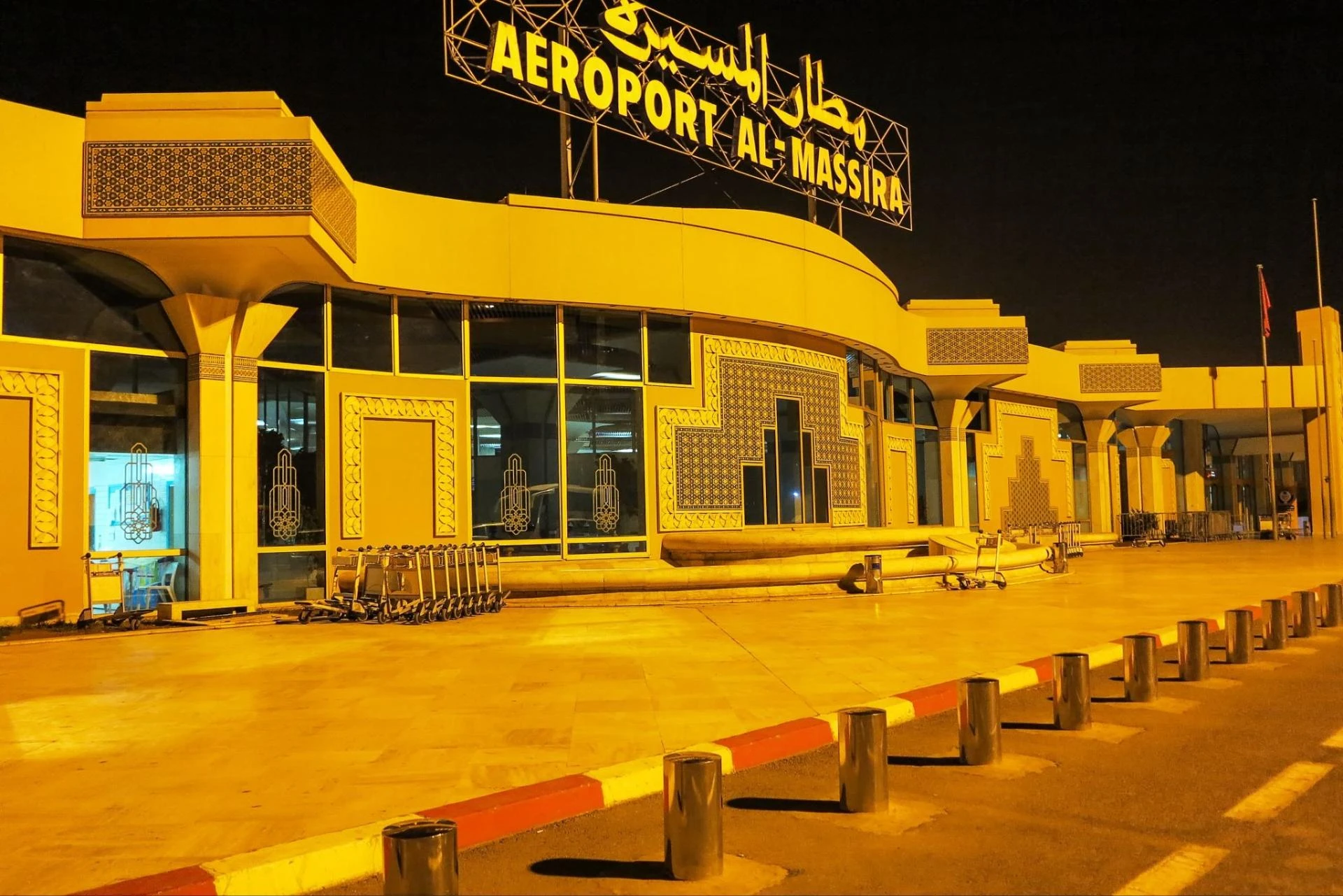
Yes, the Morocco eVisa is generally valid at all international points of entry (airports, land borders, and seaports) that accept eVisa holders. There is no restriction that limits you to a particular airport when arriving in Morocco. This makes your travel more flexible; whether you fly into Casablanca, Marrakech, or Tangier, you should be able to enter with a valid eVisa.
What Is “AFCON 2025” in Morocco eVisa Context?
AFCON (Africa Cup of Nations) is a major football tournament in Africa. If a traveler mentions “AFCON 2025” in the context of Morocco eVisa, they might be referring to:
- Special visa facilitation or streamlined eVisa processing for attendees or participants of AFCON matches hosted in Morocco.
- Promotional or event-specific visa measures (though details would vary and need verification with the official eVisa portal).
As of now, there is no widely published official “AFCON 2025 eVisa special category” in standard visa information sources, so anyone applying under that premise should check the official Moroccan immigration or eVisa site for the most recent updates.
How to Apply for a Morocco Business eVisa
If your trip is business-related, here’s how to apply for a Morocco Business eVisa:
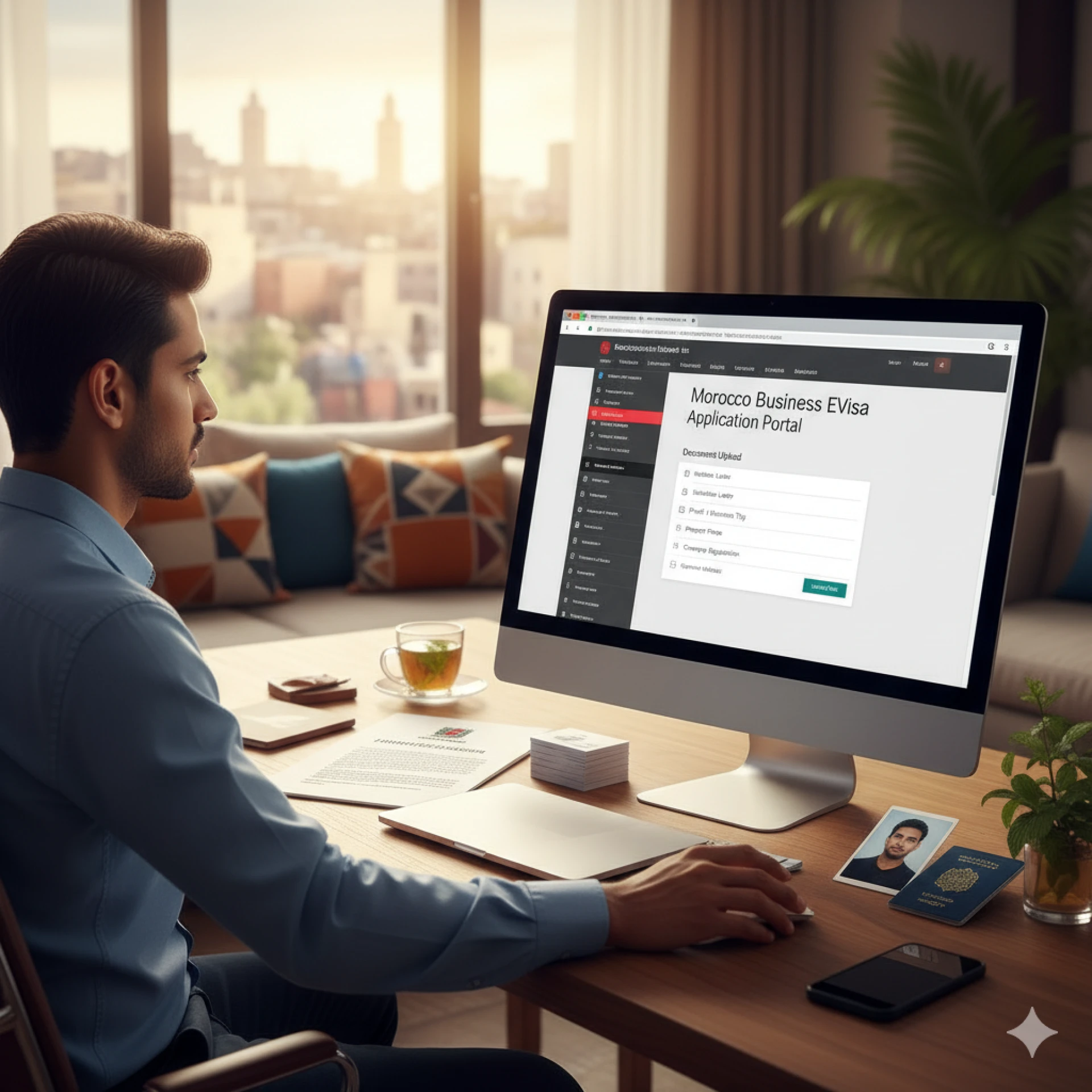
1.Choose a business visa type when filling the eVisa form.
2.Prepare business-specific documents:
- An invitation letter from a Moroccan company or institution.
- A cover letter explaining the purpose of your trip (meetings, trade fair, etc.).
3.Upload business proofs along with your usual travel documents (passport, photo, itinerary).
4.Pay the visa fee, which might be the same as a tourist eVisa, but depending on the portal, may vary.
5.Submit and wait for processing via the chosen speed (standard or express).
6.Receive your eVisa, and make sure to carry the invitation letter and other business documents when you travel, as immigration officers may ask for them on arrival.
Can I Track My Visa Status?
Yes after submitting your eVisa application, most portals provide a tracking mechanism:
- You’ll typically receive a reference or application number once you submit.
- Use this number along with your email or other login credentials on the eVisa portal to check the status (e.g., “in process,” “approved,” “rejected”).
- Once approved, you’ll be able to download your eVisa directly from the portal or via a link sent to your email.
How can I avoid errors on my Morocco eVisa application?
When applying, travelers often make errors that could delay or even reject their visa. Here are some common pitfalls and how to avoid them:
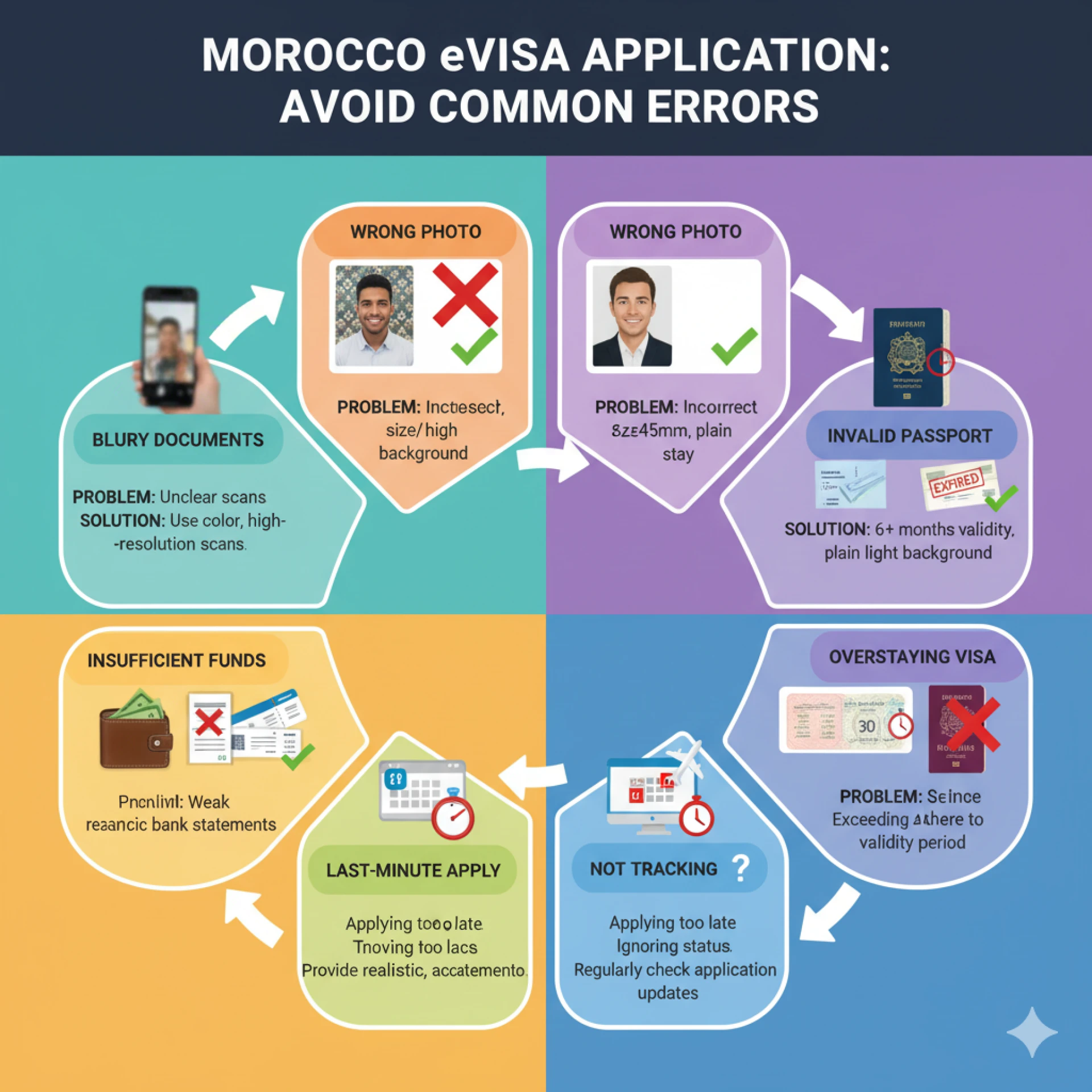
- Incomplete or blurry documents: Make sure scans of your passport and photo are clear, in color, and meet the required specifications.
- Wrong photo size/background: Not following the 35 × 45 mm requirement, or using a patterned background, can lead to refusal.
- Invalid passport validity: If your passport doesn’t meet the minimum validity requirement, you may be rejected.
- Missing proof of travel plans: Not uploading a confirmed return/onward ticket or accommodation details can raise red flags.
- Insufficient funds: Provide realistic proof of financial means for your stay; weak or incomplete bank statements can be problematic.
- Applying at the last minute: Even with express processing, applying too close to the travel date adds risk.
- Not tracking your application: Failing to follow up or check your status can lead to missed issues or required corrections.
- Overstaying the visa: Assuming you can stay beyond 30 days (or beyond visa validity) can lead to penalties.