



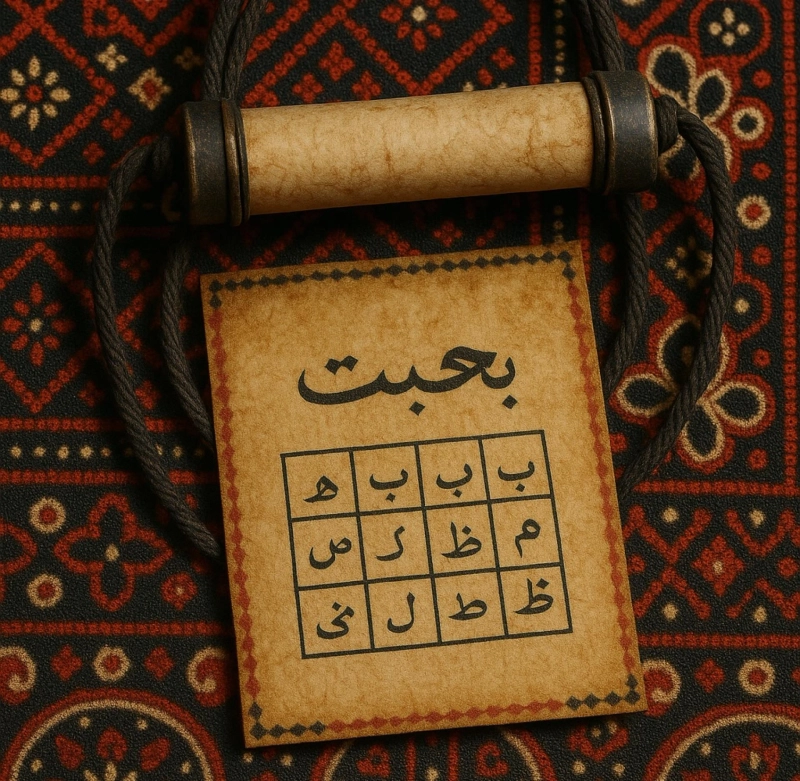
The term taweez refers to a written amulet intended to protect, influence, or support a desired outcome. Urdu lexica such as Rekhta define taʿwidh as a written charm containing Qur’anic verses or supplicatory formulas. Arabic dictionaries give the related form taʿwidh as “a protective written invocation,” while Persian usage similarly denotes an inscribed amulet used for supplication and safeguarding. Pashto linguistic resources record the form taweez with the same semantic field of “inscribed protective charm.” Hindi-language reference sources use the term to describe Islamic amulets employed for healing, fortune, or affective intentions. Collectively, these cross-linguistic definitions capture a stable South Asian understanding of the taweez as a ritual object combining text, materiality, and embodied practice.
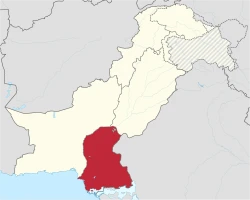
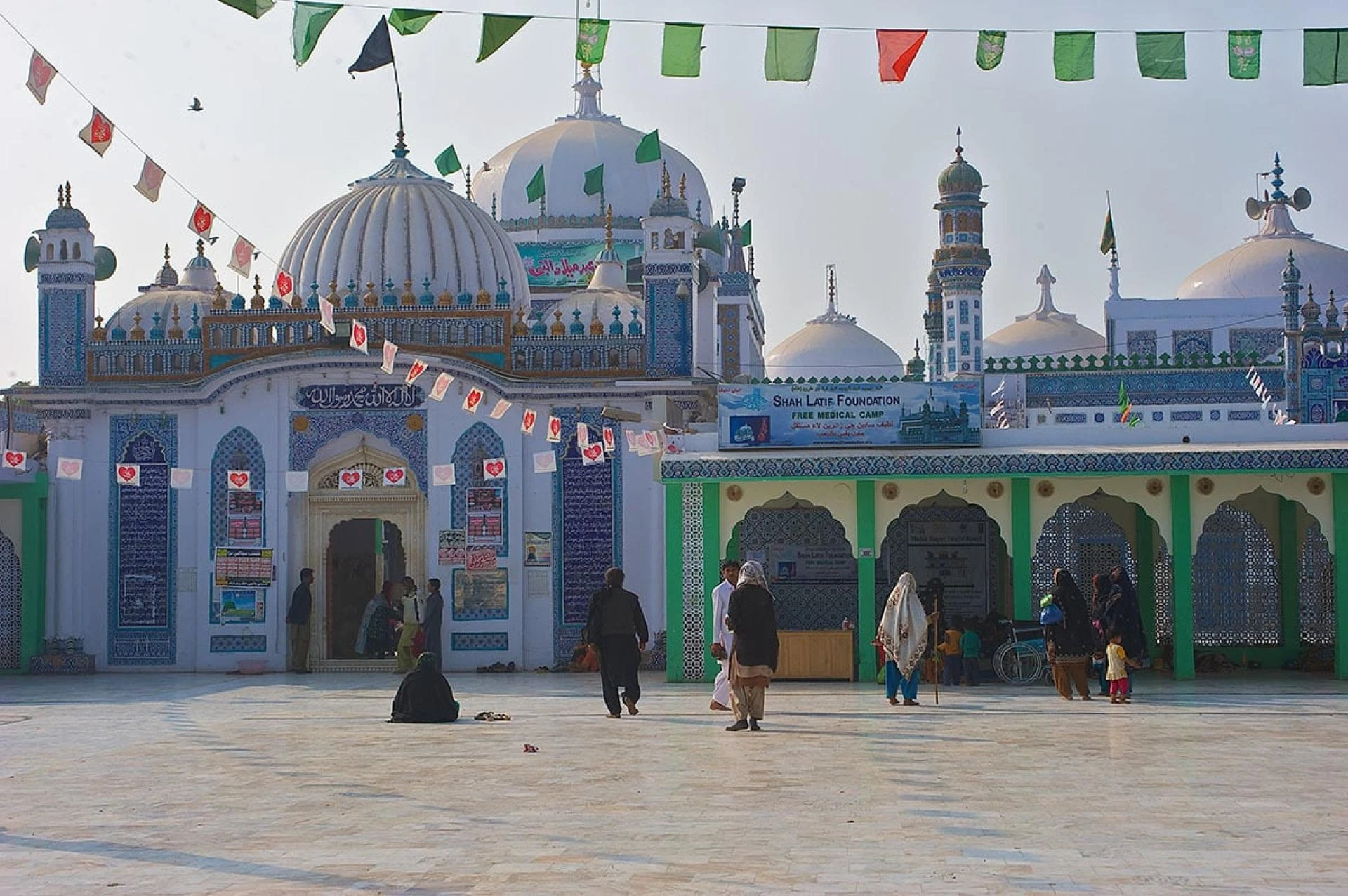
Within Sindh province in Pakistan, the use of taweez for love - amulets intended to secure affection, restore disrupted relationships, or navigate familial resistance is tightly embedded in folk-Islamic traditions and shrine-based ritual life. Major pilgrimage sites such as Sehwan Sharif and Bhit Shah function as authoritative centres where pirs, khalifas, and ritual specialists craft or prescribe taweez. Ethnographic works on Sindh’s Sufi landscape and regional social studies (ojs.ahss.org.pk) highlight how these shrines serve as nodes of emotional, spiritual, and social negotiation.
Sindhi Sufism, Shrines, and Everyday Intimacy
Scholarly work on Sindh consistently frames the province as one of the most influential centres of South Asian Sufism, where devotional practice, shrine authority, and everyday emotional life intertwine. Foundational analyses of the Sehwan Sharif complex describe the site as a “system,” rather than a single shrine, comprising ritual specialists, resident malangs, hereditary custodians, and highly mobile pilgrims. This system creates a ritual environment in which personal petitions, ranging from healing to affective dilemmas such as love, marriage, or reconciliation are embedded in repetitive, embodied practices such as dhamal, circumambulation, and votive offerings. These performances create what Boivin identifies as “shared emotional worlds,” within which amulet-seeking becomes a normalized and socially legible act.
Parallel accounts from AHSS (ojs.ahss.org.pk) that focus on rural social structures in Sindh emphasize the permeability between household tensions, kinship expectations, and the recourse to shrine-based problem-solving. The literature demonstrates that romantic difficulties frequently fall within the same moral-ritual category as disputes over livelihood, childbearing, or protection, meaning that love taweez are not treated as a special or marginalized practice but as part of broader repertoires of ritual troubleshooting. This perspective also aligns with STDC documentation of the Bhit Shah heritage complex, where the annual Urs draws large numbers of petitioners whose requests encompass emotional, relational, and familial concerns, indicating the depth of shrine-based authority in matters of intimacy.
Defining “Taweez for Love”: Terms, Materials, and Typologies
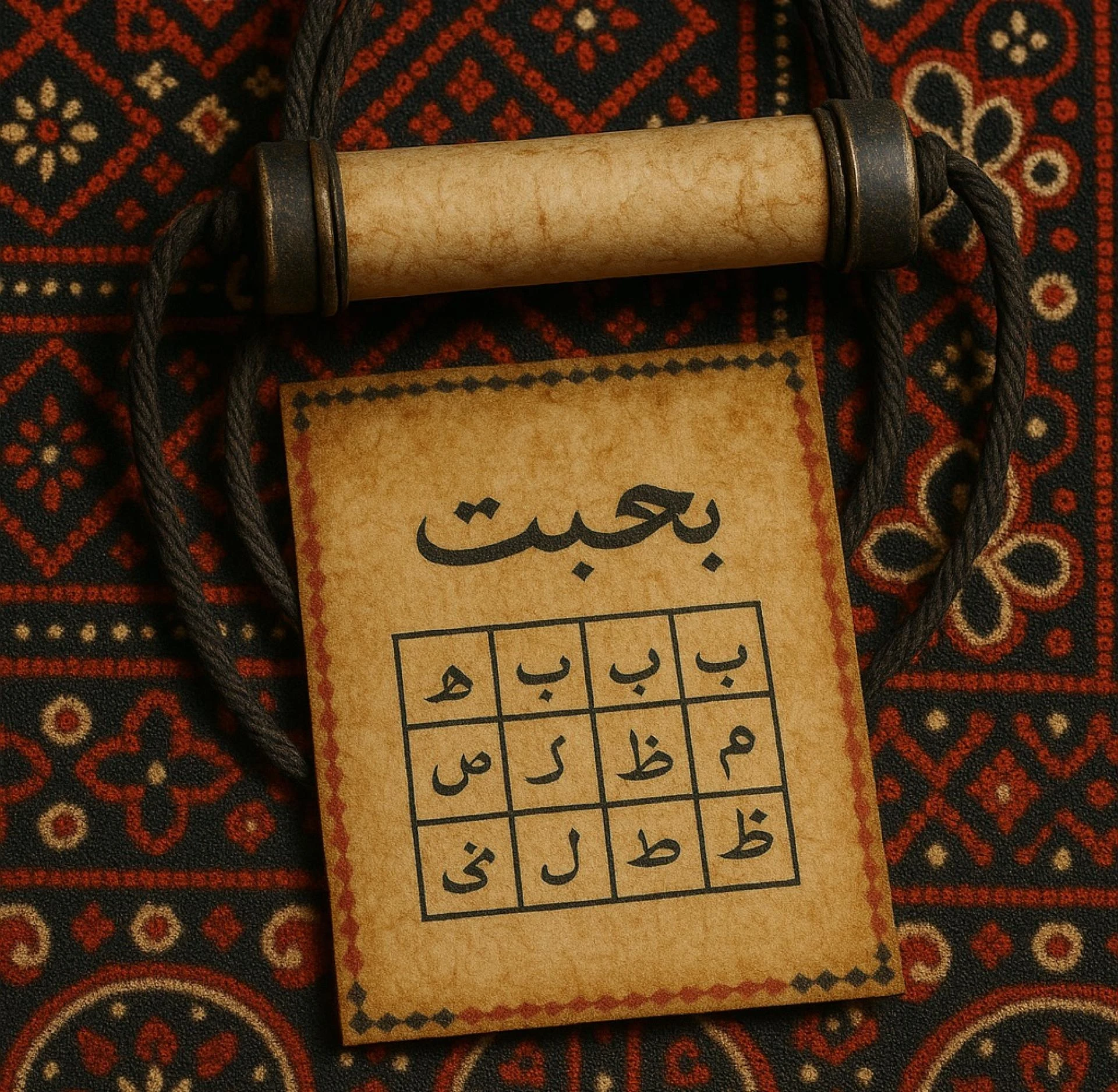
In Sindh province, the taweez for love constitutes a functional subcategory oriented toward emotional or relational outcomes such as restoring affection, prompting communication, or easing family resistance. General Urdu-language Sufi guidance materials describe a consistent material format: Qur’anic verses, Divine Names (asma al-husna), or short invocations written on paper, folded into geometric packets, and encased in cloth or metal. The textual content of “love” taweez does not differ structurally from other taweez categories; what distinguishes them is intent, the instructions given by the authorized scribe, and the social context in which they are requested.
Typologically, practitioners in Sindh differentiate among:
1. Protective taweez (general safeguarding),
2. Purposive taweez (including love, reconciliation, or marriage facilitation),
3. Restorative taweez (reuniting estranged partners).
Social Context: Love, Arranged Marriage, and Kinship in Sindh
Any analysis of taweez for love in Sindh province must begin with the marriage norms that shape the emotional and strategic landscape. Surveys by Gallup Pakistan consistently show that arranged marriages remain the dominant model nationwide, with “love marriages” forming a significantly smaller share. Although these surveys are national, they align with regional sociological observations from AHSS studies (ojs.ahss.org.pk), which describe rural Sindh as governed by strong kinship blocs, lineage expectations, and household-level decision-making. Within this structure, romantic choice is often constrained by family negotiations, caste boundaries, and the need to preserve the honor.
Medical and demographic research on consanguinity in Sindh which documents a meaningful proportion of intra-clan marriages reinforces the idea that marital decisions operate inside tight family circles. These patterns directly affect how individuals interpret emotional difficulty: a stalled romance, a parent’s refusal, or barriers between two households are not seen as private failures but as structural obstacles embedded in kinship obligations.
Within this social framework, the taweez for love emerges as a negotiating tool, not a purely esoteric solution. AHSS analyses of Sindhi social life show that people often seek parallel strategies: persuasion through elders, attempts to mobilize mediators, and, simultaneously, recourse to shrine-based ritual support. Shrine-perception studies referenced in the Sindh literature confirm that devotees approach pirs, khalifas, or shrine writers not because love is “supernatural,” but because institutionalized Sufi authority provides a culturally legitimate channel for addressing emotional conflicts that families may refuse to negotiate.
The Ritual Chain: From Request to Wearing
In Sindh province, the practical process through which a taweez for love is obtained follows a recognizable and socially codified sequence. Ethnographic accounts of Sehwan Sharif show that petitioners typically begin by entering the shrine precinct, performing salam at the saint’s tomb, and observing a short period of silent intention-setting. From there, most seekers approach a khalifa or a designated scribe known for handling relational petitions. Shrine-perception studies note that visitors often articulate their problem in precise social terms (parental refusal, emotional withdrawal, ongoing conflict) rather than in abstract spiritual language. This specificity guides the scribe’s choice of Qur’anic verses, Divine Names, or short invocations to be written.
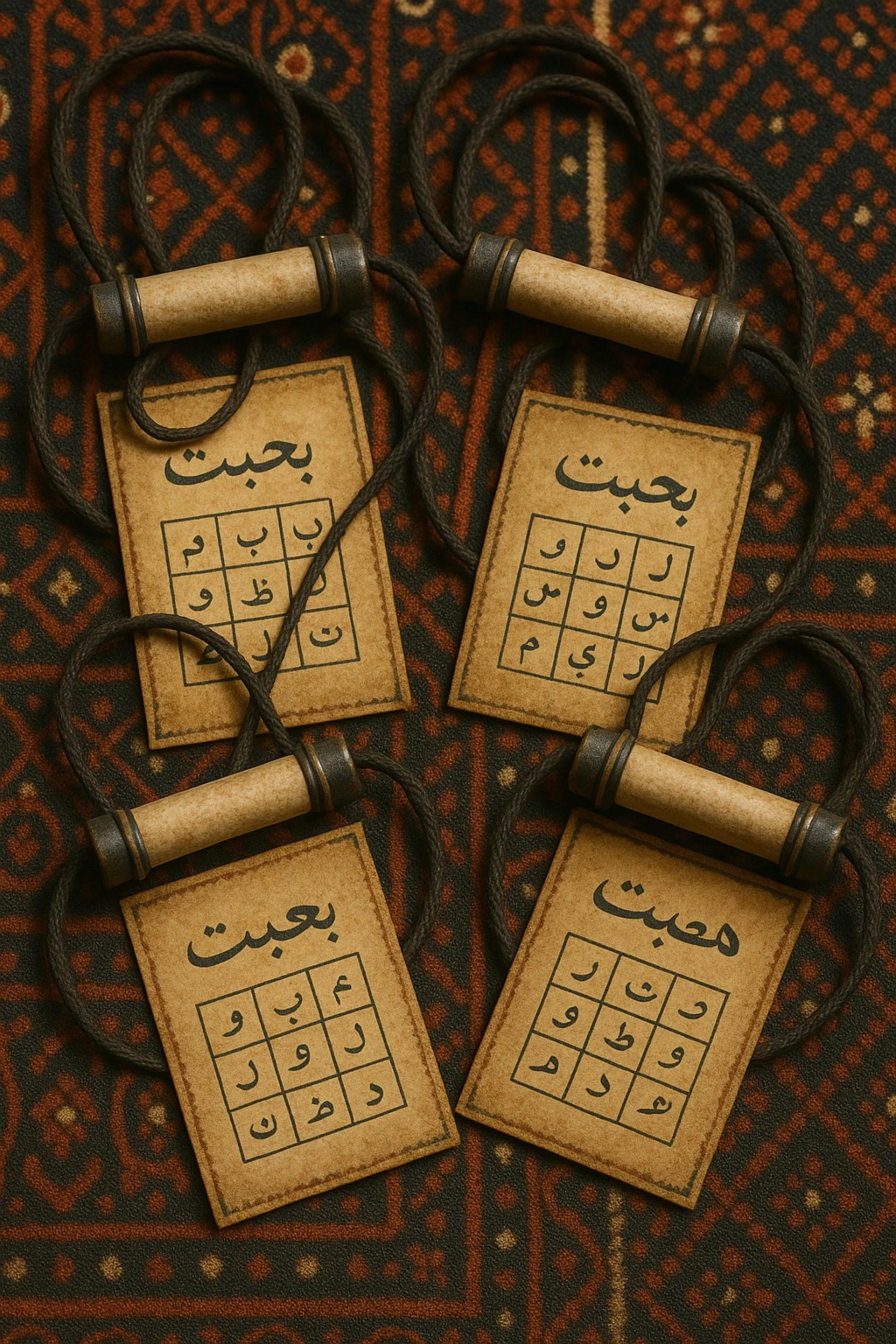
The production stage adheres to a stable regional format documented in general taweez primers and Urdu Sufi guidance materials: the scribe writes the selected text on paper, sometimes in a grid or repeat-pattern form; folds it into geometric shapes; and encloses it within cloth or a small metal case. The petitioner receives practical instructions - wearing the taweez over the heart, keeping it dry, avoiding impurity, and reciting accompanying prayers for several days.
In Sehwan, the ritual chain is frequently reinforced by embodied practices. Boivin’s observations and shrine descriptions (sanipanhwar.com) emphasize that petitioners often participate in dhamal or attend evening recitations, treating these as supportive acts that “open the heart” or strengthen intention. Offerings such as mannat pledges or small donations formalize the petition and establish a reciprocal relationship with the shrine.
By the time the taweez is worn, the seeker has moved through a multi-stage process that combines text, bodily practice, institutional authority, and personal narrative. In Sindh, this full sequence (not the amulet alone) is what constitutes the ritual efficacy of a taweez for love.
Gendered Demand and Ethics
Patterns of demand for taweez for love in Sindh exhibit clear gendered dynamics shaped by household authority and social expectations. Shrine-perception research from AHSS indicates that young men frequently seek taweez when they face obstacles in initiating or formalizing a relationship, particularly when a woman’s family refuses to consider the proposal or when communication between the pair has broken down.
For young women, the motivations differ. Dawn’s reportage on rural Sindh documents that many women approach shrines when they have little leverage within the family structure and cannot openly advocate for their preferences. In these cases, a love taweez becomes a culturally acceptable method of expressing desire while remaining within the parameters of propriety. AHSS materials note that widowed or divorced women may also request taweez to ease social stigma surrounding remarriage, which often requires negotiation of both emotional and reputational constraints.
Ethically, love taweez sit within an ongoing debate in Pakistan’s Islamic discourse. Urdu Sufi guidance sources commonly frame taweez as permissible only when used as supplication, not as coercion, and caution against excessive dependence on intermediaries.
Material Culture
Materially, studies of shrine practice cited in AHSS show that taweez in Sindh rely on a limited but symbolically stable set of components: paper of varying thickness, black or blue ink, carefully folded packets, and cloth or metal casings purchased from nearby stalls. In Sehwan, metal cases, often cylindrical or rectangular are prominently sold because they protect the amulet during participation in dhamal or other physically intense ritual activities, a detail noted in the shrine descriptions on sanipanhwar.com.
Rural AHSS fieldwork indicates that these markets extend beyond major centers: smaller darbars maintain local scribing economies that mirror the same structure - minimal payments, standardized materials, and reliance on recognized intermediaries. In all cases, the micro-economies surrounding taweez production highlight how ritual authority, material durability, and accessible pricing converge to make love taweez a widely attainable form of emotional problem-solving in Sindh.
Digital Mediation: YouTube, WhatsApp, and Scripted “Amals”
The circulation of love taweez in contemporary Sindh is increasingly shaped by digital platforms, where standardized ritual instructions (amals) are widely disseminated in Hindi, Urdu, and Pashto. Publicly accessible YouTube videos in these languages typically demonstrate the scribing process step by step: writing Qur’anic verses in grid form, repeating Divine Names, folding the paper into geometric packets, and reciting specific sequences of prayers. These demonstrations do not originate from Sindh’s major shrines, yet they strongly influence public expectations about what a “proper” taweez should look like.
Many Sindhi devotees arrive at Sehwan or Bhit Shah already familiar with these scripted online methods. As a result, petitioners often ask writers to reproduce formats they have seen on video, treating digital templates as authoritative. Some seekers even bring screenshots or handwritten transcriptions of an amal obtained through WhatsApp groups.
The role of digital mediation is therefore twofold. First, it standardizes ritual scripts, creating a shared visual and textual vocabulary for love-oriented taweez. Second, it extends the ritual chain beyond physical shrine space.
Efficacy and Evaluation
Evaluations of love taweez in Sindh revolve around two overlapping registers: devotional efficacy and social-technological effect. Linguistic usage notes preserved in Urdu lexica such as Rekhta document common idioms - kargar hona (“to become effective”) and dori chalna (“the thread begins to move”) that devotees use to describe perceived ritual success.
Shrine-perception research shows that devotees rarely attribute outcomes to the written text alone. Instead, they evaluate efficacy across multiple factors: the reputation of the scribe, the perceived baraka of the saint, adherence to the wearing instructions, and the alignment of personal effort with ritual practice. Petitioners commonly interpret partial progress: renewed contact, softened parental resistance, or a reduction in conflict as evidence that the taweez is “working,” even when final outcomes remain unsettled.
Constraints, Risks, and Contestations
While the taweez for love occupy a normalized place within Sindh’s shrine culture, they operate within a set of social and ethical constraints that shape how the practice is perceived and judged. Dawn’s reportage on rural Sindh notes that families may react negatively when they believe a young person has sought supernatural support to circumvent parental authority. Such backlash often arises in contexts where marriage decisions are tightly controlled by kinship elders.
Urdu Sufi guidance materials underline additional boundaries. They caution against using taweez in ways that might be interpreted as coercive—attempts to override another person’s agency are framed as ethically illegitimate, even when the intention is reconciliation. These sources emphasize that legitimate petitionary use must remain rooted in supplication and self-correction.
Legal and medical limits also appear in public discourse: when cases involve harassment, stalking, or severe emotional distress, taweez are viewed as insufficient or inappropriate substitutes for interpersonal accountability or professional intervention.