



Starting a meal plan for weight loss can feel overwhelming when you’re surrounded by endless advice. One source tells you to cut carbohydrates, another warns against fats, while others insist on tracking every calorie you eat. Most people, however, are not searching for strict rules or complicated systems. They want a simple, healthy way to eat that fits into daily life and supports weight loss without pressure.
This guide is designed for anyone looking for a realistic approach to healthy eating. You don’t need expensive ingredients or time-consuming recipes. Success comes from eating balanced meals, following a clear routine, and building small habits that lead to lasting results.
Why Planning Meals Works Better Than Chasing Diet Trends
Many diet trends fail because they are difficult to sustain over time. They often eliminate familiar foods or demand drastic changes that don’t match real lifestyles. Meal planning offers a more flexible solution. It provides structure while still allowing choice. When meals are planned ahead, decision-making becomes easier, portion sizes are more controlled, and hunger levels stay steady. This reduces overeating and limits unhealthy snacking.
What Makes a Meal Plan Truly Healthy
A healthy eating plan is not about eating as little as possible. It’s about choosing the right foods in balanced amounts. A well-rounded meal usually includes protein, whole grains, healthy fats, vegetables, and fruit. Together, these foods help you feel full, support energy levels, and prevent sudden cravings during the day.
Building a Simple and Sustainable Daily Routine
Keeping meals straightforward makes healthy eating easier to maintain.
Breakfast
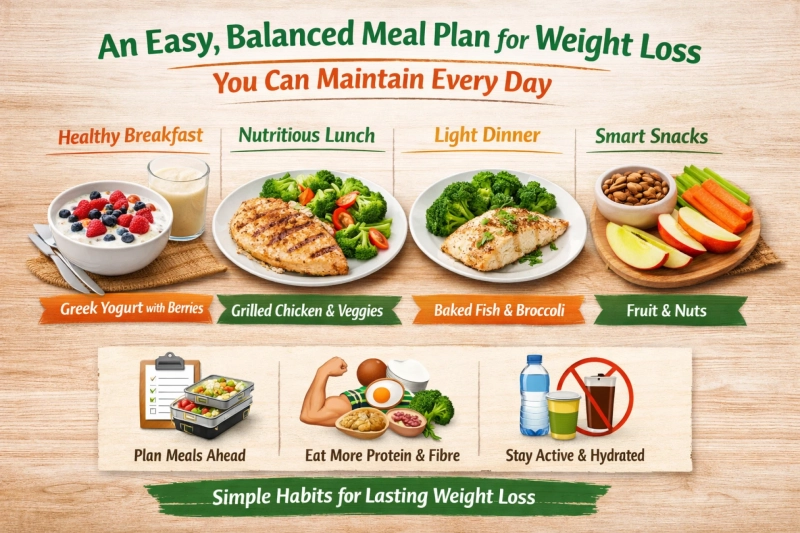
A protein-rich breakfast helps prevent hunger later in the morning. Good options include oats with fruit, boiled eggs with whole-grain toast, Greek yoghurt with berries, or a smoothie made with oats and banana.
Lunch
Lunch should provide both nourishment and energy. Meals such as grilled chicken with vegetables, chickpea-based salads, tuna sandwiches with fresh greens, or tofu stir-fries offer fibre and keep you satisfied for hours.
Dinner
Dinner should feel light yet filling. Baked fish with vegetables, vegetable soups, paneer-based salad bowls, or simple chicken stir-fries are ideal choices that won’t leave you feeling heavy.
Snacks
Healthy snacks help control hunger between meals. Fruits, yoghurt, nuts, and raw vegetables are far better options than fried or sugary snacks that add little nutritional value.
Staying on Track with a Busy Schedule
A packed routine often makes healthy eating challenging. Preparing food in advance can make a big difference. Washing and chopping vegetables ahead of time, cooking grains in batches, and keeping quick foods like eggs, fruit, and yoghurt readily available can help you stay consistent. Planning meals the night before, drinking enough water, and avoiding skipped meals also support better eating habits.
The Role of Protein in Weight Loss
Protein is essential for effective weight loss. It helps you stay full for longer, supports muscle maintenance, and boosts metabolism. Including a protein source in every meal—such as chicken, fish, eggs, tofu, beans, lentils, or Greek yoghurt—can significantly improve progress over time.
Why Fibre Should Not Be Ignored
Fibre plays an important role in digestion and appetite control. It helps reduce bloating and keeps you satisfied without adding many calories. Vegetables, fruits, whole grains, and legumes are excellent sources of fibre and should be a regular part of your daily meals.
Healthy Eating Without Feeling Deprived
Eating well does not mean giving up all your favourite foods. The key is balance and portion control. Enjoy treats occasionally, serve smaller portions, and replace sugary drinks with water or herbal teas. Choosing healthier cooking methods—such as grilling or baking instead of frying—and adding more vegetables to meals can improve nutrition without feeling restrictive.
A Simple One-Day Meal Example
Here’s an easy sample day you can follow:
- Breakfast: Greek yoghurt with berries
- Lunch: Grilled chicken with brown rice and vegetables
- Snack: A piece of fruit or a small handful of nuts
- Dinner: Baked fish with steamed broccoli
Small Habits That Lead to Long-Term Success
Simple lifestyle habits can strongly support your progress. Eating slowly, controlling portion sizes, getting enough sleep, staying physically active, and cutting down on sugary drinks all help your body respond better to your meal plan.
Final Thoughts
Weight loss does not have to be stressful or complicated. When you follow a clear routine, focus on whole foods, and build habits you can maintain, results come naturally and steadily. Meal planning is not a short-term solution—it’s a sustainable way to support your health over time.
With consistency and patience, reaching your goals becomes more achievable. And if you’re looking for a clear starting point, choosing a meal plan to lose weight is one of the most effective ways to begin.