


South Florida heat is relentless, and without a robust thermal barrier, maintaining a comfortable indoor temperature becomes a constant, expensive battle. Many property owners find their HVAC systems running continuously yet never achieving consistent cooling, leading to skyrocketing energy bills and humidity issues that threaten structural integrity. The solution lies in upgrading the building envelope with advanced materials that seal air leaks, block moisture, and drastically reduce heat transfer, transforming energy-inefficient structures into climate-controlled sanctuaries.
The Superior Solution for Wellington's Climate
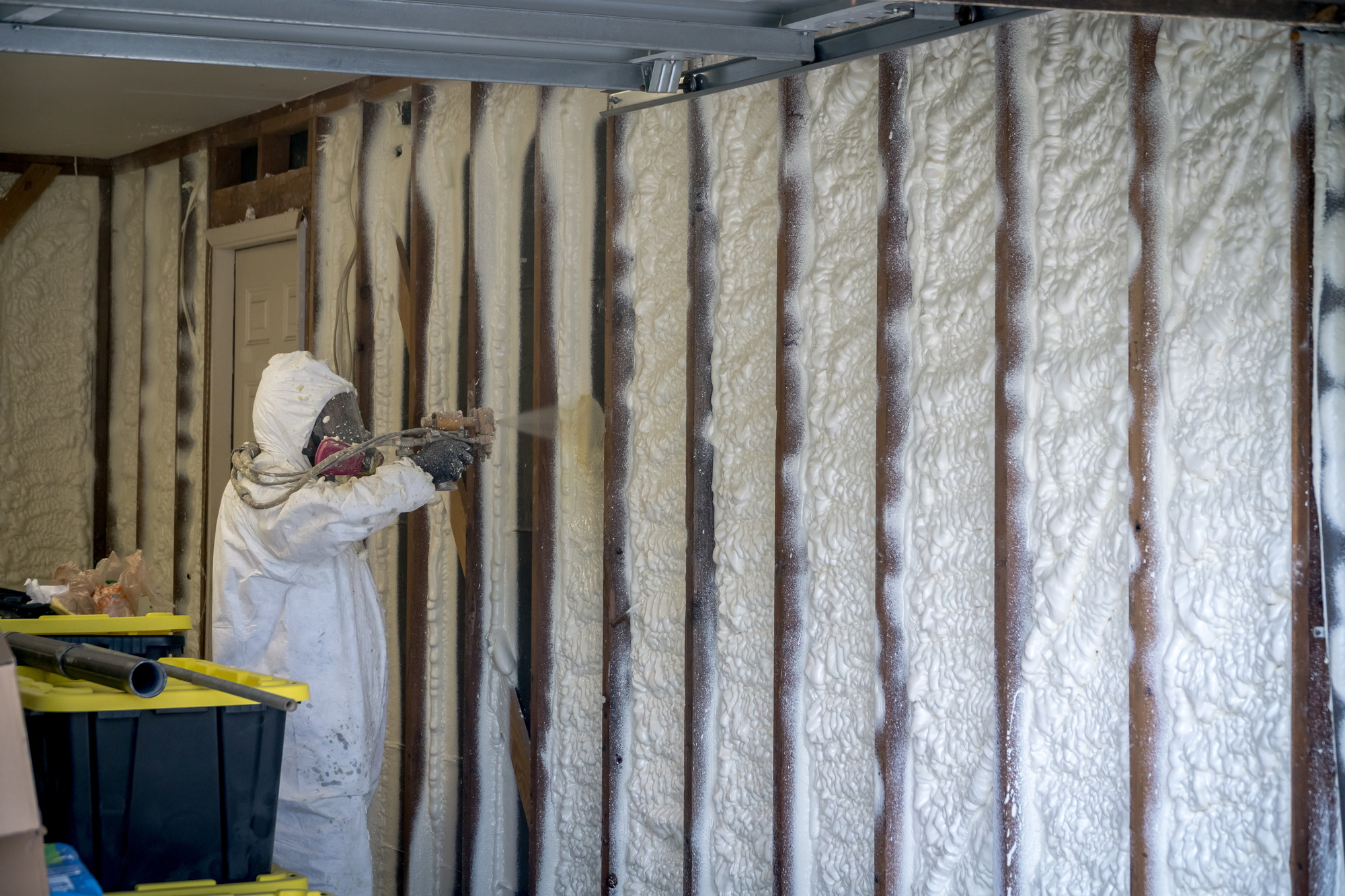
In the unique climate of standard spray foam insulation in Wellington, FL, materials often fall short in high-humidity, intense-solar-radiation environments. We provide a comprehensive solution that addresses these specific environmental challenges through precision-applied spray foam technology. By creating an airtight seal, we eliminate the gaps and cracks where conditioned air escapes and hot, humid air infiltrates.
Why Traditional Insulation Fails Here
Fiberglass and cellulose have been industry standards for decades, but they possess inherent weaknesses when utilized in tropical climates. These materials function like a wool sweater; they slow down heat but allow air to pass through. Over time, fiberglass sags, settles, and absorbs moisture, which reduces its R-value and creates breeding grounds for mold. Our approach utilizes spray polyurethane foam (SPF), which adheres directly to the substrate and expands to fill every crevice. This prevents the "stack effect," where hot air entering the attic forces cool air out of the living space, ensuring the thermal barrier remains intact for the lifespan of the building.
The Science of the Thermal Envelope
Creating a true thermal envelope requires more than just high R-value; it requires air sealing. Heat travels through conduction, convection, and radiation. While most insulation addresses conduction, spray foam is unique because it also stops convection (air movement). By sealing the building envelope, we reduce the workload on cooling systems. This results in immediate energy savings and a noticeable reduction in the wear and tear on mechanical systems.
Our Core Services Include:
- Residential spray foam insulation
- Commercial spray foam insulation
- Closed-cell spray foam
- Open-cell spray foam insulation
- Attic insulation
- New construction insulation
- Metal building insulation
- Pole barn insulation
- Agricultural insulation
- Insulation removal
Comprehensive Residential and Commercial Applications
Spray foam is not limited to residential attics; its versatility makes it the premier choice for a wide range of structures, from commercial warehouses to agricultural facilities. We tailor our application methods to suit the specific architectural and functional needs of each property, ensuring maximum efficiency and structural protection.
Transforming Residential Comfort
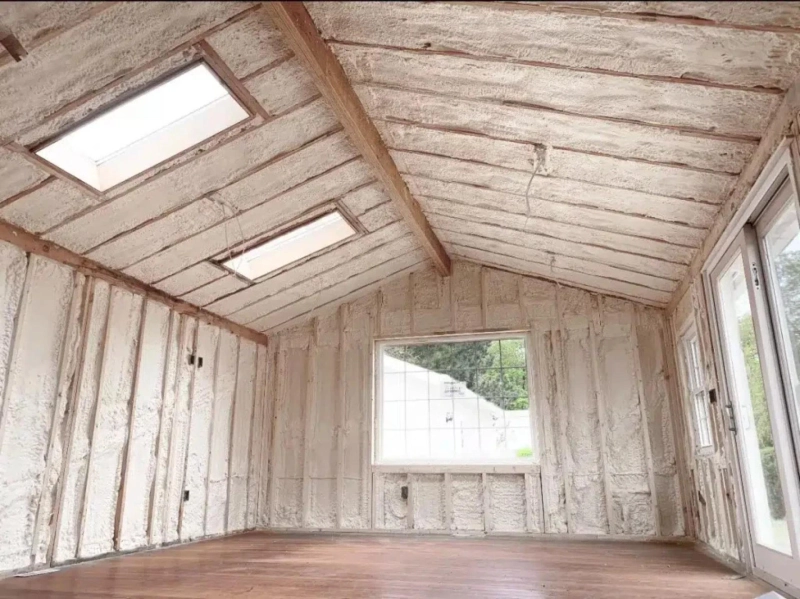
For homeowners, the attic is usually the primary source of heat gain. By applying foam to the underside of the roof deck, we bring the attic space into the conditioned envelope of the home. This process, known as an unvented attic assembly, prevents ductwork located in the attic from sweating and losing energy. Beyond the attic, we treat crawl spaces and exterior walls to ensure a continuous barrier against pollutants, allergens, and moisture.
Commercial and Agricultural Efficiency
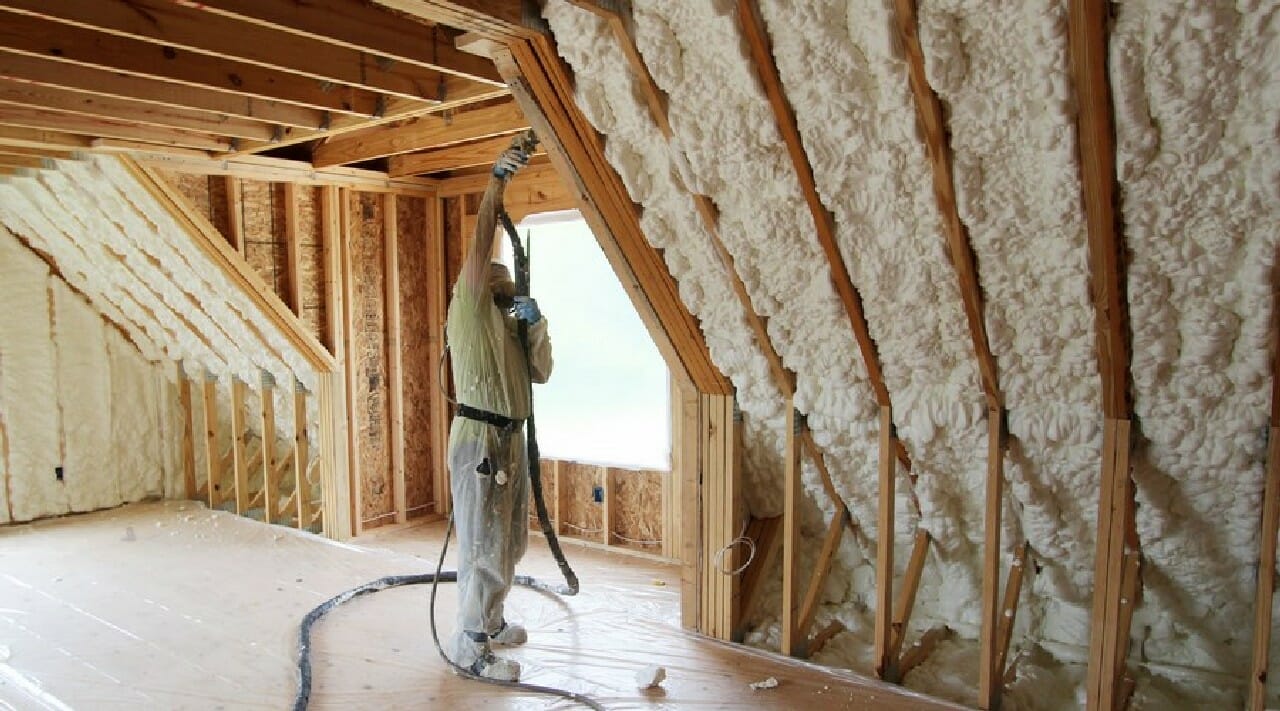
Commercial properties, particularly metal buildings and pole barns, face distinct challenges regarding condensation and temperature fluctuation. Metal conducts heat rapidly, making these structures unbearable in the summer and prone to "raining" interior condensation in the winter or during high humidity. We apply specialized spray foam that bonds aggressively to metal surfaces, stopping condensation immediately and adding rigidity to the structure. This is vital for agricultural facilities where temperature control is necessary to protect livestock, equipment, or stored crops.
Addressing Metal Building Condensation
Condensation occurs when warm, moist air hits a cool surface. In metal buildings, this can lead to rust, corrosion, and inventory damage. Closed-cell foam is particularly effective here as it acts as both insulation and a vapor retarder. It creates a seamless monolith that separates the interior air from the metal cladding, eliminating the dew point occurrence on the interior surfaces.
Open-Cell vs. Closed-Cell Foam: Making the Right Choice
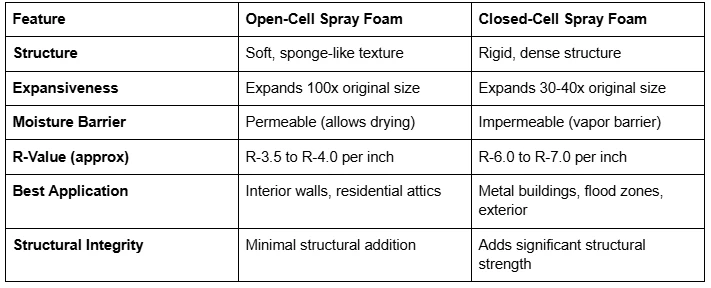
Understanding the difference between open-cell and closed-cell foam is critical for project success. Both provide excellent insulation, but they have different physical properties and ideal applications. We guide property owners through this selection process based on their specific goals and building requirements.
When to Choose Closed-Cell
Closed-cell foam is the heavy lifter of the insulation world. Its high density and water resistance make it the mandatory choice for flood zones, exterior applications, and metal buildings. Because it is rigid, it actually strengthens the walls and roof deck, offering increased resistance to wind uplift—a valuable feature during Florida's storm season.
Advantages of Open-Cell
Open-cell foam is an excellent, cost-effective solution for residential attics and interior wall soundproofing. Because it expands so significantly, it easily fills complex framing cavities and irregular shapes. It allows for bi-directional drying, meaning if a roof leak occurs, the water can eventually pass through rather than getting trapped against the wood decking, allowing the leak to be detected and repaired.
The Long-Term Economics of Energy Efficiency
Investing in premium insulation is one of the few home improvements that pays for itself over time. While the upfront investment is higher than traditional materials, the reduction in operational costs provides a clear return on investment (ROI). We help clients view insulation not as a construction expense, but as a long-term financial asset.
Reducing HVAC Load and Maintenance
When a home or building leaks air, the HVAC system must work harder to maintain the set temperature. This constant cycling shortens the lifespan of the unit and increases the frequency of required repairs. By sealing the envelope, we allow the HVAC equipment to run shorter, more efficient cycles. This extends the life of the mechanical systems and often allows for smaller, less expensive units to be installed when replacement is necessary.
Increasing Property Value and Marketability
Energy efficiency is a top priority for modern buyers. A property with documented low energy costs and a sealed thermal envelope commands a higher market price. Certification of spray foam installation serves as proof of a high-performance building, differentiating the property in a competitive real estate market.
Common Questions Regarding Insulation Upgrades
Does spray foam insulation cause roof rot in Florida homes?
No, when applied correctly by experienced professionals, spray foam does not cause roof rot. In fact, by preventing humid air from condensing on the roof deck, it often protects the wood better than vented assemblies, provided the roof shingles are in good condition.
Is spray foam safe for my family and pets?
Yes, spray foam is safe once it has fully cured and off-gassed. We utilize modern, high-quality formulas and adhere to strict ventilation protocols during application to ensure the environment is safe for re-entry, typically within 24 hours.
Can spray foam be applied over existing insulation?
Generally, we recommend removing old, soiled, or settled insulation before applying spray foam. This allows us to inspect the substrate for damage, ensure proper adhesion of the new foam, and eliminate any allergens or pests trapped in the old material.
Securing Your Property Against the Elements
A well-insulated building is the foundation of energy independence and indoor comfort. Upgrading to spray foam insulation addresses the root causes of energy loss rather than just treating the symptoms. It provides a permanent solution that withstands the humid, hot environment of Wellington, ensuring that your property remains cool, dry, and structurally sound for decades. Taking action to seal the building envelope today prevents wasted capital on utility bills and protects the long-term value of the asset.
Upgrade Your Insulation Standard Today
Efficiency is not just about saving money; it is about creating a healthier, more sustainable living and working environment. All In Overhall is dedicated to delivering performance-driven results with honesty and precision. We transform properties into efficient powerhouses, ensuring every inch of space is optimized for comfort.
Take control of your energy costs and comfort. Call (561) 406-3835
FAQs
How long does the off-gassing process take before we can re-enter the property?
Most modern spray foam products require a re-entry period of 24 hours to ensure all volatile organic compounds have dissipated. We utilize high-velocity ventilation during the curing process to ensure the air quality is perfectly safe for occupants and pets upon return.
Does spray foam insulation attract pests or termites?
Spray foam does not provide a food source for rodents or termites, and unlike fiberglass, it does not offer loose nesting material. However, it is not a pesticide; we recommend leaving a small inspection strip near the foundation for termite professionals to monitor activity.
What is the difference in sound dampening between open-cell and closed-cell foam?
Open-cell foam is superior for sound attenuation because its softer, sponge-like density absorbs sound waves and reduces reverberation through walls. Closed-cell foam is denser and reflects sound, making it less effective for soundproofing media rooms or bathrooms but excellent for blocking exterior noise.
Will I need to upgrade my HVAC system after installing spray foam?
You typically do not need to upgrade; in fact, you may need to downsize your HVAC equipment or install a dehumidifier. Because the home becomes airtight, the cooling load decreases significantly, and an oversized unit may cool the house too quickly without removing enough humidity.
How does insulation removal work if I have old blown-in fiberglass?
We utilize high-powered industrial vacuums located outside the home, connected by large hoses running to the attic, to suction out old fiberglass or cellulose. This process removes dust, rodent droppings, and contaminated material safely without circulating it through the living space.
Author: Richard Hall founded ALL IN OVERHALL, Your Local Spray Foam Insulation Company in Jupiter, FL, on January 3, 2022, to offer honest and reliable insulation services across South Florida. He focuses on clear communication and careful workmanship to improve comfort and reduce energy costs. His team helps homeowners and businesses create spaces that stay cooler and more efficient year-round.
Reviewer: Lucas Mitchell has 6 years of experience in spray foam insulation. He reviewed this article and helped refine the ideas to strengthen the brand's presence and reach homeowners seeking reliable insulation.