



Online threats are a major concern for e-commerce businesses, especially with more people shopping and interacting with one another online.
Artificial intelligence (AI) has had a major impact on the digital identity verification world. It’s making online identity verification more secure, easier, and less expensive for everyone by using advanced data analytics, finding patterns, and making accurate predictions.
AI identity verification software, for example, is capable of performing tasks that traditionally relied on human intelligence.
Its problem-solving abilities and capacity for learning outshine more traditional verification methods such as usernames, passwords, and security questions. AI performs a thorough analysis to ensure the user\'s identity with greater depth and accuracy.
Curious to learn about how AI is transforming digital identity verification?
Join us today for an in-depth look into the workings of AI-powered digital identity verification and the major impact it has on online business.
How Is AI Used in Digital Identity Verification?
AI is important for verifying digital identities and plays an important role in many areas.
To gain a deeper understanding of its importance, let\'s look at the key components used in AI verification:
Machine learning
Machine learning is a subset of AI. It uses data and algorithms to allow software applications to learn and adapt to new data and patterns without the need for explicit programming.
By using large databases and advanced algorithms, machine learning can spot patterns and anomalies that suggest fraud. This helps businesses quickly catch and stop fraudulent transactions in real-time.
Facial recognition
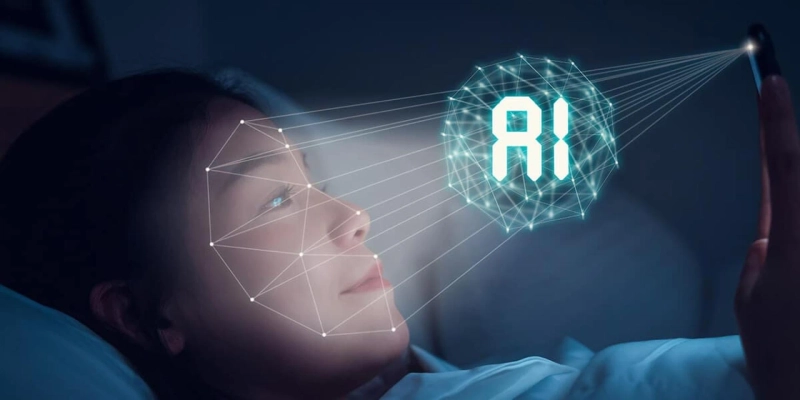
Facial recognition is a great biometric tool that uses AI algorithms to analyze facial features in real-time.
They are compared against a database of known faces to accurately verify an identity. The facial recognition system has the ability to accurately identify unique patterns and features, even capturing the tiniest changes.
In addition to being contactless and convenient, this technology can detect inconsistencies in movement and facial features in deepfakes and presentation attacks.
Fingerprint scanning
A fingerprint scanner is a widely used biometric security device that captures the unique ridges and valleys of a user\'s fingertip.
Al algorithms notice tiny details on the fingertips that humans may not be able to see. AI systems can generate highly accurate representations of a fingerprint by examining ridge endings, bifurcations, and crossovers.
Voice biometrics
This technology consists of analyzing a user’s unique voice characteristics, such as their accent, pitch, speech rhythm, and tone, to verify their identity.
It is particularly useful for remote or mobile identity verification. Other common uses include confirming a user’s identity during a phone chat with a customer service representative.
Liveness detection
Liveness detection is the process of identifying potential spoof attempts by distinguishing between a live person and a fake representation in a biometric sample source.
Advanced detection algorithms analyze subtle facial movements, like blinking and head rotation, to determine the authenticity of a face, preventing spoofing attempts.
This technology serves as a major defense, preventing attackers from deceiving biometric systems with static images, videos, or masks of the user.
Optical character recognition
Optical Character Recognition (OCR) is a technology designed to identify text within images, such as photos and scanned documents. Its purpose is to turn essentially any image containing written text into machine-readable text data.
OCR plays a major role in extracting and confirming information from documents such as passports, driver\'s licenses, and other ID documents. This ensures the verification of an individual\'s identity.
To verify accuracy, AI algorithms analyze the text extracted through OCR. They then cross-reference this information with other data sources to confirm and validate the individual’s identity.
What Are Fraud Prevention Use Cases for AI Digital ID Verification?
AI digital ID verification is an essential tool in safeguarding against fraud in a variety of areas, including the following:
- Account fraud: To avoid dealing with account takeovers and fraudulent transfers, AI oversees account activity to detect unauthorized access, suspicious transfers, or a shift in transaction habits.
- Online gaming: AI analyzes user behavior patterns, detecting anomalies linked to unauthorized access. This prevents attackers from entering accounts. AI uses facial analysis to determine a gamer\'s age. Doing this limits access to age-inappropriate content and makes sure minors are protected from unsuitable material.
- Ecommerce: AI-powered verification helps online businesses stay safe from fraud. It looks at customers\' behavior, buying history, and transaction data to spot any suspicious activity. AI also checks for unusual patterns in returns that could be linked to fraud or people abusing return policies.
- Government services: Artificial intelligence can confirm the identities of individuals seeking government benefits or using government services. Through the analysis of tax return data, AI can detect any suspicious activities or inconsistencies that may indicate tax evasion or fraudulent submissions.
- Insurance claims: AI plays an important role in detecting fraudulent insurance claims by analyzing data for inconsistencies and detecting unusual patterns, such as frequent claims. By automating this process, the risk of human errors is significantly reduced.
- Healthcare: Artificial intelligence performs a claims data analysis to identify patterns linked to potentially fraudulent activities, such as detecting suspicious billing patterns and identifying duplicate claims. It also plays a major role in reducing medication errors and ensuring the accurate dispensing of prescriptions.
- Travel and hospitality: AI transforms the check-in process by using facial recognition technology, eliminating tedious paperwork, and significantly reducing waiting times. Guests can have a convenient and hassle-free experience.
Key Benefits of AI Digital Identity Verification
AI-powered digital identity verification offers major benefits for businesses and customers, ensuring a secure and user-friendly experience.
Here are some of them:
- Fraud reduction: Fraud detection systems powered by AI have the ability to analyze massive volumes of data and identify any anomalies that may be related to fraudulent behavior. The outcome of this advanced technology is the prevention of unauthorized access to accounts, synthetic identity fraud, and fraudulent transactions.
- Save money: Due to the automated processes of AI, there\'s no need for extensive manual verification, data entry, and risk assessment. Because AI makes fewer mistakes than humans, there are fewer errors and less need to redo things. This saves time and money that would have been spent on labor.
- Easier verification process: Automation eliminates the need for manually checking new users\' documents. Users don\'t have to go through complicated processes or wait for manual verification, making it convenient without sacrificing security.
- Seamless onboarding: Artificial intelligence simplifies onboarding for new users by automatically verifying their identities and documents. This eliminates the need for manual checks and reduces delays. With AI enabling biometric verification, such as facial recognition, users enjoy a more user-friendly experience.
- Better compliance: AI automates KYC and AML checks, improving regulatory compliance and eliminating fraud. AI\'s integration into compliance management allows businesses to proactively prevent fines and penalties.
Conclusion
In this digital-heavy world, businesses should know how AI impacts verifying digital identities. AI can quickly check large amounts of data and offer top-notch security, making it likely that more people will use AI to safeguard personal information. This makes it crucial for businesses to learn how to use AI effectively in their processes and systems. The possibilities of AI are endless, and by understanding its benefits, we can make sure that identities remain safe.