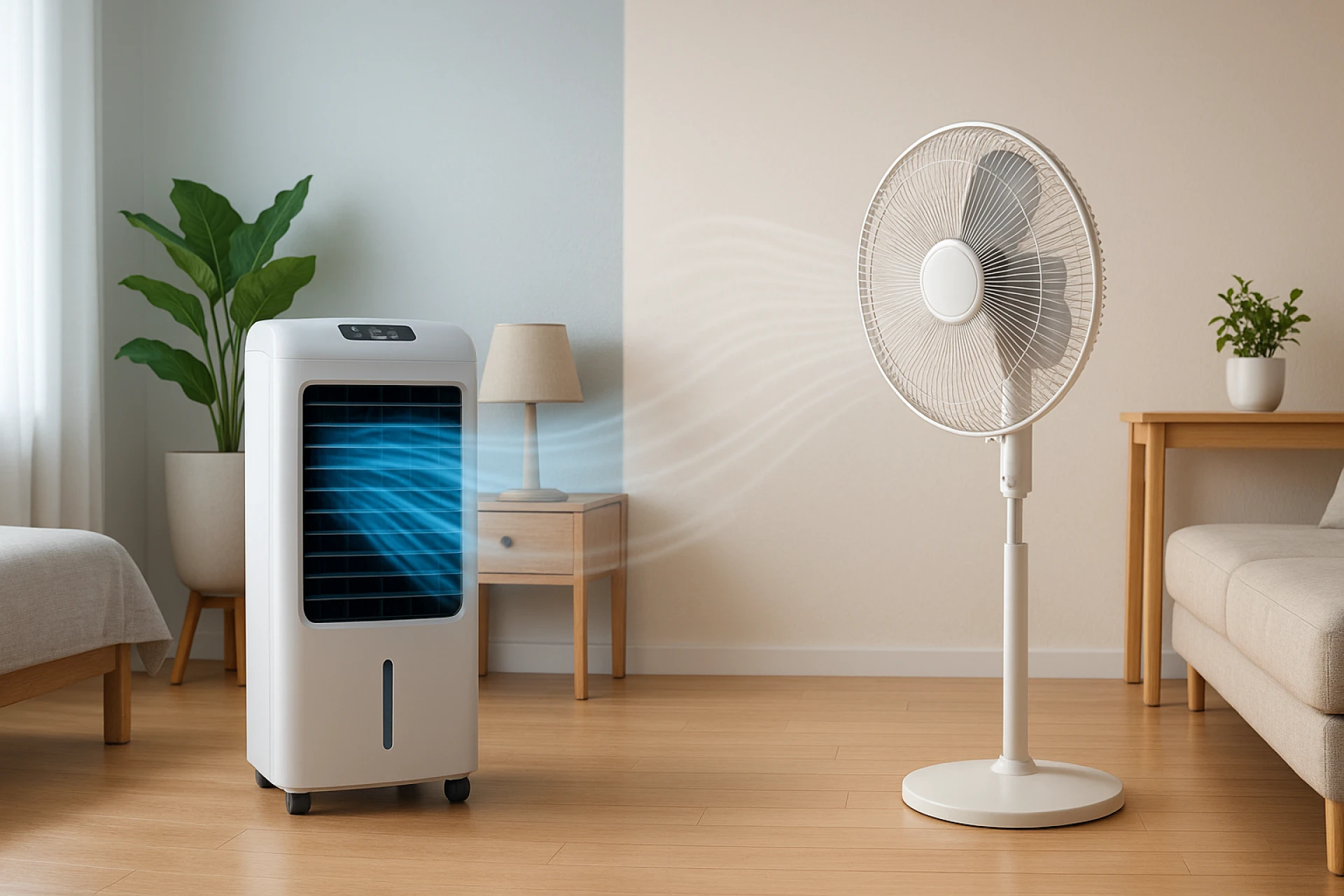
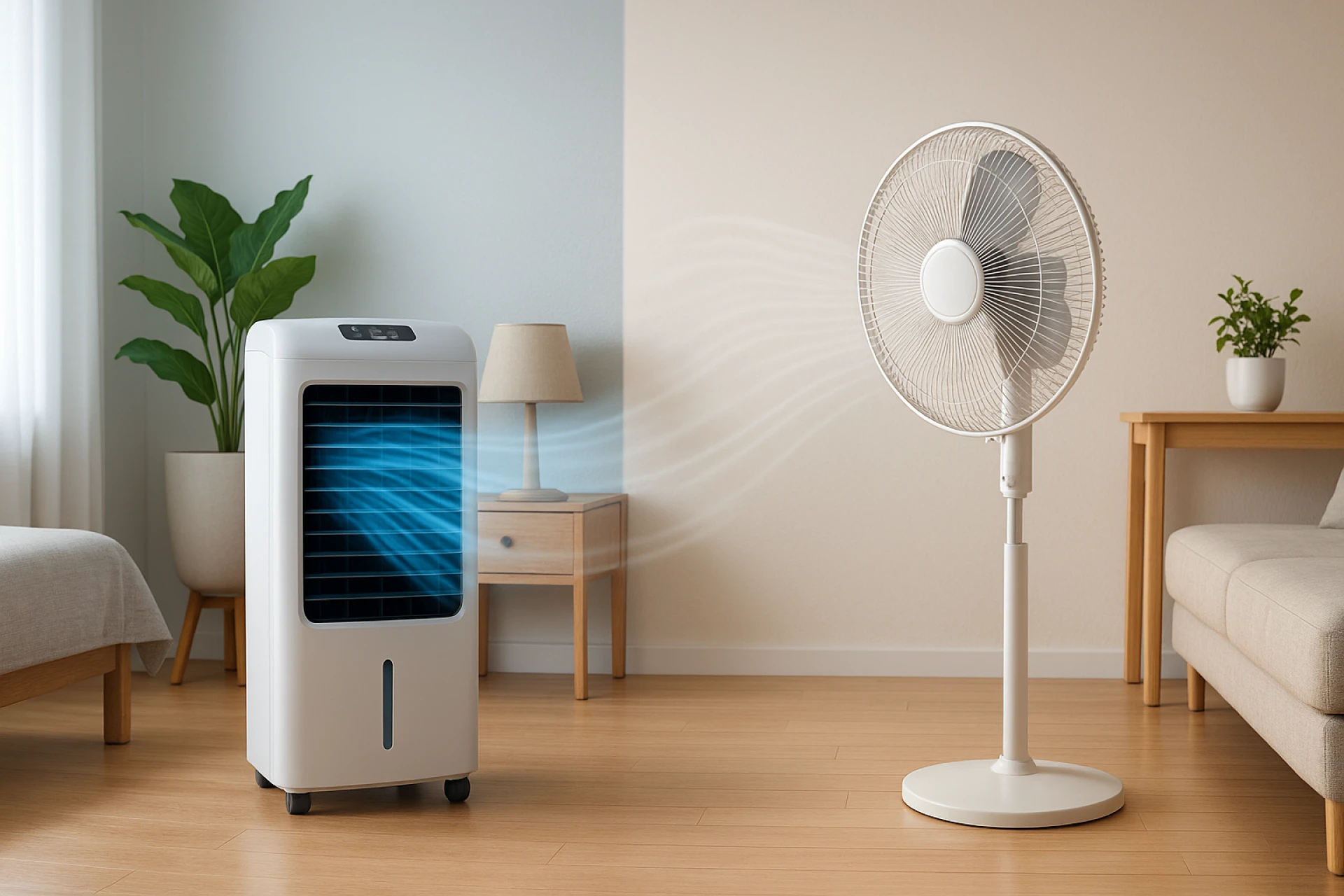
With rising summer temperatures and increasing electricity costs, many households, tenants, students, and small businesses are searching for cooling solutions that deliver comfort without straining their budgets. While air conditioners provide powerful cooling, their high purchase price and electricity consumption make them impractical for many users. As a result, air coolers and fans remain the most popular budget-friendly cooling options. Both have their own advantages and limitations, and choosing the right one depends on factors such as climate, room size, usage pattern, and comfort expectations. Understanding how air coolers and fans differ helps buyers make a smarter, more cost-effective decision while buying.
How Air Coolers Work
Air coolers operate on the principle of evaporative cooling, where warm air passes through water-soaked cooling pads and loses heat through evaporation. This process lowers the temperature of the air before it is circulated into the room. Air coolers use water, a fan, and cooling pads to provide natural cooling while continuously drawing in fresh air from outside. Because they rely on ventilation, air coolers improve air circulation and reduce the feeling of stuffiness. This makes them especially suitable for homes that need both cooling and fresh airflow.
How Fans Work
Fans work by circulating air within a room without actually reducing the temperature. They create a wind-chill effect that makes people feel cooler by increasing the evaporation of sweat from the skin. Common household fans include ceiling fans, pedestal fans, table fans, and wall-mounted fans. While fans are simple, affordable, and consume very little electricity, their effectiveness reduces significantly in extreme heat. Since fans only move existing air, they become less comfortable when room temperatures rise too high.
Cooling Performance Comparison
When comparing cooling performance, air coolers clearly offer an advantage over fans. Air coolers can reduce room temperature by several degrees, especially in hot and dry climates, providing noticeable relief during peak summer. Fans, on the other hand, do not reduce temperature and only provide comfort as long as the surrounding air is not excessively hot. In small and medium rooms, air coolers deliver more consistent comfort, while fans may feel ineffective during extreme heat conditions.
Electricity Consumption & Energy Efficiency
Fans consume very little electricity, typically between 50 to 90 watts, making them the most energy-efficient option in terms of power usage. Air coolers consume more electricity than fans, usually ranging from 120 to 250 watts, depending on size and motor type. However, air coolers still consume far less power than air conditioners and offer significantly better cooling performance than fans. When considering comfort per unit of electricity, air coolers provide a better balance between energy efficiency and cooling effectiveness.
Initial Cost & Long-Term Expense
Fans have the lowest upfront cost, making them attractive for users with very tight budgets. Air coolers cost more initially but remain affordable compared to air conditioners. Over the long term, air coolers offer better value because they provide actual cooling while still keeping electricity bills low. Maintenance costs for air coolers are minimal and mainly involve water usage and occasional cleaning. Fans have almost no maintenance cost, but their limited cooling capability may push users to upgrade later.
Comfort, Air Quality & Health Impact
Air coolers improve indoor air quality by continuously bringing in fresh air and maintaining natural humidity levels. This reduces dryness in the skin, eyes, and throat, which is common in hot weather. Fans can increase dryness and discomfort during extreme heat, especially when used for long hours. In dusty environments, fans tend to circulate dust particles, while air coolers help settle dust due to moisture in the air. However, in very humid conditions, air coolers may feel less effective if not used properly.
Suitability for Different Room Sizes & Climates
For small rooms, both fans and air coolers can work, but air coolers offer better comfort during hot summers. Medium rooms benefit more from air coolers because fans struggle to maintain comfort as room size and heat increase. In dry and hot climates, air coolers perform exceptionally well, delivering strong cooling at low cost. In humid climates, fans may feel more comfortable during mild heat, while air coolers require proper ventilation to work efficiently.
Noise Levels & Everyday Usability
Fans are generally quieter and suitable for sleeping or studying, especially ceiling and table fans. Air coolers produce slightly more noise due to water pumps and larger fans, but modern models are designed to operate quietly enough for daily use. For long-hour operation, fans offer silent comfort, while air coolers provide better cooling at the cost of slightly higher noise. Choosing a low-noise air cooler is important for bedrooms and workspaces.
Maintenance & Ease of Use
Fans require almost no maintenance apart from occasional cleaning of blades. Air coolers need basic maintenance such as cleaning cooling pads, refilling water tanks, and periodic tank cleaning to ensure hygiene. While this requires a bit more effort, it also ensures better cooling performance and longevity. With proper care, air coolers remain reliable and easy to use for many years.
When an Air Cooler Is the Better Choice
An air cooler is the better choice when actual cooling is required rather than just air movement. It is ideal for well-ventilated rooms, hot and dry climates, and users who want better comfort without high electricity bills. If the budget allows a slightly higher upfront cost, an air cooler provides significantly more value by delivering effective cooling and improved air quality.
When a Fan Is the Better Choice
A fan is the better choice when the budget is extremely limited or when the climate is mild and does not require temperature reduction. Fans are suitable for very small rooms, shared accommodations, or situations where portability and simplicity are priorities. They also work well as a supplementary cooling option alongside other systems.
Final Verdict – Air Cooler or Fan?
The choice between an air cooler and a fan depends on budget, climate, and comfort expectations. Fans are the most economical option with minimal electricity usage but offer limited cooling. Air coolers, while slightly more expensive, provide real temperature reduction, better comfort, and improved air quality at a still-affordable running cost. For budget-friendly cooling with meaningful comfort, an air cooler is generally the better long-term investment, while fans remain suitable for basic airflow needs and extremely tight budgets.