



Global supply chains have evolved from static networks into dynamic, complex systems that move continuously across geographies. In high-speed environments, traditional surveillance methods and manual monitoring often fail to keep pace. Delays, theft, unauthorized access, and operational inefficiencies are common challenges, particularly when visibility across fleets, warehouses, and transit routes is limited. To address these challenges, enterprises are turning to AI-powered surveillance and video analytics. These technologies provide real-time intelligence, improve operational efficiency, and strengthen security across supply chains.
Complexities in Modern Supply Chains
Modern supply chains face multiple layers of complexity. Limited real-time visibility, operational delays due to human-dependent monitoring, rising compliance requirements, and risks like pilferage or cargo theft make management increasingly difficult. Scalability further complicates operations, as expanding networks amplify vulnerabilities.
Relying on fragmented systems often leads to errors, delayed responses, and uncoordinated decision-making. By leveraging AI video analytics for supply chains, businesses can transform raw visual data into actionable intelligence, enabling faster anomaly detection, centralized monitoring, and informed decision-making across the supply chain ecosystem. AI-driven surveillance closes gaps by converting video and sensor data into real-time insights, helping organizations operate securely and efficiently.
What is AI-Driven Surveillance in Supply Chains?
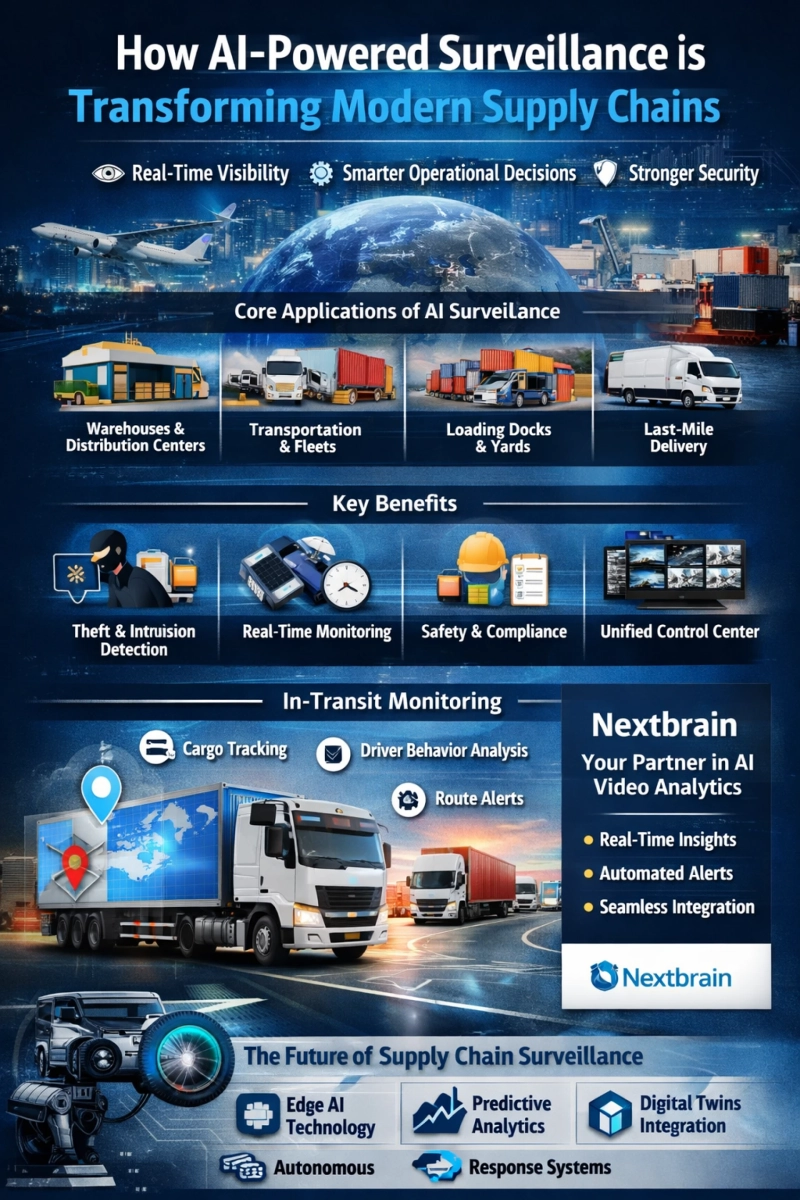
AI-driven surveillance combines machine learning, computer vision, IoT sensors, and edge analytics to monitor supply chain operations in real time. Unlike traditional CCTV or manual inspection, AI-enabled systems actively analyze data, detect irregularities, and respond automatically. These systems operate seamlessly across:
- Warehouses and distribution centers
- Loading docks and yard operations
- Transportation fleets and containers
- Last-mile delivery routes
The intelligence derived from these systems allows supply chain teams to identify potential threats, monitor compliance, and optimize operations proactively.
Strengthening Security Across Supply Chains
Security is a primary driver behind AI adoption in supply chain monitoring. AI surveillance can detect intrusions, cargo tampering, and unauthorized access in real time. It also verifies seal integrity, monitors high-risk transit routes, and tracks geofenced areas. Early threat detection reduces losses, minimizes insurance claims, and prevents operational disruptions.
Smart Warehouses & Distribution Centers
Warehouses are central to supply chain efficiency, housing valuable inventory while ensuring minimal downtime. Manual oversight often leads to overlooked errors and operational inefficiencies.
With AI video analytics, security personnel can monitor entry and exit points, detect tailgating, and track inventory movements to prevent pilferage. Warehouse managers gain real-time insights, enabling them to act before small issues escalate into costly incidents. AI also improves workflow efficiency, helping manage vehicle movement, dock operations, and inventory handling.
Real-Time Visibility Across Supply Chain Networks
Visibility across supply chains is critical for managing goods, assets, and operations. AI-driven surveillance transforms video feeds into actionable insights, enabling instant identification of delays, unauthorized access, or bottlenecks. A unified monitoring platform allows enterprises to track operations across all facilities, ensuring complete situational awareness.
In-Transit & Fleet Monitoring
Visibility is most crucial when goods are in transit. AI-enabled cameras installed in vehicles can monitor cargo conditions, driver behavior, route deviations, and tampering attempts. Alerts from these systems allow control centers to intervene promptly, preventing delays or losses. By providing real-time insights, AI surveillance ensures the safe and efficient movement of goods.
Improving Safety, Compliance, & Accountability
Safety and regulatory compliance are non-negotiable in global supply chains. AI-powered systems can detect unsafe behaviors, enforce safety protocols, and document incidents automatically. This ensures accountability across warehouses, fleets, and third-party logistics providers, while reducing operational risks and enhancing compliance with global standards.
Unified Monitoring Across Supply Chains
One major advantage of AI surveillance is centralized monitoring. By integrating feeds from warehouses, vehicles, yards, and partner locations into a single dashboard, businesses gain a holistic view of operations. Any suspicious activity triggers instant alerts, enabling rapid intervention. Unified monitoring drives predictive planning, faster decision-making, and continuous improvement across the supply chain network.
According to a McKinsey report on supply chain digitization, enterprises leveraging AI-driven visibility tools can significantly reduce operational losses and disruptions.
Why AI Surveillance is a Strategic Backbone
AI-driven surveillance is no longer just a security tool—it is a strategic enabler. It supports:
- Data-driven risk management
- Agile supply chain operations
- Enhanced customer satisfaction through reliability
- Scalable business growth
In increasingly complex and time-sensitive supply chains, intelligent surveillance is essential to maintain control, efficiency, and competitive advantage.
The Future of Supply Chain Surveillance
AI surveillance will continue to evolve with edge AI for faster decision-making, predictive analytics for risk prevention, and deeper integration with digital twins and supply chain analytics. Autonomous response systems will further enhance incident handling.
Combining AI surveillance with GPS and historical data will enable enterprises to forecast congestion, predict risk zones, and optimize routes proactively. As the World Economic Forum predicts, AI-powered supply chains will become more resilient, transparent, and adaptive—qualities critical in volatile markets.
Nextbrain: Elevating Supply Chain Surveillance
At Nextbrain, we specialize in delivering AI video analytics software for supply chain operations. Our solutions integrate AI-driven video intelligence with IoT, fleet management, and warehouse monitoring systems to provide real-time visibility, automated alerts, and actionable insights. By partnering with Nextbrain, businesses can enhance security, improve operational efficiency, and scale confidently across global networks.
Our team of experts ensures smooth implementation, seamless integration with existing systems, and continuous support to maximize ROI from AI surveillance solutions.
Get in touch with Nextbrain today to transform your supply chain security into a dynamic intelligence system that drives efficiency and resilience.
Conclusion
In today’s fast-paced global supply chains, keeping track of every movement is no longer optional—it is essential. AI-powered surveillance and AI video analytics for supply chains transform traditional security into a proactive intelligence system. By converting passive video data into real-time actionable insights, organizations can protect assets, optimize operations, and ensure complete visibility across warehouses, fleets, and transit routes.
Implementing AI surveillance not only strengthens security and compliance but also enhances operational efficiency, reduces losses, and supports scalable growth. For enterprises looking to stay competitive and resilient, intelligent video analytics has become a strategic necessity.
Upgrade your supply chain operations today by partnering with experts who specialize in AI-driven logistics monitoring. At Nextbrain, we provide advanced AI solutions to help businesses secure their assets, improve efficiency, and scale confidently across global networks.
Frequently Asked Questions
1. What is AI-driven surveillance in supply chain management?
AI-driven surveillance uses computer vision, machine learning, and real-time analytics to actively monitor fleets, warehouses, and transit routes. It transforms traditional security into proactive, intelligent monitoring.
2. How does AI contribute to supply chain operations?
AI enables predictive analytics, real-time visibility, intelligent automation, and proactive risk management, helping reduce delays, theft, and operational inefficiencies.
3. Can AI surveillance integrate with existing supply chain systems?
Yes. Nextbrain’s AI solutions integrate with IoT devices, fleet management systems, and access control to create a unified operational view.
4. Does AI reduce theft and cargo loss?
Absolutely. AI detects suspicious behavior, unauthorized access, and seal breaches in real time, enabling preventive action to minimize losses.
5. Is AI surveillance scalable for global supply chains?
Yes. AI video analytics software is highly scalable and can be deployed across multiple regions without manual intervention, supporting both operational efficiency and security.