



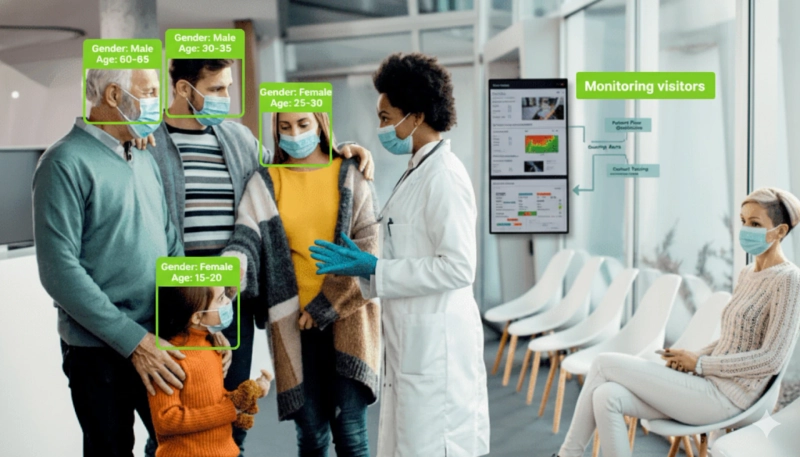
In the healthcare industry, patient safety and operational efficiency are non-negotiable priorities. Hospitals and medical facilities are increasingly embracing advanced technologies to enhance care quality, streamline operations, and maintain a secure environment. Among these, AI video analytics in hospitals has emerged as a groundbreaking innovation — transforming how healthcare facilities monitor patients, detect risks, and ensure security.
AI-driven video analytics systems go beyond simple surveillance. They analyze visual data in real-time using intelligent algorithms, helping hospital administrators and staff make faster, data-backed decisions. From detecting unusual behavior and monitoring patient movement to managing crowd flow and ensuring compliance, this technology is setting new benchmarks for hospital safety and patient care.
The Growing Role of AI in Healthcare Monitoring
Hospitals are complex environments that function 24/7. Managing patient safety, staff coordination, and facility security simultaneously can be challenging. Traditional CCTV systems may record video footage but fail to provide actionable insights. This is where AI video analytics software changes the game.
AI algorithms process video feeds in real time, automatically identifying patterns, behaviors, and anomalies. The system can trigger instant alerts for potential hazards, such as patient falls, restricted area breaches, or overcrowding in emergency departments. By combining visual data with artificial intelligence, healthcare facilities can achieve smarter, faster, and more proactive operations.
Key Applications of AI Video Analytics in Hospitals
1. Patient Safety and Fall Detection
Falls are one of the most common and serious incidents in healthcare settings, especially in elderly wards or ICUs. With AI video analytics in hospitals, cameras can automatically detect sudden movements or unusual body postures that indicate a fall.
Once detected, the system immediately alerts nearby nurses or caregivers, reducing response time and preventing further injury. This ensures continuous patient monitoring without invading privacy, offering peace of mind to both patients and their families.
2. Monitoring Patient Behavior and Activity
AI systems can analyze patient behavior to identify distress, agitation, or attempts to leave restricted areas — crucial for mental health wards or post-surgery recovery zones.
By tracking movements and gestures, the system helps medical staff respond promptly to emergencies or changes in patient conditions. Over time, the collected data can even assist doctors in understanding patient recovery patterns and making better clinical decisions.
3. Enhancing Hospital Security
Security is a vital concern in healthcare facilities that store sensitive data, expensive equipment, and controlled substances. AI video analytics for hospitals helps security teams identify unauthorized access, detect suspicious activity, and ensure compliance with safety regulations.
From tracking vehicles entering hospital premises to monitoring restricted zones like pharmacies or operating theaters, intelligent surveillance enhances control and minimizes human error.
4. Crowd and Queue Management
Emergency rooms and outpatient departments often face crowding issues, which can lead to chaos and patient dissatisfaction. AI video analytics can monitor real-time crowd density, track queue lengths, and predict waiting times.
Hospitals can use this data to optimize staff allocation, reduce congestion, and improve service delivery — ensuring a smoother and safer patient experience.
5. PPE and Hygiene Compliance
In the post-pandemic era, ensuring staff and visitors follow hygiene and PPE protocols is essential. AI video analytics for healthcare safety can automatically detect whether doctors, nurses, or visitors are wearing masks, gloves, and other protective gear.
This automated compliance monitoring minimizes manual checks and ensures that infection control measures are strictly maintained throughout the facility.
6. Fire and Smoke Detection
Hospitals require reliable emergency detection systems to protect patients who may not be able to evacuate independently. AI-based video systems can detect smoke, fire, or unusual temperature changes faster than traditional sensors.
By generating instant alerts, the system helps authorities take immediate action, reducing risks and ensuring the safety of all occupants.
Benefits of Implementing AI Video Analytics in Healthcare Facilities
1. Real-Time Insights and Faster Response
AI-powered analytics offer real-time situational awareness. From emergency incidents to patient safety breaches, every alert allows quick decision-making — minimizing delays and improving outcomes.
2. Enhanced Patient Experience
Patients feel safer in a hospital environment where technology is proactively used for their protection. Automated monitoring ensures they receive timely assistance and attention, improving overall satisfaction and trust.
3. Improved Staff Efficiency
By automating repetitive monitoring tasks, hospital staff can focus more on patient care instead of watching CCTV screens. This leads to better productivity and reduced fatigue among healthcare professionals.
4. Data-Driven Decision Making
AI systems collect and analyze data continuously, helping management identify trends and optimize resource allocation. Insights gained can also guide hospital policies and long-term planning.
5. Cost-Effective and Scalable Solution
Although initial setup may require investment, AI video analytics significantly reduce operational costs over time. With fewer incidents, reduced losses, and optimized staffing, hospitals see strong ROI and sustainable growth.
Nextbrain: Powering Smart Hospital Environments with AI Video Analytics Software
Nextbrain, a leading AI development company, is empowering hospitals and healthcare organizations to embrace intelligent automation with advanced AI Video Analytics Software. Their custom-built solutions are designed to enhance patient safety, security, and operational efficiency across complex medical environments.
Nextbrain’s AI systems can detect PPE compliance, track patient movements, monitor restricted areas, and alert authorities about potential risks — all in real time. By integrating seamlessly with existing hospital management systems, Nextbrain enables healthcare institutions to shift from reactive surveillance to proactive safety management.
With years of experience in AI-driven innovation, Nextbrain ensures its solutions are fully customizable, secure, and compliant with healthcare standards. Hospitals leveraging their technology gain the advantage of data-backed insights and real-time visibility that strengthen trust and safety across every department.
Challenges and Ethical Considerations
While the benefits are substantial, implementing AI video analytics in hospitals requires careful consideration of data privacy and ethics. Hospitals must ensure that the system complies with health data regulations like HIPAA or GDPR.
It’s essential to anonymize video data wherever possible and restrict access to authorized personnel only. Transparency in communication with patients and staff about the use of AI surveillance fosters trust and ethical deployment.
Future of AI Video Analytics in Healthcare
The future of healthcare is smart, data-driven, and predictive. AI video analytics will continue to evolve, offering even more advanced capabilities such as facial recognition for patient identification, gesture-based distress detection, and predictive analytics for disease outbreak management.
With continuous innovation, hospitals will soon transition from reactive to proactive models of care — where technology anticipates risks before they occur and supports real-time collaboration between medical teams.
Conclusion
AI video analytics in hospitals is redefining how medical facilities operate — transforming traditional surveillance into an intelligent ecosystem that enhances patient care, ensures safety, and streamlines operations.
From preventing falls and monitoring PPE compliance to securing restricted zones and managing crowds, this technology empowers hospitals to deliver smarter and safer healthcare experiences.
As healthcare institutions continue embracing digital transformation, integrating AI video analytics becomes not just an option but a necessity for excellence in patient care and operational efficiency.
Contact Nextbrain today to explore how advanced AI-powered video analytics solutions can elevate your hospital’s safety, compliance, and patient experience standards.
FAQs
1. What is AI video analytics in hospitals?
It’s a system that uses artificial intelligence to analyze video footage in real time, improving patient monitoring, safety, and hospital security.
2. How does AI video analytics help with patient care?
It detects patient falls, monitors activity, and provides instant alerts to medical staff for faster response.
3. Can it integrate with hospital management systems?
Yes, AI video analytics software can integrate seamlessly with existing hospital and security systems for efficient workflow.
4. Is patient privacy protected?
Yes, ethical AI systems anonymize video data and comply with healthcare privacy laws such as HIPAA and GDPR.
5. What are the main benefits of AI video analytics in healthcare?
Improved safety, operational efficiency, faster incident response, and data-driven management decisions.