



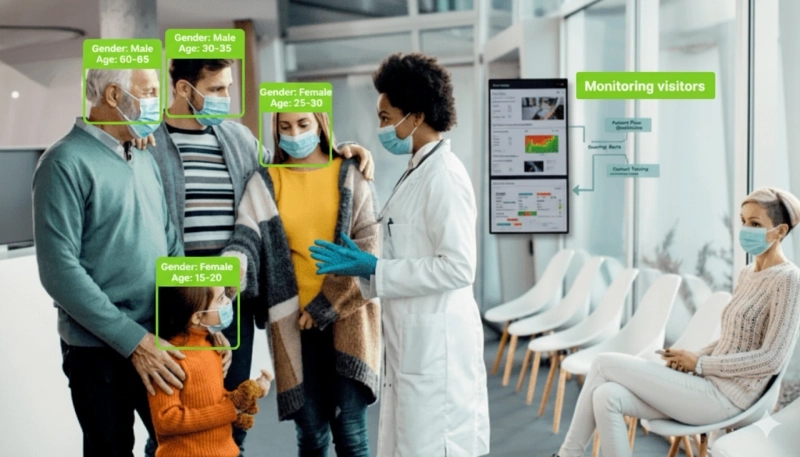
In the healthcare industry, patient safety and operational efficiency are not optional—they are mission-critical. Hospitals, clinics, and medical facilities operate in highly complex environments where even minor delays or errors can have serious consequences. To address these challenges, healthcare providers are increasingly turning to advanced technologies. Among the most impactful innovations is AI video analytics in hospitals, a technology that is redefining how healthcare facilities monitor patients, manage security, and optimize daily operations.
Unlike traditional CCTV systems that merely record footage, AI-powered video analytics actively interprets visual data in real time. By using advanced algorithms and computer vision, hospitals can detect risks early, automate monitoring tasks, and make faster, data-driven decisions. This shift from passive surveillance to intelligent monitoring is setting new standards for patient care and hospital safety.
The Growing Role of AI in Healthcare Monitoring
Hospitals operate 24/7, managing patients, staff, visitors, and critical infrastructure simultaneously. Relying solely on manual monitoring or conventional surveillance systems often results in delayed responses and missed incidents. Traditional systems lack the ability to analyze behavior or identify anomalies in real time.
This is where AI video analytics software for hospitals plays a transformative role. AI systems continuously analyze live video feeds to recognize patterns, movements, and unusual events. Whether it’s a patient fall, overcrowding in the emergency department, or unauthorized access to restricted areas, the system instantly alerts hospital staff.
By combining artificial intelligence with visual data, healthcare facilities gain proactive visibility into daily operations—improving safety, efficiency, and overall care quality.
Key Applications of AI Video Analytics in Hospitals
1. Patient Safety and Fall Detection
Patient falls remain one of the most common safety incidents in hospitals, especially in elderly care units, ICUs, and rehabilitation wards. AI video analytics in hospitals can automatically detect sudden movements, abnormal postures, or collapse events that indicate a fall.
Once detected, the system triggers real-time alerts to nurses or caregivers, significantly reducing response time. This continuous, non-intrusive monitoring improves patient safety while respecting privacy.
2. Monitoring Patient Behavior and Activity
AI-powered video systems can analyze patient behavior to detect distress, agitation, or wandering—particularly important in mental health wards, dementia units, and post-operative recovery areas.
By identifying unusual activity or changes in movement patterns, medical staff can intervene early. Over time, behavioral data also helps clinicians understand recovery trends and improve treatment planning.
3. Strengthening Hospital Security
Hospitals house sensitive patient data, expensive medical equipment, and controlled substances. Ensuring security across such a vast environment is challenging.
AI video analytics for hospitals enhances security by detecting unauthorized access, loitering, tailgating, or suspicious behavior. Restricted areas such as pharmacies, operating rooms, and data centers can be monitored automatically, reducing dependency on manual surveillance and minimizing human error.
4. Crowd and Queue Management
Overcrowding in emergency rooms and outpatient departments can negatively impact patient experience and staff efficiency. AI video analytics monitors real-time crowd density, queue lengths, and movement flow.
With these insights, hospital administrators can dynamically allocate staff, open additional service counters, or redirect patients—leading to reduced waiting times and smoother operations.
5. PPE and Hygiene Compliance Monitoring
Infection control is a top priority in modern healthcare environments. AI video analytics for healthcare safety can automatically detect whether staff and visitors are wearing masks, gloves, or other required protective equipment.
Automated PPE compliance monitoring ensures adherence to hygiene protocols without manual supervision, helping hospitals maintain high safety standards and reduce infection risks.
6. Fire and Smoke Detection
Hospitals require rapid emergency response systems, especially for patients who may not be able to evacuate independently. AI-based video analytics can detect smoke, fire, or abnormal visual patterns faster than traditional sensors.
Early detection enables immediate action, protecting patients, staff, and critical infrastructure while minimizing damage and downtime.
Benefits of Implementing AI Video Analytics in Healthcare Facilities
Real-Time Alerts and Faster Response
AI-powered systems provide instant alerts for critical incidents, enabling faster intervention and better outcomes.
Improved Patient Experience
Patients feel safer knowing that advanced technology is actively monitoring their environment and well-being.
Higher Staff Productivity
By automating monitoring tasks, healthcare professionals can focus more on patient care instead of surveillance duties.
Data-Driven Hospital Management
Continuous data collection helps administrators identify trends, optimize workflows, and improve long-term planning.
Cost-Effective and Scalable
Although the initial investment may be significant, AI video analytics reduces incidents, operational losses, and staffing inefficiencies—delivering strong ROI over time.
Nextbrain: Powering Smart Hospitals with AI Video Analytics Software
Nextbrain, a leading AI development company, is helping healthcare organizations build safer and smarter hospital environments with advanced AI Video Analytics Software. Their solutions are designed to address real-world healthcare challenges—from patient safety and PPE compliance to security and crowd management.
Nextbrain’s AI-powered systems provide real-time alerts, seamless integration with existing hospital infrastructure, and customizable analytics tailored to specific healthcare needs. By shifting hospitals from reactive monitoring to proactive risk prevention, Nextbrain enables higher standards of safety, efficiency, and trust.
With deep expertise in AI and computer vision, Nextbrain delivers secure, scalable, and regulation-compliant solutions that support digital transformation across healthcare facilities.
Ethical Considerations and Data Privacy
While AI video analytics offers immense benefits, ethical deployment is essential. Hospitals must ensure compliance with healthcare regulations such as HIPAA and GDPR. Video data should be anonymized where possible, securely stored, and accessed only by authorized personnel.
Clear communication with patients and staff about the purpose and use of AI surveillance fosters transparency and trust, ensuring responsible adoption of this technology.
The Future of AI Video Analytics in Healthcare
The future of healthcare is intelligent and predictive. As AI continues to evolve, video analytics systems will offer advanced capabilities such as predictive risk analysis, gesture-based distress detection, and AI-assisted patient identification.
Hospitals will increasingly move toward proactive care models—where risks are anticipated, not just responded to. AI video analytics will play a central role in this transformation, enabling safer, smarter, and more efficient healthcare delivery.
Conclusion
AI video analytics in hospitals is revolutionizing patient safety, security, and operational efficiency. From fall detection and PPE compliance to crowd management and emergency response, this technology empowers healthcare providers to deliver higher-quality care with confidence.
As hospitals continue their digital transformation journey, AI-powered video analytics is no longer a luxury—it is a necessity for modern, patient-centric healthcare.
Contact Nextbrain today to discover how AI-powered video analytics solutions can elevate your hospital’s safety, compliance, and patient care standards.
FAQs
1. What is AI video analytics in hospitals?
AI video analytics in hospitals uses artificial intelligence and computer vision to analyze live video feeds in real time. It helps healthcare facilities monitor patient safety, detect falls, manage security, track crowd movement, and ensure compliance with safety protocols.
2. How does AI video analytics improve patient safety?
AI video analytics enhances patient safety by automatically detecting incidents such as patient falls, unusual behavior, or distress. The system sends instant alerts to healthcare staff, allowing faster intervention and reducing the risk of serious injuries or complications.
3. Can AI video analytics be integrated with existing hospital systems?
Yes, modern AI video analytics software can seamlessly integrate with existing hospital management systems, CCTV infrastructure, access control systems, and nurse call systems. This ensures smooth workflows without disrupting current operations.
4. Is patient privacy protected when using AI video analytics?
Yes. Ethical AI video analytics systems follow strict data privacy regulations such as HIPAA and GDPR. Video data can be anonymized, securely stored, and accessed only by authorized personnel to protect patient confidentiality.
5. What are the key benefits of AI video analytics in healthcare facilities?
The main benefits include improved patient safety, faster incident response, enhanced hospital security, better staff efficiency, data-driven decision-making, and reduced operational costs—making healthcare environments safer and more efficient.