



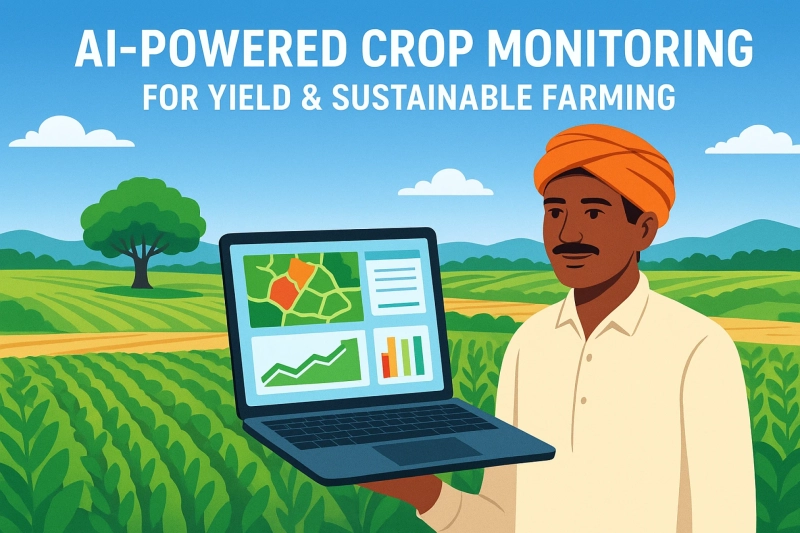
Modern agriculture is rapidly transforming, and at the heart of this change lies AI-powered crop monitoring — a powerful tool that helps farmers boost yields while promoting more sustainable farming practices. In the face of erratic weather, increasing pest pressure, and constrained resources, artificial intelligence offers a way to optimize crop health and resource management. By leveraging real-time data, predictive analytics, and smart interventions, farmers can not only grow more but also grow smarter.
Understanding AI‑Powered Crop Monitoring
At its core, AI-powered crop monitoring combines several advanced technologies to give farmers a detailed, real-time view of their fields:
- Satellite Imagery & Drones: High-resolution images from satellites or drones help identify stressed zones, pest attacks, or early signs of disease across large plots with precision.
- IoT Sensors: Devices planted in the soil or deployed around the farm measure moisture, temperature, nutrient levels, and other environmental factors.
- Machine Learning Algorithms: These algorithms process vast amounts of data to detect patterns, predict threats like disease outbreaks or water stress, and recommend tailored actions.
Together, these technologies turn raw environmental data into actionable insights, enabling farmers to make informed decisions instantly, rather than relying on guesswork or reactive measures.
Boosting Yield Through Early Detection and Precision Interventions
One of the most compelling benefits of AI-powered monitoring is its ability to detect crop stress early. By noticing subtle changes in plant physiology, such as variations in leaf color or canopy structure, AI can flag areas that may be under threat from pests, disease, or nutrient deficiency. Early detection means:
- Timely Intervention: Farmers can act swiftly by spraying only the affected parts, thereby minimizing crop damage and reducing chemical usage.
- Optimized Irrigation & Fertilizer Use: AI models can recommend exact amounts of water and nutrients required per zone, helping farmers avoid both under- and over-application.
- Growth Forecasting: Predictive algorithms estimate crop development and yield, helping farmers plan harvests and allocate labor and resources more effectively.
By preventing losses before they escalate, AI ensures that farms consistently produce higher yields.
Enhancing Sustainability & Resource Efficiency
Beyond yield, AI-powered monitoring plays a vital role in pushing agriculture toward sustainability:
- Water Conservation: Smart irrigation scheduling based on real-time sensor data prevents overwatering, saving precious water in drought-prone regions.
- Reduced Agrochemical Footprint: Because AI signals precise areas that truly require pesticide or fertilizer application, the overall consumption of potentially harmful chemicals falls, reducing environmental pollution.
- Climate-Responsive Farming: Constant monitoring allows systems to adapt quickly to changing weather patterns. AI can recommend adjustments when heat, rainfall, or drought conditions shift, helping maintain soil health and reduce long-term damage.
Thus, AI doesn’t just help farmers grow more — it helps them grow more responsibly.
Lowering Costs & Saving Time
Traditionally, crop monitoring involves regular field visits, visual inspections, and manual sampling — all of which are time-intensive and labor-heavy. AI streamlines these efforts:
- Real-Time Alerts: Farmers receive notifications on their devices when anomalies appear, reducing the need for constant physical checks.
- Automated Decision Support: Recommendations from AI allow farmers to take action immediately without waiting for agronomist input.
- Labor Prioritization: Work can be focused exactly where it is needed — areas flagged by AI — instead of distributing manpower blindly across the entire farm.
The bottom line? Farmers save both time and money, and can concentrate their efforts on high-impact zones.
Real-World Use Cases
Across India and globally, AI-powered crop monitoring is already making a tangible difference:
- Disease & Pest Management: Farms using AI-driven drones report earlier detection of pest infestation, enabling spot treatment and saving crops.
- Yield Prediction Models: By combining sensor data, past weather records, and satellite imagery, predictive models guide farmers on optimal harvest times and expected production.
- Precision Machinery: Some farms integrate AI insights with variable-rate machinery that applies water or nutrients only where offered, increasing efficiency and reducing input costs.
These practical applications show that AI-driven crop monitoring is not futuristic — it's here, and it's working.
Challenges & Roadblocks
As promising as this technology is, there are several challenges to widespread adoption:
- Cost of Implementation: High upfront investment in drones, sensors, and analytics platforms can be a barrier, especially for small and marginal farmers.
- Data Dependence: AI systems are only as good as the data they receive. Faulty sensors or poor-quality imagery can lead to misleading recommendations.
- Digital Literacy: Not all farmers may be familiar with interpreting AI-driven insights, making training essential.
- Connectivity Constraints: In remote or rural areas with limited internet, real-time data transmission and cloud-based analytics may be difficult.
- Scalability: While pilots in large farms are promising, scaling across fragmented landholdings and small farms presents logistical challenges.
Overcoming these obstacles will require a combination of technology support, financial models, and capacity building.
The Future Outlook
The potential of AI in agriculture is just beginning to unfold. Looking ahead, we can expect:
- Next‑Gen Robotics: Autonomous drones and farm robots powered by AI could monitor and treat crops without human intervention.
- Advanced Predictive Models: AI will increasingly forecast yield, disease risk, and climate impacts with greater precision, helping farmers plan long term.
- Edge Computing: Deploying AI models on local devices (edge) could reduce reliance on internet connectivity and make real-time insights more accessible.
- Policy & Institutional Support: As governments realize the benefits of AI for food security and sustainability, supportive policies and subsidies may accelerate adoption.
This future promises smarter, more resilient agriculture — driven by data, not guesswork.
Conclusion
AI-powered crop monitoring is more than a technological leap — it’s a practical pathway to higher yields, reduced costs, and sustainable farming. By leveraging satellite imagery, IoT sensors, and predictive analytics, farmers gain deep, real-time insight into their fields. These insights empower timely interventions, minimize waste, and drive more informed decisions.
As this transformation unfolds in India, StarAgri is at the forefront of revolutionizing agriculture. With advanced AI-driven crop-monitoring tools and comprehensive agritech solutions, StarAgri empowers farmers with technology, insights, and guidance to optimize yields, reduce costs, and adopt sustainable practices. Their leadership in innovation and commitment to supporting the farming community solidify their position as a leading agritech company in India, helping farmers grow smarter, greener, and more profitably.