



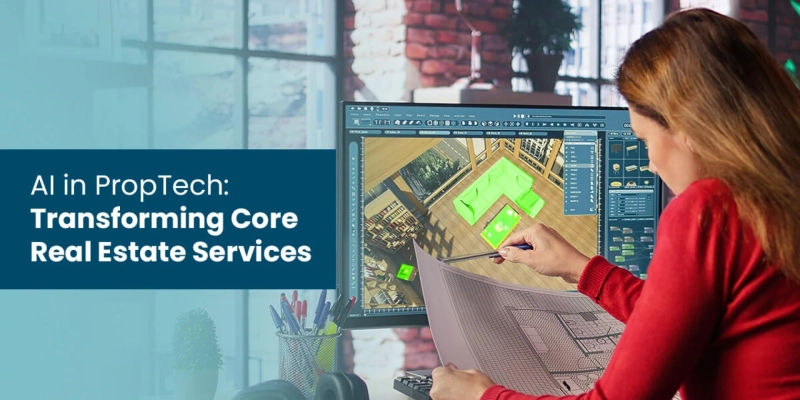
The Proptech sector integrates advanced artificial intelligence (AI) technology with real estate data. AI, when applied to analyzing multiple large datasets, offers greater clarity in curating tailored property listings according to clients’ preferences.
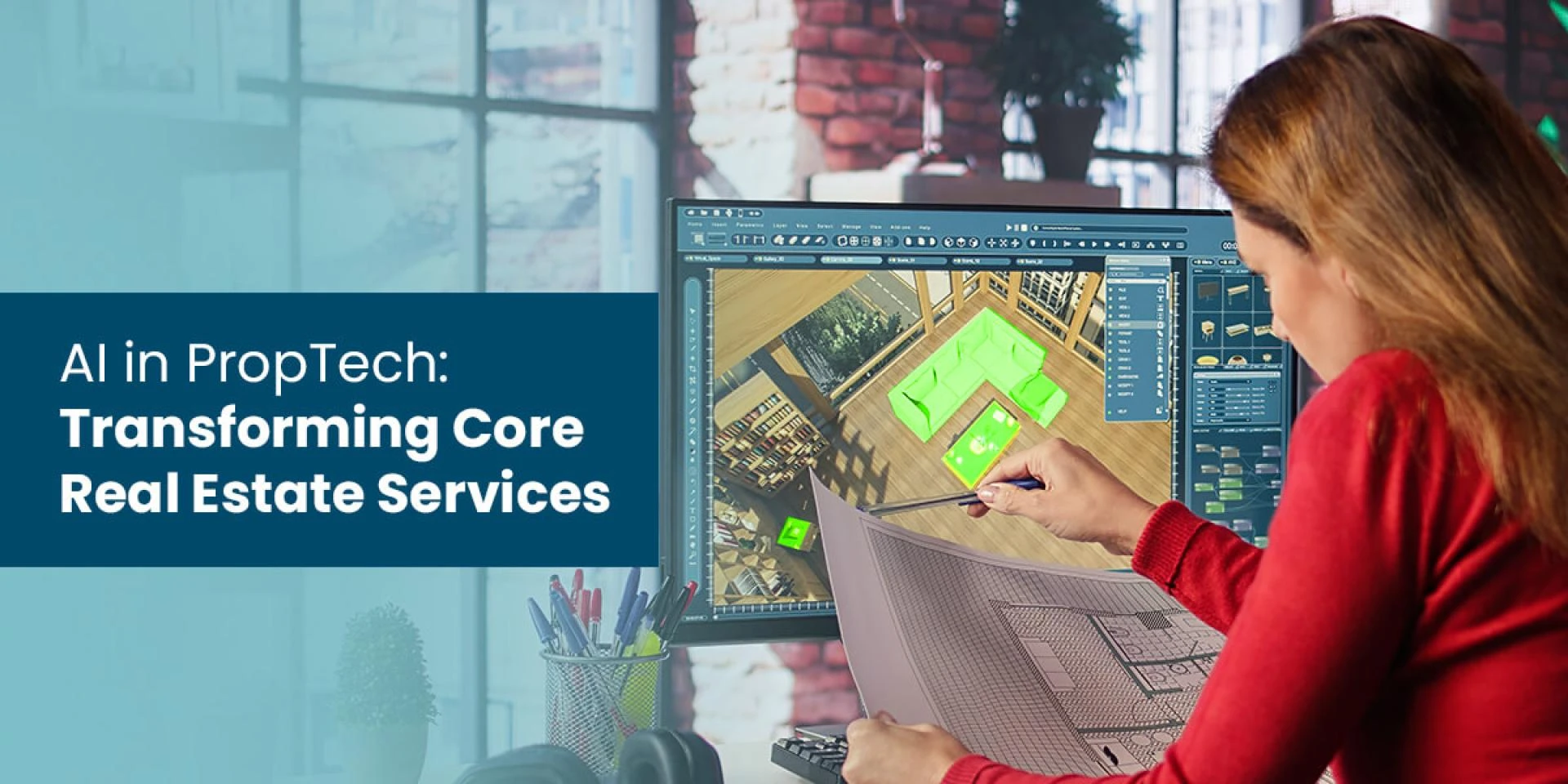
Proptech, once limited to basic property management software, is now enhancing the overall experience for buyers, sellers, and property managers. It has now gained traction as companies introduce virtual reality property tours, which have expanded the global reach of high-end properties, all while accelerating sales and saving agents time and resources by pre-screening serious buyers.
Another enhancement is seen in the use of Gen AI, which utilizes advanced algorithms to generate content, such as answers to customer queries. These tools change how people search for properties, determine their value, manage them, and invest in them by utilizing AI systems that analyze users' preferences and browsing history. Many companies accelerate property management by applying proptech data annotation.
What core real estate services does the integration of AI in proptech offer? Let us dive into these in the upcoming sections. Notably, AI in PropTech relies on high-quality labeled data to accurately analyze property images, documents, and market signals. To make it happen, image annotation, along with other methods, is required. Therefore, we will explore the importance of labels and where real estate business professionals can obtain the right proptech training datasets to advance their services.
AI as the Intelligence Layer Powering PropTech Services
Core service segments in PropTech, including residential, commercial, and financial real estate solutions, are powered by AI. These services are described below.
Residential Platforms
AI-powered residential PropTech platforms focus on improving the experience of homeowners, tenants, and property managers. As younger generations enter the housing market, what's considered the 'norm' for residential property sales has shifted dramatically. Millennials and Gen Z home buyers conduct a significantly greater amount of online research before deciding to tour a prospective home. Hence, estate agents are adapting to this demographic change by placing an even greater emphasis on the online presentation of residential properties.
In the development of personalized AI-driven chatbots and virtual assistants, one component of AI utilized to make the service more seamless is leveraging computer vision for tenant queries, which reduces manual effort and operational expenses. These inquiries relate to whether a residential property is in good condition or not. This involves verifying the property for signs of cracks, water damage, and wear and tear.
This process becomes seamless with the help of computer vision, as it helps with the analysis of images, videos, satellite data, and floor plans to identify renovations or structural changes that have occurred over time. Additionally, some CV-enabled inspection tools can also analyze images or walkthrough videos uploaded by tenants or agents.
Commercial Lease Management
Commercial leases are lengthy, complex, and legally dense documents, and to make these data usable, a combination of AI technologies, namely natural language processing (NLP) and optical character recognition (OCR), is employed. NLP models extract and analyze key clauses from lease documents, track compliance requirements, and extract dates of expiry, break options, and rent reviews. Predictive analytics enable asset managers to forecast vacancy risks, optimize space utilization, and assess tenant creditworthiness. Moreover, it is very easy for AI to identify underutilized or over-leased spaces and develop various strategies to optimize property performance based on data for office, retail, and industrial properties.
- Immersive Tech in PropTech
Virtual reality technology has enabled successful touring experiences of properties, whether commercial or residential. It has become an essential part of today’s world, enabling potential buyers and tenants to tour homes and commercial spaces in an immersive environment. For example, home staging has a significant influence on prospective clients, and more agents are trying to include these to attract buyers. A US study by the National Association of Realtors found that staging the living room was considered most important for buyers (37%), followed by staging the primary bedroom (34%) and the kitchen (23%).
AI virtual staging uses advanced algorithms and rendering techniques, which need the right kind of annotated data to create visually appealing presentations of empty rooms. These machine learning (ML) algorithms even analyze images of staged homes and recommend visualizations for other spaces. Such things are possible on the foundation of proptech data annotation solutions that can furnish and decorate spaces to enhance their appeal.
There is also the use of image recognition technology to enhance the immersive display of a room by analyzing textures, patterns, furniture, and objects, thereby producing an appealing visual representation and rendering it for prospective clients.
End-to-end digital platforms
Online real estate platforms have evolved beyond listing pages because integrating AI has made such platforms a comprehensive ecosystem for virtual tours, agent connections, mortgage pre-approvals, legal assistance, and even digital signatures.
This seamless integration reduces the number of points where a transaction can go wrong. Buyers can research, compare, and close deals from the comfort of their homes. Agents, in turn, gain access to a wider market and can operate with digital tools that handle scheduling, customer management, and reporting.
These platforms are more popular among millennials, who prefer mobile-first solutions and quick turnaround times.
Drones shots of properties
Drones are not just for capturing scenic aerial shots. In real estate, the use of technology is helping to market land or houses via aerial videos. The footage captured from drones offers new perspectives of properties. Most property tours feature inside images, but drone shots are particularly helpful for viewing large estates, farmhouses, and commercial sites from a broader perspective. Drones' ability to capture data from difficult angles quickly is a valuable asset across both residential and commercial real estate projects.
Sustainable proptech solutions
Eco-conscious building is a growing priority among high-end property buyers, and the industry is adapting accordingly to cater to the elite class. For buyers opting for a sustainable or green lifestyle, the AI is enabling the creation of more effective energy tracking systems that monitor consumption in real-time. Now, people who make environmentally conscious choices can reside in such places, made possible by new-age technology.
Modern homes are equipped with IoT devices, including smart grids, solar integrations, and automated waste systems, which are becoming standard in new developments. The impact of these technologies is such that existing establishments are also making structural changes and revamping their spaces with the aim of mitigating their carbon footprint, adding smart appliances for energy savings, and adjusting designs to meet environmental targets.
It can be observed that both buyers and investors are increasingly considering sustainability ratings and energy certifications when selecting properties, thereby adding long-term value to eco-friendly buildings.
What Powers PropTech AI: Data, Labels, and Models
As mentioned above, solutions from PropTech AI systems do not appear on their own. These intelligent systems need training data, labels, and learning models. Each part is distinct but depends on the others. If one part is weak, the entire system underperforms, no matter how advanced the algorithms are, because all components must be robust for the system to succeed.
- At the base of an AI model is data. Real estate generates various types of data, but it is not usable by machines. This raw data illustrates how properties appear and function, and the key takeaway is that they evolve over time. However, raw data is unstructured and meaningless to machines. Its value depends on how relevant, diverse, and representative it is across properties, locations, and cases.
2. Labeled data is the next critical factor here. Labels turn real-world information into signals machines can read. It can refer to marking defects on images, sorting clauses in leases, extracting dates, or tracking occupancy in video feeds.
3. Ultimately, the resultant learning models integrate data and labels, enabling deep learning models to find patterns in images, text, and spatial information. These models then make predictions or give recommendations; examples include using computer vision models for inspections, NLP for lease details, or models that mix images with financial data. The success of these models depends on the quality of their training data.
Are businesses implementing the right data strategy?
Since real estate data often includes sensitive information, the question remains: where do real estate developers or entrepreneurs acquire data to train AI models? The answer lies in outsourcing proptech data annotation solutions.
As much as integrating AI into a real estate platform is necessary, using quality and compliant data is just as important. The use of sensitive data, which refers to details such as bank account information, social security numbers, tenant names, and mortgage loan payment statuses, cannot be fed into the models for training unless they comply with the norms of both local and global data privacy laws.
It is here that outsourcing to the AI proptech companies is advisable. The proptech data annotation requires data science expertise as much as rigorous quality control to ensure that artificial data is realistic, compliant-ready, and useful. Due to the high expense of maintaining an in-house workforce, the outsourcing partner can provide all these services.
The Future of Proptech Data Annotation
The 2026 CRE outlook states that “the path to turning AI promise into success likely runs through reliable data and application readiness.” Their survey reveals that 19% of respondents believe their organizations are still in the early stages of their AI journey.
Buying or selling a property is one of life’s most significant decisions, and technology enhances these interactions but doesn’t replace the need for skilled professionals who can interpret data, manage relationships, and guide clients through emotional and financial complexities.
Outsourcing data annotation is crucial for achieving ROI in real estate, as AI integration heavily relies on data quality. This approach ensures success by leveraging automation and high-quality training datasets while maintaining a people-centered focus.
Conclusion
AI technology is not merely supporting real estate but is also transforming it through its applications. AI-powered property valuation predictions, blockchain-enabled secure transactions, immersive virtual tours, predictive analytics, and more are revolutionizing the real estate industry. Given the rise of the proptech industry, both residential and commercial markets are expected to sell well through data-driven methodologies. This seeming rise of AI is a testament to how quality datasets determine the success of proptech models.
Nonetheless, the volume of data doesn’t equate to the utility for AI models in real estate success. The quality-first approach to building proptech models brings the AI innovators close to achieving their goals. It is advisable to choose the right data annotation partner to amplify their existing real estate platform through fine-tuning services for proptech models. Alternatively, businesses can develop language models from scratch by training them on targeted, domain-specific datasets, which can help ensure the models are optimized for unique operational needs.