



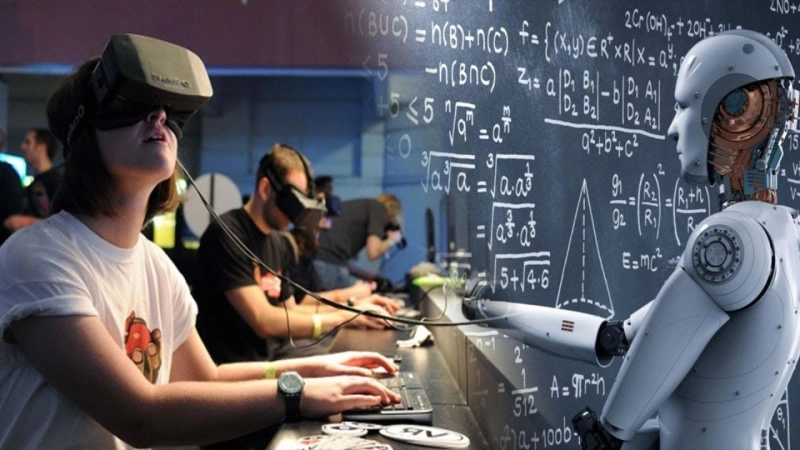
Artificial Intelligence (AI) is reshaping every aspect of our lives, and education is no exception. From personalized learning experiences to automated grading systems, AI redefines how students learn and how educators teach. As we embrace digital transformation, integrating AI into education systems offers unprecedented opportunities and critical challenges that need careful consideration.
Personalized Learning
One of the most significant contributions of AI in education is personalized learning. Traditional classrooms often struggle to meet the needs of diverse learners. AI systems, however, can analyze a student's strengths, weaknesses, learning style, and pace to tailor content accordingly. Platforms like Carnegie Learning and Squirrel AI adapt lessons in real-time, ensuring that each student receives a customized experience that maximizes engagement and comprehension.
This kind of personalization helps bridge learning gaps, especially for students who need more time or alternative explanations. It also benefits advanced learners by pushing them beyond the standard curriculum, ensuring that education is not one-size-fits-all.
Intelligent Tutoring Systems
AI-driven tutoring systems provide one-on-one support to students outside of traditional classroom hours. These intelligent tutors use natural language processing (NLP) to understand student queries and provide relevant explanations, much like a human teacher would. Tools like Duolingo use AI to teach languages through interactive exercises, adapting to the learner's progress and areas of difficulty.
Such systems are especially valuable in remote or under-resourced areas, where access to qualified teachers may be limited. AI ensures that educational support is available anytime and anywhere.
Automation of Administrative Tasks
Teachers often spend a significant portion of their time on administrative duties such as grading, attendance tracking, and managing coursework. AI can automate many of these tasks, freeing educators to focus more on teaching and interacting with students. For example, AI tools can grade multiple-choice tests and even evaluate short-answer questions with increasing accuracy.
Moreover, AI can assist in creating lesson plans, tracking student performance, and identifying at-risk learners, enabling timely interventions. These efficiencies can improve the overall effectiveness of educational institutions.
Enhancing Accessibility
AI also plays a crucial role in making education more accessible to students with disabilities. Speech recognition, text-to-speech, and image recognition technologies enable learners with visual, auditory, or cognitive impairments to participate more fully in educational activities. Tools like Microsoft's Immersive Reader or Google's Live Caption are designed to support inclusive learning environments.
AI translation tools help bridge language barriers, enabling students from different linguistic backgrounds to understand course materials and participate in discussions.
Ethical and Equity Considerations
Despite its promise, the use of AI in education raises important ethical and equity issues. Data privacy is a major concern, as AI systems rely on collecting and analyzing student data to function effectively. Safeguarding this data and ensuring transparency in how it's used is critical.
Moreover, there is a risk that AI could widen the digital divide. Students in well-funded schools are more likely to benefit from AI tools than those in underfunded institutions. Ensuring equal access to AI-powered resources must be a priority for policymakers and educators.
Bias in AI algorithms is another challenge. If the data used to train these systems reflects societal biases, the AI could reinforce or even exacerbate inequalities. AI tools in education must be regularly audited for fairness and inclusivity.
The Role of Educators
Contrary to fears that AI might replace teachers, the reality is that it will more likely augment their roles. Teachers will continue to be central figures in education, providing emotional support, critical thinking guidance, and social interaction—elements that machines cannot replicate. AI can serve as a powerful assistant, enabling teachers to focus on what they do best: inspiring and nurturing students.
Professional development will be essential to equip teachers with the skills needed to integrate AI into their classrooms effectively. Training programs should focus not only on the technical use of AI tools but also on ethical and pedagogical implications.
Conclusion
AI is not just a futuristic concept—it's actively transforming education today. With the potential to personalize learning, automate administrative tasks, and expand access to quality education, AI can enhance the teaching and learning experience. However, it also brings challenges that must be addressed thoughtfully to ensure ethical, equitable, and effective implementation.
The key lies in striking a balance: leveraging AI's power to support human educators and empower learners, while ensuring fairness, transparency, and inclusivity in every aspect of its use. As we move forward, collaboration between educators, technologists, and policymakers will be essential in shaping the future of AI in education.