



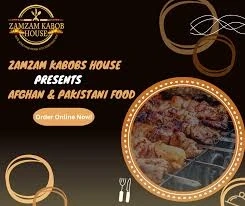
In the heart of Northern Virginia, where history-rich Manassas boasts its Civil War battlefields, a different kind of memorable encounter awaits—not on a field of battle, but on a plate. Here, the aromatic smoke of the grill tells a story of ancient spice routes, nomadic traditions, and shared culinary heritage. For those seeking an authentic taste of South and Central Asia, Zamzam Kabobs stands as a beacon, offering a masterful exploration of the distinct yet harmoniously intertwined flavors of Afghan and Pakistani cuisines through its artful focus on one beloved dish: the kabob.
To understand the magic of Zamzam Kabobs, one must first appreciate the culinary landscapes from which it draws inspiration. Afghan and Pakistani cuisines are close neighbors, sharing a border and a deep history, yet each possesses a unique soul. Pakistani cuisine is a vibrant tapestry woven from the subcontinent's rich palette. It is characterized by its bold, complex layers of spices—cumin, coriander, turmeric, garam masala, and fiery chilies. The food is often hearty, with rich, slow-cooked curries and marinated meats that speak to the influence of Mughlai cooking, where fragrance is as important as flavor.
Afghan cuisine, by contrast, is the food of the crossroads of Asia. It is subtly elegant, less about intense heat and more about the celebration of a few exquisite flavors. The focus is on the quality of the meat, the fragrance of basmati rice, and the clever use of spices like sumac, black pepper, and a generous helping of fresh herbs. Where Pakistani food delights in complex sauces, Afghan cuisine often shines in its glorious simplicity, allowing the primal, smoky flavor of the open flame to be the star. It is this beautiful intersection—where Pakistani boldness meets Afghan refinement—that Zamzam Kabobs masterfully occupies.
The kabob, in all its forms, is the universal language at this intersection. For generations, from the rugged mountains of Afghanistan to the bustling streets of Peshawar and Lahore, the grill has been a communal hearth. It is where families gather, where hospitality is offered, and where skilled cooks, or ustads, demonstrate their craft. The kabob is more than food; it is a cultural artifact, a symbol of celebration and togetherness. Zamzam Kabobs brings this tradition to Virginia, honoring the meticulous process that transforms simple ingredients into something extraordinary.
The journey of a Zamzam kabob begins days before it ever touches the fiery grill. The first, and most crucial, step is the marinade. This is where the culinary philosophies of Pakistan and Afghanistan are expressed. For their Pakistani-style kabobs, like the iconic Seekh Kabob, the meat—often finely minced lamb or beef—is lavishly treated with a paste of onions, ginger, garlic, and a powerful array of ground spices, including red chili powder, roasted cumin, and coriander. It’s left to meld for hours, the spices penetrating deeply to create a kabob that is explosively flavorful and aromatic.
The Afghan approach, seen in their Chapli Kabob or Lamb Chop Kabobs, is a study in balance. The marinade might include yogurt-based marinades tenderizing the meat while imparting a subtle tang, complemented by notes of garlic, black pepper, and perhaps a hint of papaya for tenderness. The result is not a spicy heat, but a profound, savory depth that perfectly complements the char of the grill.
Then comes the fire. Grilling is not merely a method of cooking at Zamzam; it is a performance. The skewers are arranged over glowing charcoal, the heat licking at the marinated meat. The cook attentively turns each skewer, achieving that perfect, signature char—crispy and slightly smoky on the outside, impossibly juicy and tender on the inside. This dedication to the charcoal grill, or mangal, is what separates an authentic kabob from an imitation. It’s the source of the irreplaceable flavor that fills the restaurant and beckons from the street.
A meal at Zamzam is a curated experience. Your plate arrives not with just a kabob, but with a supporting cast designed to elevate it. There is always a mound of perfectly steamed, long-grain Basmati rice, perhaps speckled with cumin seeds. Alongside, you’ll find a fresh Afghan salad with tomato, cucumber, and onion, dressed simply with lemon and mint, providing a crisp, clean counterpoint to the rich meat. No plate is complete without a drizzle of creamy white sauce and a spoonful of zingy green chutney—the yin and yang of condiments that allow you to customize each bite. And for the true experience, a piece of warm, freshly baked Naan bread is essential for scooping up every last morsel.
For the first-time visitor, navigating the menu is a delightful adventure. The Chicken Tikka Kabob, marinated in Pakistani-style spices and yogurt, is a universally loved classic. The Seekh Kabob, a signature minced meat kabob, is a testament to spicing mastery. For the more adventurous, the Lamb Shammi Kabob, a patty of finely ground lamb and lentils, offers a unique texture and flavor. And one cannot leave without trying a Chapli Kabob, a legendary Pashtun-style kabob from the frontier region, known for its distinctive round shape, crispy edges, and complex flavor profile infused with tomatoes, coriander, and pomegranate seeds.
In a region as diverse as Northern Virginia, Zamzam Kabobs does more than just serve food; it builds community. It is a place where locals gather for a taste of home, where curious foodies embark on a culinary journey, and where everyone is welcomed with the same generous spirit of hospitality that defines both Afghan and Pakistani culture. It’s a reminder that food is the most universal storyteller, capable of conveying history, tradition, and passion without saying a word.
So, if you find yourself in Manassas, let the aroma of grilled meat and spices guide you. Pull up a chair at Zamzam Kabobs, order a mixed platter, and experience a delicious dialogue between two magnificent cuisines. It’s more than a meal; it’s a passport to the vibrant heart of South and Central Asia, right here in Virginia.
New chat