



The world of metal fabrication is evolving rapidly, driven by the increasing need for accuracy, aesthetics, durability, and efficiency in manufacturing. Whether it’s automotive components, aerospace parts, architectural structures, or custom industrial assemblies, today’s industries demand processes that deliver flawless results with minimal waste. To achieve this level of perfection, fabricators rely on advanced technologies such as glass bead blasting, bead blasting, Tube Laser cutting, Bending Brake forming, and a deeper understanding of what precision tools truly are.
This comprehensive guide explores how these techniques work, why they matter, and how they collectively transform the quality and performance of fabricated metal products.
What Is Precision Tools & Why They Matter in Fabrication
Before diving into surface treatments and advanced cutting techniques, it’s essential to understand what is precision tools and how they influence every manufacturing step. Precision tools refer to highly engineered instruments designed to perform exact, repeatable tasks with microscopic accuracy. These include digital calipers, CNC machining tools, laser measuring systems, high-accuracy cutting heads, and specialized forming equipment.
In metal fabrication, precision tools ensure:
- Perfect alignment
- Tight tolerances
- Smooth edges and consistent cuts
- Reduced material waste
- Enhanced structural integrity
Without precision tools, even the most advanced processes like Tube Laser cutting or Bending Brake forming would struggle to achieve reliable results. The entire modern manufacturing ecosystem depends on them, making precision tools the silent backbone of today’s fabrication shops.
Bead Blasting & Glass Bead Blasting: Why Surface Finish Matters
Surface finishing is one of the most crucial phases in metal fabrication. It improves appearance, eliminates imperfections, and prepares the material for coatings, welding, bonding, or painting. Two widely used techniques in this category are bead blasting and glass bead blasting.
Bead Blasting: A Versatile Surface Cleaning Solution
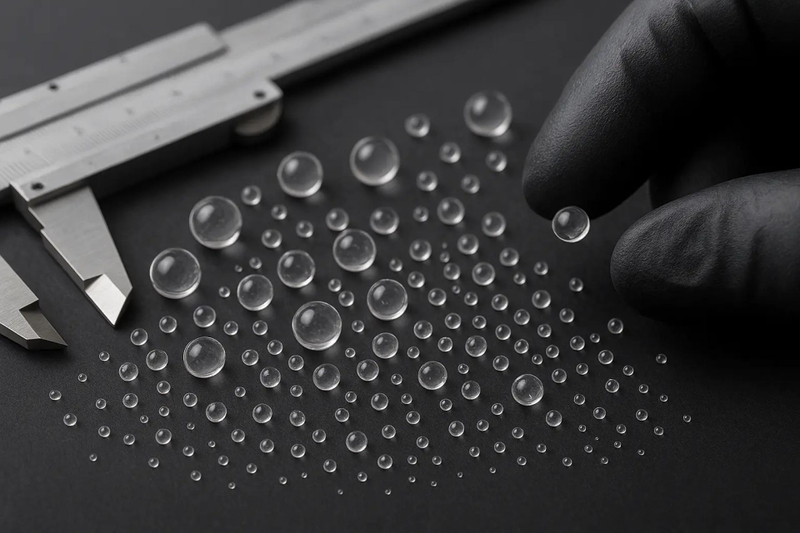
Bead blasting is a finishing method where spherical media — often glass, ceramic, or steel beads — are propelled at high speed onto a metal surface. This process removes grime, rust, minor surface defects, and contaminants without causing damage to the substrate.
Key benefits include:
- Uniform matte finish
- Improved coating adhesion
- Removal of oxidation
- Enhanced aesthetic appeal
Bead blasting is widely used in automotive restoration, aerospace components, stainless steel products, and medical equipment.
Glass Bead Blasting: When You Need a Smooth, Satin Finish
Glass bead blasting is a specialized form of bead blasting that uses fine, round glass beads to create a soft, clean, and uniform satin-like surface. Unlike aggressive methods that remove material, glass bead blasting gently peens the surface, strengthening it while preserving its dimensional accuracy.
Advantages of glass bead blasting include:
- Non-abrasive, non-etching finishing
- Suitable for thin or delicate metals
- Creates a bright, polished appearance
- Ideal for stainless steel, aluminum, brass, and alloys
This method is particularly valuable for industries that require cosmetic perfection, corrosion resistance, and smooth texture — such as medical instruments, aircraft parts, food-grade equipment, and architectural stainless steel.
Tube Laser Cutting: Precision & Speed in One Process
The integration of Tube Laser technology has significantly revolutionized modern metal fabrication. Traditional tube cutting methods involved manual measuring, sawing, drilling, and grinding, which added time, labor, and error. Tube Laser systems eliminate these limitations with automated precision and incredible speed.
How Tube Laser Cutting Works
A high-powered laser beam cuts through tube, pipe, and structural profiles with pinpoint accuracy. Modern Tube Laser equipment is controlled by CNC systems that read CAD files and execute cuts automatically.
Why Fabricators Rely on Tube Laser Technology
- Extreme accuracy with repeatability
- No distortion even on thin-walled tubes
- Complex cutouts and shapes made easily
- Faster production, reducing delivery timelines
- Minimal waste, maximizing material usage
Industries such as automotive frames, furniture design, construction supports, and machine assemblies benefit heavily from Tube Laser precision. From intricate contours to angle cuts and slotted holes, Tube Laser cutting offers unmatched versatility.
Bending Brake: Perfect Forming for Complex Designs
Once metal sheets or tubes are cut, the next step often involves shaping them. The Bending Brake is one of the most essential fabrication tools for forming precise bends in sheet metal. Advanced CNC-controlled bending brakes can handle multiple angles, radiuses, and complex sequences with exceptional consistency.
How the Bending Brake Supports Fabrication
- Forms metal sheets into enclosures, brackets, structural parts, and channels
- Ensures exact angles for perfect assembly
- Maintains structural integrity without cracking or deforming the metal
The Bending Brake is especially crucial in architectural metalwork, enclosures, HVAC ducting, industrial machinery, and custom fabrication projects where accuracy and repeatability are vital.
Bringing It All Together: A Complete Fabrication Workflow
Modern metal fabrication is no longer a simple cut-and-assemble operation. It’s a highly coordinated workflow of precision-driven processes. Here’s how the techniques discussed above create a seamless production chain:
- Precision tools ensure accurate measurements, consistent quality checks, and flawless machine setups.
- Tube Laser cutting delivers perfect cuts and intricate geometries without manual handling errors.
- Bending Brake forms the metal into the desired shape with exact angles and consistent bends.
- Bead blasting cleans and preps the parts, removing impurities.
- Glass bead blasting gives the metal a smooth, polished finish ready for coating or assembly.
The result? Superior components that exceed industry performance standards.
Why These Technologies Matter for the Future of Manufacturing
As industries push for lighter materials, tighter tolerances, and more efficient designs, the demand for advanced fabrication processes will continue to grow. Businesses that integrate Laser Tube cutting, precision-controlled forming, and high-quality surface finishing processes like bead blasting and glass bead blasting will secure a strong competitive advantage.
These technologies not only improve quality but also reduce labor, accelerate lead times, and minimize waste — making them essential for sustainable, future-ready manufacturing.