



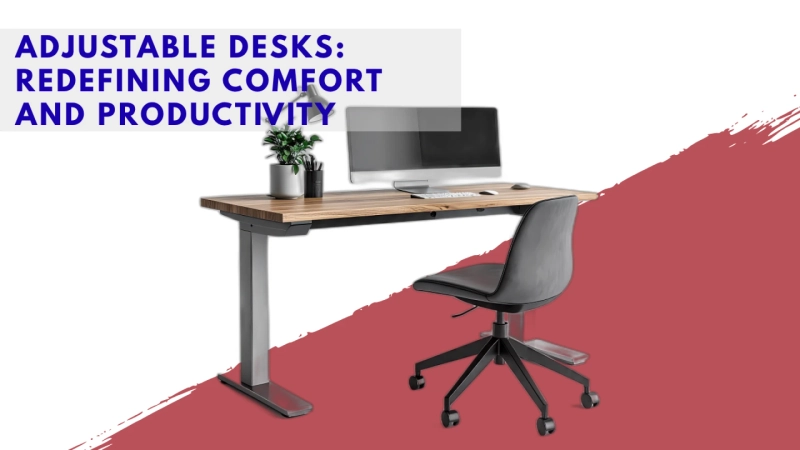
In modern Thailand, where the demands of remote work, dynamic hybrid office models, and a growing freelance community meet the compact realities of urban living, the traditional fixed desk no longer meets the standard for professional well-being. For countless hours each day, office workers and creative professionals in Bangkok, Chiang Mai, and beyond are locked into static positions, leading to poor posture and chronic discomfort. The simple yet revolutionary concept of the adjustable desk—also known as a sit-stand desk—has emerged as the essential solution, redefining what it means to be comfortable and productive throughout the workday.
An adjustable desk provides the freedom to seamlessly transition between sitting and standing, encouraging movement that counteracts the negative health effects of prolonged sitting. This flexibility is not merely a comfort feature; it is an ergonomic necessity backed by health research, which links static, sedentary work to increased risks of back pain, poor circulation, and reduced focus. As the Thai furniture market expands to meet the demand for higher-quality home office solutions, understanding the mechanics, features, and correct usage of these versatile workstations is key to making a wise and long-term investment in personal health and work performance.
The Health and Productivity Imperative
The core motivation for investing in an adjustable desk is the desire to mitigate the health risks associated with a sedentary lifestyle and enhance cognitive function.
Reducing Musculoskeletal Strain
Prolonged sitting places immense strain on the spine, hip flexors, and shoulders, leading to the chronic pain commonly experienced by office workers.
- Spinal Health: Alternating between sitting and standing alleviates pressure on the lumbar spine. When correctly adjusted, a standing posture allows the spine to maintain its natural curvature, minimizing the compression that builds up when sitting for long periods. Research suggests that this postural shifting can significantly reduce lower back pain.
- Core and Leg Activation: Standing, even lightly, engages core and leg muscles, improving circulation and preventing the muscle fatigue and stiffness associated with static postures. This subtle movement is often enough to keep the body energized and alert.
Enhancing Energy and Focus
Movement breaks up the monotony of the workday and stimulates blood flow, which has measurable benefits for mental clarity.
- Improved Circulation: Standing promotes better blood flow, increasing oxygen delivery to the brain. Users of adjustable desks frequently report feeling more energized and less susceptible to the mid-afternoon slump.
- Increased Engagement: Studies indicate that alternating positions can improve focus and cognitive function, making workers more engaged and productive during tasks like collaborative meetings, presentations, or creative work.
Key Technical Features to Evaluate
When shopping for an adjustable desk in the Thai market, the price difference is generally tied to the quality of the lifting mechanism, which determines speed, noise, and stability.
Electric vs. Manual Mechanisms
The method of height adjustment directly impacts the user experience and long-term convenience.
- Electric Desks (Motorized): The preferred choice for seamless use. These employ single or dual motors to adjust the height via the push of a button.
- Dual Motor: Offers superior speed, stability, and lifting capacity (often 120 kg or more), making them suitable for heavy desktop setups (multiple monitors, large PCs) and providing a smoother, quieter transition. They are generally found in the mid-to-premium price ranges (฿15,000–฿35,000+ for the frame).
- Single Motor: A cost-effective entry point (starting around ฿10,000). While functional, they are typically slower, noisier, and have lower weight capacities than dual-motor models.
- Manual Desks (Crank or Pneumatic): The most budget-friendly option. While quiet, they require physical effort (cranking a handle) or counterbalancing (pneumatic) to change height, which can discourage frequent position changes.
Frame Stability and Lifting Capacity
A desk must remain rock-solid and stable at both sitting and full standing height to prevent monitor shake and provide a secure work surface.
- Telescopic Stages: Look for frames with three-stage telescoping legs rather than two-stage. Three-stage legs offer a greater height range, making them suitable for both shorter users (necessary for correct sitting posture) and taller users (necessary for correct standing posture), while also contributing to better stability.
- Max Load: Ensure the lifting capacity (kg) comfortably exceeds the total weight of your desktop equipment (monitors, PC, accessories). Overloading the motor will shorten its lifespan.
Control Panel and Features
The controls should offer more than just up and down functionality to truly support a healthy work routine.
- Memory Presets: Essential for convenience. Quality electric desks offer at least 3–4 memory presets, allowing the user to save their perfect sitting height and standing height for instant, seamless transition.
- Anti-Collision Sensor: A critical safety feature, especially in a home environment. This sensor automatically stops the desk's movement if it encounters an obstruction (like a chair arm or an object under the desk), preventing damage and injury.
Ergonomic Guidelines for Optimal Use
Simply owning an adjustable desk is not enough; correct ergonomic adjustment is necessary to realize the health benefits and avoid creating new strains.
Finding the Right Sitting and Standing Heights
The key principle is achieving neutral posture for both positions, with the desk supporting the arms comfortably.
- Elbow Angle: Whether sitting or standing, the desk height should be adjusted so that your elbows are bent at approximately a 90-degree angle when your fingers rest lightly on the keyboard. This ensures the shoulders are relaxed and not hunched.
- Monitor Height: The top of your computer monitor should be at or just slightly below eye level, preventing neck strain from looking down or up. The screen should also be about an arm’s length away.
The Sit-Stand Ratio
Experts agree that standing all day is as detrimental as sitting all day. The benefit comes from constant movement and postural variation.
- Alternating Positions: A good starting ratio is to alternate every 30 to 60 minutes. Aim to stand for a total of two to four hours throughout your entire workday. Use the memory presets to make the transition a simple button press, removing any barrier to movement.
- Anti-Fatigue Mats: When standing, use an anti-fatigue mat. This cushioning encourages subtle shifts in weight distribution, improving circulation in the legs and reducing pressure on the feet and lower back. Avoid standing barefoot on hard floors.
A Long-Term Investment in the Thai Workspace
The decision to purchase an adjustable desk moves beyond buying simple office furniture; it is a strategic investment in long-term health, focus, and professional longevity. In the dynamic world of work in Thailand, the adjustable desk provides the flexibility necessary to manage health risks associated with sedentary work while optimizing a comfortable, customized workspace. By prioritizing a stable, dual-motor frame with essential ergonomic features like memory presets, consumers ensure their investment supports both their immediate comfort and their sustained productivity for years to come.
FAQs
What is a reasonable budget for a quality electric adjustable desk in Thailand?
A reasonable budget for a quality electric adjustable desk with a reliable, dual-motor frame and a decent tabletop typically falls between ฿15,000 and ฿35,000. Desks below this range often use less stable single-motor mechanisms or lighter materials, which can compromise stability and lifespan, especially when supporting heavy equipment.
Should I choose a manual or electric adjustable desk?
While manual desks are cheaper, electric desks (dual-motor) are highly recommended. The effort required to use a crank or pneumatic lever often discourages users from frequently switching positions, which defeats the desk's primary purpose. The simple push-button control of an electric desk ensures you maintain the beneficial sit-stand cycle throughout the day.
How often should I switch between sitting and standing?
You should aim to switch between sitting and standing every 30 to 60 minutes. The goal is not to stand all day, but to break up long periods of static posture with movement. Start with 30-minute intervals and gradually increase the standing time as your body adapts. Listen to your body and adjust the ratio based on your comfort level.
Do I need an anti-fatigue mat?
Yes, an anti-fatigue mat is strongly recommended when standing. Standing on hard floors for extended periods can place strain on your feet, knees, and lower back. The mat's cushioning helps to absorb impact and encourages slight, beneficial micro-movements in your leg muscles, significantly improving comfort and endurance while standing.