



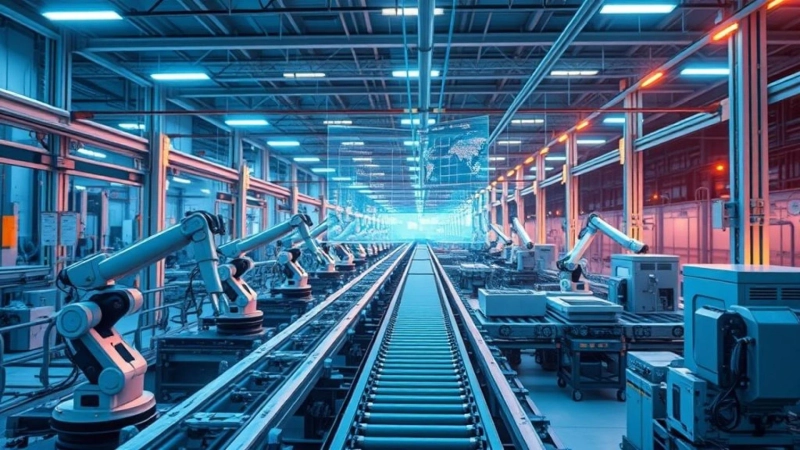
Manufacturing has always been a cornerstone of global economic progress. From the industrial revolution to the digital revolution, manufacturers have embraced new technologies to boost productivity, streamline operations, and remain competitive. Today, as industries face mounting pressures—rising costs, supply chain disruptions, sustainability demands, and increasing customer expectations—a new technological frontier is reshaping the landscape: adaptive AI development.
Adaptive AI goes beyond traditional AI models by evolving continuously. It doesn’t just follow pre-programmed instructions or analyze historical datasets; instead, it learns and adapts in real time. For manufacturers, this is transformative. By partnering with an adaptive ai development company and leveraging adaptive ai development services, manufacturers can achieve smarter, leaner operations that deliver agility, efficiency, and long-term growth.
This article explores how adaptive ai development solutions are revolutionizing the manufacturing sector, the benefits they bring, real-world applications, challenges to overcome, and why adaptive ai solution development is the key to building a resilient and future-ready manufacturing ecosystem.
Why Manufacturing Needs Adaptive AI Now
Manufacturing industries face a rapidly changing environment. Challenges such as global competition, unpredictable demand, labor shortages, and the push toward sustainability have created a need for dynamic solutions. Traditional automation and AI systems often lack the flexibility to adapt to unexpected variables.
Here’s why adaptive ai development services are uniquely positioned to address these challenges:
- Dynamic Market Conditions – Manufacturers need real-time systems that can respond to changing demand, supplier disruptions, and shifting regulations.
- Supply Chain Volatility – Adaptive AI optimizes procurement, logistics, and demand forecasting even under uncertain conditions.
- Customization Demands – With customers demanding tailored products, adaptive AI helps manufacturers balance mass production with personalized outputs.
- Sustainability Pressure – Reducing waste, energy consumption, and emissions requires adaptive, data-driven insights.
- Operational Efficiency – Manufacturers must continually optimize production lines, maintenance schedules, and resource usage.
By investing in adaptive ai development solutions, manufacturing companies can transform challenges into opportunities, paving the way for smarter, leaner operations.
The Role of an Adaptive AI Development Company in Manufacturing
An adaptive ai development company acts as the technology partner manufacturers need to implement scalable, customized solutions. These companies specialize in understanding industrial processes and integrating adaptive ai development services seamlessly into manufacturing workflows.
Key contributions of such companies include:
- Custom-Built AI Models tailored to specific manufacturing processes, from assembly lines to robotics.
- Real-Time Data Integration connecting IoT sensors, ERP systems, and factory equipment.
- Predictive Maintenance Tools that evolve with machine usage to minimize downtime.
- Smart Supply Chain Management through adaptive ai solution development that anticipates disruptions and offers alternatives.
- Scalable Frameworks capable of growing with the business as production demands expand.
Working with an adaptive ai development company ensures manufacturers are not just adopting technology, but future-proofing their operations.
Applications of Adaptive AI Development in Manufacturing
Adaptive AI is not just a theoretical concept; it is already revolutionizing multiple areas of the manufacturing process. Here’s how adaptive ai development services are being applied across the industry:
1. Predictive and Adaptive Maintenance
Traditional maintenance schedules are static, often leading to either unnecessary servicing or unexpected breakdowns. Adaptive AI predicts maintenance needs dynamically by analyzing sensor data, machine performance, and usage patterns. This reduces downtime and extends equipment lifespan.
2. Quality Control and Assurance
Adaptive AI systems learn from production line data to detect anomalies in real time. These systems continuously refine themselves, reducing defects, improving product quality, and lowering costs associated with returns and recalls.
3. Demand Forecasting and Inventory Management
By analyzing global trends, market fluctuations, and customer orders, adaptive AI offers accurate demand forecasting. Manufacturers can optimize inventory levels, reduce waste, and align production schedules with actual demand.
4. Supply Chain Optimization
Adaptive ai development solutions help manufacturers build resilient supply chains. They analyze supplier performance, predict logistics bottlenecks, and suggest alternatives in real time, ensuring smooth operations even during disruptions.
5. Process Optimization
Production processes involve multiple variables—temperature, speed, pressure, energy consumption. Adaptive AI continuously analyzes these variables and makes real-time adjustments, resulting in optimal efficiency.
6. Workforce Augmentation
Adaptive AI can enhance human productivity by offering decision support, automating repetitive tasks, and providing insights that empower workers to focus on innovation.
7. Energy Management and Sustainability
Manufacturers are under pressure to reduce energy consumption and carbon emissions. Adaptive AI monitors energy usage across facilities and suggests optimizations to meet sustainability goals while reducing costs.
Benefits of Adaptive AI Development for Manufacturing
The adoption of adaptive ai development services delivers significant benefits to manufacturers, both immediate and long-term.
For Manufacturers:
- Operational Efficiency through real-time optimization of production processes.
- Cost Reduction by minimizing waste, reducing downtime, and improving supply chain resilience.
- Scalability with adaptive ai development solutions that evolve as production grows.
- Sustainability Compliance by optimizing energy and resource use.
- Competitive Edge through faster innovation and responsiveness to market demands.
For Customers:
- Consistent Quality ensured by adaptive quality assurance systems.
- Faster Delivery through optimized supply chains.
- Personalized Products made possible by flexible production enabled by adaptive AI.
- Affordable Prices driven by efficiency and reduced operational costs.
Case Studies and Real-World Examples
- Automotive Industry: Car manufacturers are using adaptive AI to monitor assembly line robotics, predict maintenance, and improve safety standards.
- Electronics Manufacturing: Companies are leveraging adaptive ai development solutions to detect defects in microchips with near-perfect accuracy.
- Textile Industry: Adaptive AI systems optimize dyeing processes by monitoring chemical usage and water consumption, reducing environmental impact.
- Heavy Machinery: Adaptive AI enhances predictive maintenance in industries producing industrial equipment, minimizing costly downtimes.
Challenges in Implementing Adaptive AI in Manufacturing
While adaptive ai solution development offers massive benefits, it also presents challenges:
- High Initial Costs – Developing and deploying adaptive AI systems requires substantial investment.
- Integration with Legacy Systems – Many manufacturers operate outdated infrastructures not designed for AI integration.
- Data Quality Issues – Adaptive AI relies on high-quality data, but many manufacturers struggle with fragmented or incomplete datasets.
- Skilled Workforce Shortage – Implementing adaptive ai development services requires expertise in AI and manufacturing.
- Security Concerns – With AI systems connected to IoT devices, ensuring cybersecurity is critical.
Manufacturers must address these challenges through partnerships with adaptive ai development companies that provide end-to-end support.
Future of Adaptive AI in Manufacturing
The future of manufacturing will be increasingly shaped by adaptive ai solution development. Key trends include:
- Smart Factories where every machine and process is optimized in real time.
- Digital Twins powered by adaptive AI, allowing virtual simulations of entire production lines.
- Autonomous Supply Chains capable of self-optimizing based on global changes.
- Sustainable Manufacturing Models with AI ensuring efficient energy use and waste reduction.
- Collaborative AI-Worker Environments where adaptive AI augments human workers, increasing productivity and safety.
Why Manufacturers Should Invest in Adaptive AI Development Now
The competitive pressures in manufacturing leave little room for inefficiency. By working with an adaptive ai development company, manufacturers can adopt adaptive ai development services that align with their unique needs. Adaptive ai development solutions provide a framework for resilience, efficiency, and sustainability.
Adaptive ai solution development doesn’t just improve existing processes—it redefines them. Manufacturers can innovate faster, serve customers better, and stay ahead in an increasingly demanding marketplace.
Conclusion
Manufacturing is at the threshold of a new era—an era defined by agility, intelligence, and sustainability. Adaptive AI is the key driver of this transformation. By adopting adaptive ai development services, manufacturers can unlock smarter, leaner operations that respond to challenges dynamically and create new opportunities for growth.
With adaptive ai development company expertise, businesses can build tailored solutions that optimize supply chains, improve quality, reduce downtime, and enhance sustainability. Adaptive ai development solutions bring together the power of real-time data, predictive analytics, and evolving intelligence to revolutionize how factories operate.
The future belongs to manufacturers who embrace adaptive ai solution development today. Those who invest now will not only survive but thrive in the next industrial revolution.