



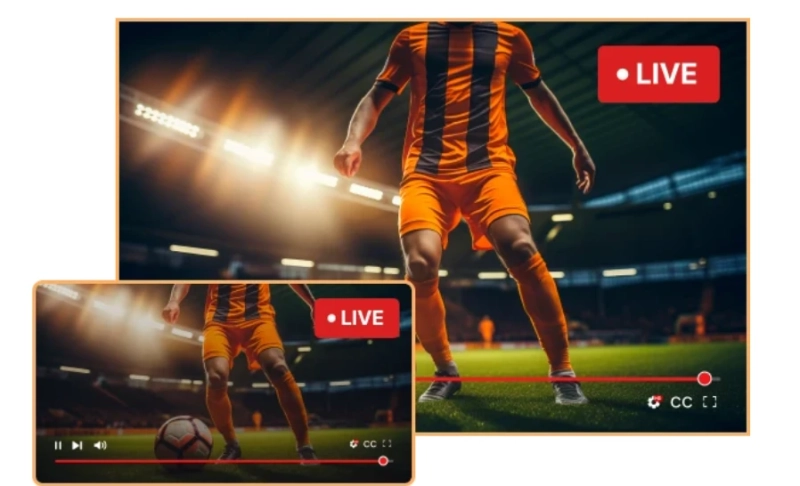
1. Muvi Live - The Ultimate Low Latency Streaming Solution
Muvi Live is a fully managed end-to-end live streaming platform that ensures ultra-low latency streaming for businesses, content creators, and broadcasters. With Muvi Live, you get real-time streaming with minimal delay, ensuring a smooth viewing experience for your audience. Its cloud-based infrastructure supports adaptive bitrate streaming, DRM protection, and seamless integration with multiple devices.
Key features of Muvi Live:
- Ultra-low latency (sub-second delays)
- 4K and HD live streaming support
- Built-in DRM and security measures
- Seamless integration with websites, apps, and smart TVs
- Auto-recording and monetization options
Muvi Live stands out because of its robust security, ease of use, and flexibility, making it the top choice for enterprises and individual broadcasters looking for the best low latency solution.
2. Wowza Streaming Cloud
Wowza is a well-known name in the streaming industry, offering a scalable and flexible live streaming solution. The platform supports low latency streaming using WebRTC and HLS but requires additional configurations to achieve sub-second latency.
Pros:
- High scalability and cloud integration
- WebRTC support for faster streaming
- Good developer tools and API support
Cons:
- Higher pricing for advanced features
- Requires extra configuration for ultra-low latency
Wowza is a solid choice for developers and enterprises looking for a customizable low latency streaming solution but may not be as user-friendly as Muvi Live.
3. AWS Elemental MediaLive
AWS Elemental MediaLive is Amazon’s cloud-based live streaming service designed for large-scale broadcasts. While it provides reliable performance, achieving low latency requires additional configurations with Amazon IVS (Interactive Video Service).
Pros:
- Scalable and reliable infrastructure
- Supports multiple streaming formats
- Integration with AWS services
Cons:
- Requires technical expertise to configure
- Additional costs for low latency options
Compared to Muvi Live, AWS Elemental MediaLive is better suited for large enterprises that have technical teams to manage configurations.
4. Vimeo Livestream
Vimeo Livestream offers professional-grade live streaming with good quality and interactive features. However, its latency is higher compared to ultra-low latency solutions like Muvi Live.
Pros:
- High-quality video streaming
- Interactive engagement features
- Good analytics and insights
Cons:
- Limited control over latency
- Higher pricing for premium features
Vimeo Livestream is a decent option for businesses focused on engagement rather than achieving ultra-low latency.
5. IBM Video Streaming
IBM Video Streaming provides a secure, AI-powered live streaming platform. It ensures reliable content delivery but lacks native ultra-low latency support.
Pros:
- AI-driven analytics and automation
- Secure streaming with enterprise-grade security
- Scalable for large audiences
Cons:
- Higher latency compared to WebRTC-based solutions
- Expensive for small businesses
For real-time engagement, Muvi Live remains a better alternative due to its built-in ultra-low latency capabilities.
6. Red5 Pro
Red5 Pro is a developer-friendly platform that enables ultra-low latency live streaming through WebRTC and RTMP.
Pros:
- Sub-second latency with WebRTC
- Multi-platform support
- High customization potential
Cons:
- Requires technical expertise for setup
- Higher costs for enterprise-level usage
Muvi Live offers the same low latency benefits without the need for complex configurations.
7. Dacast
Dacast is a professional-grade live streaming platform with a focus on monetization and video hosting.
Pros:
- Good content monetization options
- Secure streaming with DRM
- Reliable CDN delivery
Cons:
- Limited ultra-low latency support
- Less customization compared to competitors
Muvi Live is a better option for those prioritizing ultra-low latency without sacrificing monetization and security.
8. Phenix Real-Time Streaming
Phenix offers real-time streaming with sub-second latency, making it ideal for sports and interactive broadcasts.
Pros:
- Ultra-low latency streaming
- Adaptive bitrate for smooth playback
- AI-driven content optimization
Cons:
- Expensive pricing plans
- Requires enterprise-level investment
Muvi Live offers similar ultra-low latency features but at a more accessible pricing structure.
9. Brightcove Live
Brightcove Live is a cloud-based streaming solution designed for enterprises.
Pros:
- Good scalability and integration
- Reliable content delivery
- Enterprise-grade security
Cons:
- Lacks native ultra-low latency support
- Expensive pricing
For businesses looking for an affordable ultra-low latency solution, Muvi Live is the better option.
10. THEOplayer
THEOplayer is a media player offering low latency solutions for broadcasters.
Pros:
- WebRTC support for low latency
- Seamless multi-device compatibility
- DRM-protected streaming
Cons:
- Requires additional backend setup
- Not a full-fledged streaming platform
Compared to Muvi Live, THEOplayer lacks built-in live streaming features and infrastructure.
Final Verdict: Why Muvi Live is the Best Choice
When it comes to low latency live streaming, Muvi Live outshines the competition by offering:
- True ultra-low latency streaming with WebRTC and adaptive bitrate support
- Secure DRM-protected streams ensuring content protection
- Seamless multi-device integration across websites, mobile apps, and smart TVs
- Monetization options such as pay-per-view and ad-based revenue models
- User-friendly, no-code platform, making it accessible for all users
With its superior technology, competitive pricing, and ease of use, Muvi Live is the ultimate choice for broadcasters and businesses looking to deliver high-quality, real-time streaming.
FAQs About Low Latency Live Streaming
Q1: What is low latency live streaming?
Low latency live streaming refers to real-time video streaming with minimal delay, typically under 5 seconds, ensuring a seamless viewing experience.
Q2: How does Muvi Live achieve ultra-low latency?
Muvi Live uses WebRTC and adaptive bitrate streaming to minimize delay, ensuring sub-second latency for real-time broadcasts.
Q3: Which industries benefit from low latency streaming?
Industries like sports, gaming, e-learning, and live events benefit the most from ultra-low latency streaming.
Q4: What is the difference between low latency and normal streaming? Low latency streaming ensures faster content delivery, reducing buffering, while normal streaming can have delays of 10-30 seconds.
Q5: Can I monetize my low latency live streams?
Yes, platforms like Muvi Live offer monetization options, including pay-per-view, subscriptions, and ad-based revenue.