



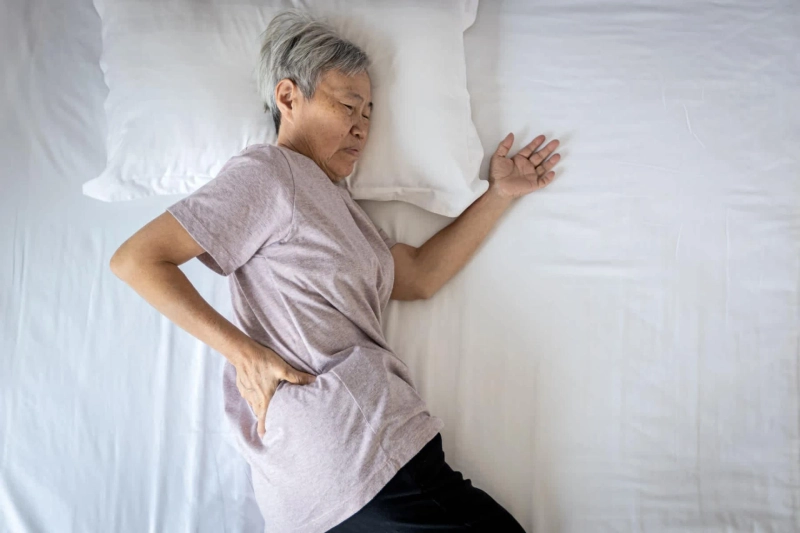
Hip pain at night is a problem many people deal with, especially if they prefer sleeping on their side. What might start as a little discomfort can quickly turn into pain that keeps you awake or wakes you up throughout the night. When your hips hurt, it’s hard to get comfortable, and poor sleep can affect your overall health and mood. To manage this problem effectively, you first need to understand what’s causing it. Below are seven common reasons your hip might hurt at night and what you can do to find relief.
1. Your Sleeping Position
If you sleep on your side, your sleeping position could be putting extra pressure on one hip. When one leg rests on top of the other, your top hip can slightly pull down due to the angle, creating tension in the muscles and joints. Over time, this uneven alignment can lead to pain on one or both sides.
If you notice more discomfort on one side, try changing your position. Placing a small pillow between your knees can help keep your hips aligned and reduce pressure while you sleep.
2. Tight Hip Flexor Muscles
One of the most common and overlooked causes of hip pain at night is tight hip flexors. These muscles, known as the iliopsoas, include the iliacus and psoas muscles. They help lift your leg and stabilize your hips, but they’re active almost all day—especially when sitting for long periods.
When these muscles tighten, they can pull your hips out of alignment, causing discomfort when lying down. Side sleepers often curl their knees slightly toward their chest, which keeps the hip flexors in a shortened position, worsening the tension. Gentle stretching before bed or physical therapy may help reduce the strain.
3. Arthritis or Osteoarthritis
If your hip pain is deep, dull, and persistent, it may be related to arthritis or osteoarthritis. These conditions cause the protective cartilage in your hip joint to wear down, leading to inflammation and stiffness. Pain from arthritis often worsens at night because of inactivity and joint stiffness after a long day.
If you suspect arthritis, consult your doctor. They might recommend imaging tests and treatments such as anti-inflammatory medications, physical therapy, or joint injections to manage pain and improve movement.
4. Bursitis
Bursitis is inflammation of the small, fluid-filled sacs (bursae) that cushion your hip joint. When these sacs become irritated, usually from overuse or pressure, they can cause sharp pain that worsens when you lie on the affected side.
Common symptoms include tenderness, swelling, and pain when moving your hip or sleeping on one side. Rest, ice packs, and avoiding direct pressure on the sore side can help. If the pain doesn’t go away, your doctor may suggest steroid injections or physical therapy to reduce inflammation.
5. Previous Injury or Overuse
Old injuries like hip strains, fractures, or muscle tears can cause long-term discomfort, especially when lying down. Even if the injury healed, scar tissue or weakened muscles can still affect your hip alignment and cause pain over time.
Overuse from repetitive activities such as running, cycling, or climbing stairs can also strain your hip muscles and joints. Giving your body time to rest, applying ice, and stretching regularly can help manage pain caused by overuse.
6. The Mattress or Pillow You Use
Your mattress might be contributing to your hip pain. If it’s too soft, your hips may sink too deeply, causing misalignment in your spine and added stress on the joints. If it’s too firm, it can put direct pressure on your hips.
The best option is a medium-firm mattress that supports your body evenly. Adding a body pillow or memory foam topper can also make a big difference by relieving pressure and keeping your hips aligned through the night.
7. Daily Habits and Lifestyle Factors
Your daily activities have a big impact on hip health. Sitting for long hours, poor posture, or lack of stretching can cause your hip muscles to tighten and your joints to stiffen. Regular movement, gentle exercise, and stretching can help maintain flexibility and reduce nighttime pain.
If you smoke, it’s another factor to consider—smoking can reduce blood flow and delay healing, which can worsen joint discomfort over time.