


If someone had told us a few years ago that handwritten notes would become a big deal in corporate gifting again, most people would have laughed. The world was running on emails, auto-generated greetings and templated “Thank you for your business” messages. But things are changing in 2026, and surprisingly, change is coming from the most digital generation itself.
Corporate gifting isn’t only about sending hampers anymore — it’s about building real human connection with clients, partners and teams. And handwritten notes are quietly winning the game.
Why handwritten notes are suddenly valuable again
Think about all the times someone sent you an email saying “Happy New Year” or “Thank you”. You probably replied, maybe smiled for a second, and forgot about it in two minutes.
Now think of the last time someone wrote something for you with a pen — even one small line.
You remember it, right?
That’s the difference.
A short handwritten message says:
- “I took time for you”
- “You matter”
- “This is personal, not automated”
And that feeling cannot be replaced by a digital message.
The shift in corporate gifting mindset
Businesses realised something important — clients don’t leave because the products changed. They leave because the human connection faded.
That’s why companies are rethinking the way they send corporate gifts.
2026 trend looks like this:
- Less flashy, more meaningful
- Less transactional, more emotional
- Less bulk-buy baskets, more curated gifts
And that is the reason a lot of companies now buy custom note cards online along with their gifting hampers.
A short message like:
“Thank you for trusting us this year”
or
“We appreciate your partnership”
creates more loyalty than a thousand rupee chocolate box.
What kind of note cards companies are choosing
Corporate gifting aesthetics have also evolved. Nobody is looking for glitter, cartoon prints or multicoloured patterns.
The new look is:
- Clean, soft, sophisticated
- Minimal typography
- Neutral shades or pastel palettes
- Thick textured paper
- Small space for handwritten lines
The idea is to look thoughtful, not loud.
That’s why premium note cards are getting so popular — they feel classy even when the message is small.
Where businesses are sourcing stationery from
Earlier, companies struggled to find personalised note cards without placing bulk commercial printing orders. Now designer gifting brands have made it easy.
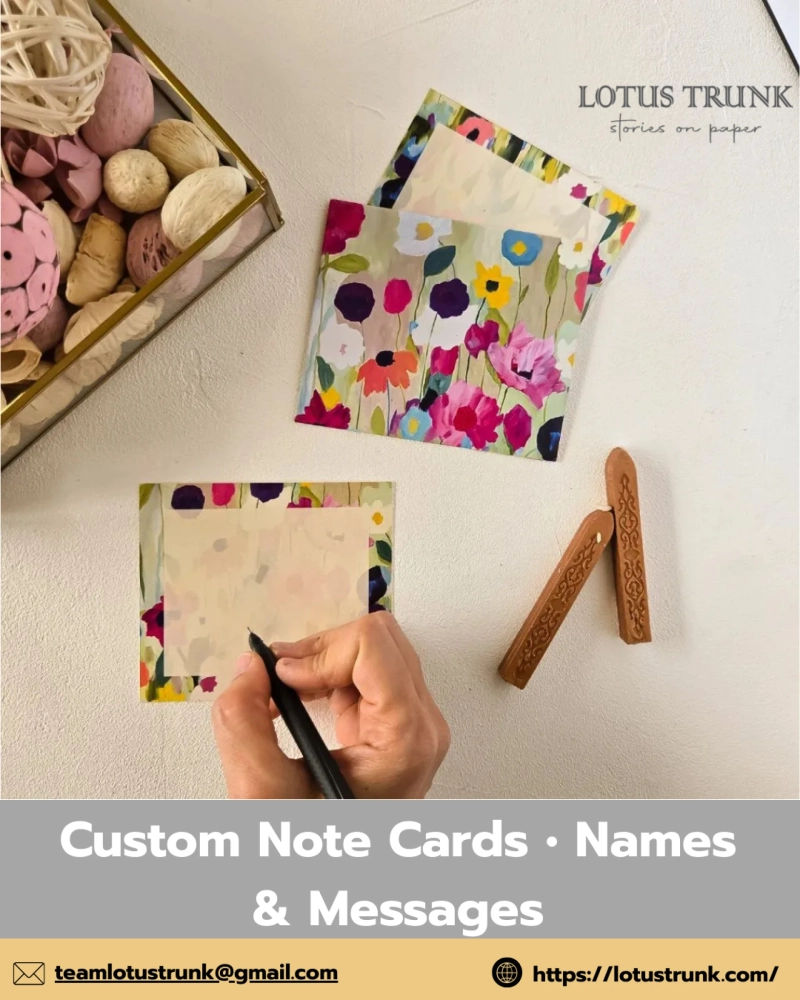
For example, Lotus Trunk creates note cards, envelopes and packaging that match modern corporate style — soft colours, clean lines and elegant designs that suit professional gifting. Companies can add their logo, initials or even a short header line on the top of the card if they want.
The best part?
They don’t need to order 1000 pieces. Even smaller quantities work — perfect for curated gifts.
The hidden impact of small gestures in business relationships
Business relationships are very similar to personal ones. Clients remember who made them feel valued. Employees remember who appreciated their efforts. Partners remember who stood by them.
And handwritten notes do something simple but rare — they slow down the moment.
A client keeps the card on the desk for weeks.
An employee puts it inside a notebook.
A partner reads it twice before throwing away the packaging.
All of this quietly builds trust.
And no — this trend isn’t “old-fashioned”
At first glance it might look like something from the past. But the reality is the opposite — the more digital the world becomes, the more meaning physical gestures carry.
In a thousand automated messages, a handwritten one stands out like a real voice in a room full of recorded tapes.
That’s why businesses who genuinely care about long-term relationships are returning to thoughtful touches — and note cards are their favourite tool right now.
Final thought
Corporate gifting in 2026 isn’t about “impressing people”. It’s about reminding them that business is human. A simple handwritten message on a premium note card has the power to make someone feel seen — and sometimes that’s all it takes to keep a relationship strong for years.
Some trends fade, but gratitude never goes out of style.