



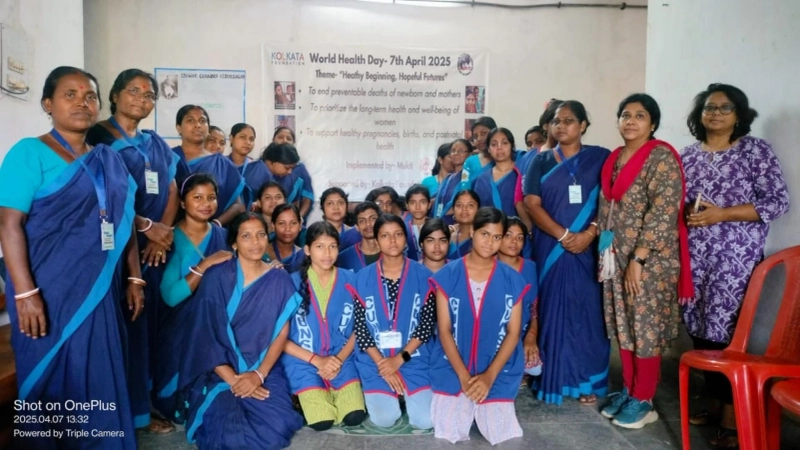
In a bold stride toward nurturing independent thought and democratic expression, Mukti, a grassroots NGO working in the Sundarbans of West Bengal, organized a two-day workshop titled “Mukto Chinta Mukti Kotha” at Purba Sridharpur. Translating to “Free Thought, Free Voice,” this workshop became a living space for dialogue, creativity, and empowerment for youth, educators, and change-makers from the region.
In rural India, where the education system often emphasizes obedience and memorization, Mukti’s Mukto Chinta Mukti Kotha offered something radically different — a chance for individuals to speak freely, question boldly, and listen deeply. The workshop aimed not only to educate but to liberate minds through discussion, art, storytelling, and participatory learning.
Breaking Silence, Building Dialogue
Over 150 participants gathered to experience a refreshing departure from conventional educational programs. Through circles of discussion, interactive debates, art sessions, and theatrical performances, Mukto Chinta Mukti Kotha broke the silence around taboo topics and encouraged new forms of expression.
The event began with a powerful ice-breaking circle where each participant shared what “freedom” meant to them. Answers ranged from "being able to choose my career" to "asking questions in class without fear." This first exercise set the tone — open, honest, and inclusive.
One of the most poignant moments came during the “Wall of Questions” activity, where students anonymously posted questions they were afraid to ask teachers or elders. Questions like “Why can't girls go out after dark?” and “What if I don’t want to get married?” sparked deep discussion, revealing both the curiosity and courage of the region’s youth.
Voices of the Youth
The workshop placed youth voices at its center. For many, Mukto Chinta Mukti Kotha was the first time they felt seen and heard in a public space. Participants wrote poems, drew posters, and performed skits reflecting their lives and dreams — unrestricted by academic syllabi or social expectations.
Sutapa Das, a 16-year-old student, shared:
“This is the first time someone asked me what I think — not just about my studies, but about my future, about society. I didn’t know how much I had to say until now.”
Students from different schools collaborated on a mural representing “freedom of expression,” blending images of books, microphones, open windows, and flying birds — a visual testament to the energy and inspiration the workshop sparked.
Teachers as Learners
Another innovative element of Mukto Chinta Mukti Kotha was the active participation of local teachers — not as supervisors, but as co-learners. In guided sessions, teachers reflected on the challenges of encouraging curiosity in classrooms that are often rigidly structured.
Ramesh Mondal, a secondary school teacher, said:
“This workshop reminded me that education is not just about facts. It’s about inspiring children to ask ‘why’ and ‘what if.’ That’s when true learning begins.”
Workshops on “Facilitating Dialogue in the Classroom” and “Listening without Judgment” gave teachers new tools and perspectives to take back to their schools.
Creative Expression as a Tool for Change
Art played a central role in Mukto Chinta Mukti Kotha. With designated corners for writing, painting, and storytelling, the event created a festival-like atmosphere of learning and sharing. From poems on gender equality to drawings on environmental justice, participants expressed their ideas on topics often ignored in traditional schooling.
A highlight was the Theatre of the Oppressed segment, where students and community members enacted real-life scenarios — like being silenced at school or discriminated against at home — and collectively imagined different outcomes. These performances were powerful exercises in empathy and problem-solving.
Toward a Culture of Free Thought
More than just a workshop, Mukto Chinta Mukti Kotha is the beginning of a larger movement Mukti envisions: one that normalizes critical thinking and open communication in rural education systems. Mukti plans to expand this model by:
- Setting up monthly discussion clubs in local schools
- Publishing student-led newsletters on current issues
- Partnering with education experts to train rural teachers
- Hosting annual thought festivals with workshops, exhibits, and talks
- Encouraging students to start “dialogue corners” in classrooms
These initiatives aim to shift educational culture from fear and conformity to freedom and collaboration.