



Property developers are shifting their focus from Western Sydney to inner-city suburbs, driven out by soaring infrastructure levies that have made apartment projects financially unviable.
In some areas of the city’s west, local and state government charges reach nearly $100,000 per apartment to cover the significant infrastructure needed to support development in these emerging suburbs.
Builders are no longer able to absorb soaring infrastructure fees within their margins, prompting a shift toward suburbs with higher apartment prices and lower government charges to keep projects viable.
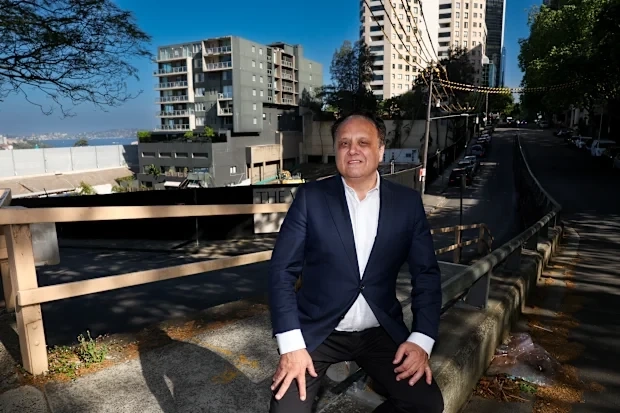
One such developer is ALAND, which has delivered more than 4,000 apartments over the past two decades. Founder Andrew Hrsto says he is moving away from Sydney’s west because the financials no longer make sense.
“I was born and raised in the West, and I’ve always been proud of that. We’ve built countless dwellings there. It’s actually disheartening to step away from where our core business has been,” Hrsto told The Australian Financial Review.
“We’re now focusing closer to the city, where sales values are higher and there’s at least a chance of making a profit. We still have projects underway in the west, but moving forward, it’s simply not sustainable; it's just too difficult.”
According to the Australian Bureau of Statistics, construction costs have climbed 18% since June 2020. But Hrsto says it’s the high government levies in western Sydney that are “killing the deals” and driving his business elsewhere.
He shared a comparison of state and local levies for two sites:
The Walden, a residential development at 177 Walker Street, North Sydney, and a proposed project at 156–166 Rickard Road, Leppington.
In affluent North Sydney, taxes amount to $34,407 per unit, roughly 1% of the $2.8 million average price for a two-bedroom apartment. By contrast, in Leppington, levies total $96,666 per dwelling, about 14% of the estimated $715,000 value.
“Between Sydney Water charges and government levies, it comes to nearly 15% of our revenue. I simply can’t absorb that,” Hrsto said.
A Ray White Western Sydney report revealed that while 15,773 dwellings were approved in FY25, only 5,369 are currently under construction. Meanwhile, the Department of Planning in western Sydney needs about 24,000 new dwellings a year to meet population growth.
Western Sydney is the state’s fastest-growing region, driven by the development of Western Sydney Airport. It accounts for 57.7% of NSW’s population growth and 60% of non-house dwelling approvals, according to Ray White.
However, Ray White Commercial Western Sydney managing director Peter Vines notes that many projects are being approved but not built.
“Getting approval is one thing. Delivering a financially viable project is another challenge, and that’s the core challenge in western Sydney,” Vines said.
He added that government rezoning is largely benefiting inner-city areas with existing infrastructure, while outer suburbs are being left behind.
“Western Sydney isn’t just the future of NSW, it's the present. If we don’t turn these plans into actual homes, we’ll undermine the entire growth strategy.”
Who Pays for Western Sydney’s Infrastructure?
The new south-western suburb of Wilton Greens, near Camden, highlights the growing gap between housing development and essential infrastructure. One couple who bought a plot of land in the suburb four years ago won’t have access to water and sewage services until 2028, underscoring how infrastructure is lagging behind rapid residential growth.
Liverpool Mayor Ned Mannoun believes that funding responsibilities should be shared across all levels of government.
“At one stage, we had 17 cranes in the sky in Liverpool. Now we have zero,” Mannoun said.
“While the efforts of the Premier and Planning Minister are commendable, the truth is our entire planning system is flawed.”
Mannoun argued that focusing development along existing transport corridors, such as the train line from Parramatta to Liverpool and through Fairfield to Cabramatta, makes far more sense than prioritising new suburbs like Austral and Leppington, which currently lack the necessary infrastructure.
“The state government should combine its balance sheet with ours to forward-fund infrastructure. Let’s invest $500 million upfront, build what’s needed, and recoup the costs over the next decade,” he said.
According to Mannoun, development in Liverpool has stalled due to a shortage of willing developers. Many successful Western Sydney developers have shifted their focus to the eastern suburbs, leaving a gap that no one is filling.
Planning Minister Paul Scully attributed the infrastructure shortfall to the previous government, which he said approved thousands of homes without providing adequate schools, services, and community facilities.
“The Minns government has begun rebalancing Sydney’s housing growth towards areas with existing infrastructure. If everyone takes their fair share, no one area has to shoulder the entire burden,” Scully explained.
“Legislative reforms recently introduced to Parliament will further support housing construction and investment if all parties are serious about boosting supply and creating jobs.”
A Sydney Water spokesperson clarified that infrastructure contribution rates are tied to servicing costs:
“Greenfield areas that need new pipes, pumping stations, and treatment facilities face higher rates. In contrast, infill areas with existing infrastructure pay less. We work with the government to identify areas with capacity, allowing for lower contributions on new housing,” the statement said.